From 25+ Years in Corporate EHS to Founding BioScience & Soul Wellness: Natalie Pryde on Bridging Ancient Healing with Functional Medicine, Why "Healing Isn't Linear," and Helping Women Reclaim Their Health Agency
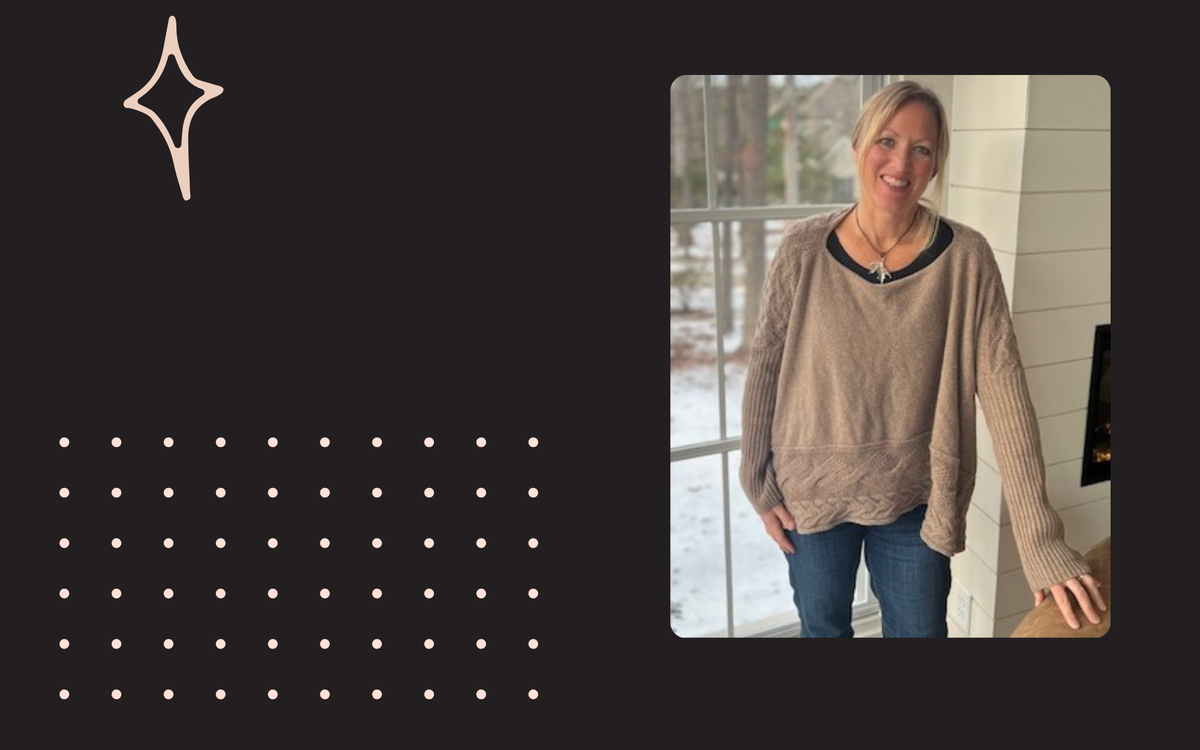
Natalie Pryde spent over 25 years in executive-level Environment, Health, Safety, and Sustainability roles, leading diverse teams globally across automotive, commercial real estate, oil and gas, and life sciences. She held leadership positions at major corporations, served on the MDEQ Green Chemistry and Engineering Steering Committee, and was a member of SASB Industry Working Groups developing sustainability accounting standards. With a Doctorate in Naturopathy from Clayton College of Natural Health, a Bachelor of Science in Management Systems from Kettering University, and a Wellness Counseling Certificate from Cornell University, she built a successful corporate career protecting the environment and people.
But something was missing. While organizations focused on preventing workplace incidents, far less attention was given to foundational health. She could see the gap clearly: during investigations, no one asked deeper human questions. Was the person under chronic stress? Sleep-deprived? Operating in a supportive environment? Carrying a high toxic load or the effects of long-term lifestyle strain? Instead, the focus was on retraining or discipline, without addressing the underlying human factors that directly impact decision-making, coordination, and mental clarity.
At the same time, Natalie and her family were living the benefits of a healthy lifestyle: clean, whole food, reduced toxic exposure, movement, sleep, and stress management. They experienced firsthand how intentional living and herbal supplements could support healing, restore energy and clarity, and enhance overall quality of life. That contrast between what she was seeing personally and what was missing professionally stayed with her. She wanted to address the problem upstream by helping people take ownership of their health so they could be more resilient at work and more present in their lives.
The timing felt right. She had reached a point where she felt she had learned what she needed to learn from her corporate roles and had contributed what she was meant to contribute. A close friend reached out and named what she hadn't yet fully acknowledged: that she was being called toward health and healing. Another friend connected her with a business coach. Her husband and son encouraged her to formalize her path by becoming certified as an Integrative Health Practitioner through the Integrative Health Practitioners Institute (IHPI), founded by Dr. Cabral.
In many ways, her entire career had been preparing her for this next chapter. She founded BioScience & Soul Wellness in Charlotte, a virtual integrative health practice that bridges seven disciplines (Ayurvedic Medicine, Bioregulatory Medicine, Herbalism/TCM, Traditional Naturopathy, Eastern Philosophy, Orthomolecular Medicine, and Functional Medicine) to help clients uncover root causes through advanced at-home functional lab testing and personalized wellness protocols. She works with driven professionals (particularly women) who are tired of the conventional system that doesn't listen to them and are looking for natural solutions to chronic gut issues, hormonal imbalances, fatigue, and toxic overload.
Her approach focuses on "removing what's harmful, restoring what's missing, and reconnecting you with the biological rhythms that create lasting wellbeing." She emphasizes that integrative health isn't a replacement for conventional medicine; it's an expansion of it. Traditional healthcare excels at diagnosis and life-saving intervention. Integrative and functional medicine focuses on how the body functions, adapts, and heals over time by honoring the interconnected systems that make us whole.
Although she works with both men and women, supporting women has always been central to her work. She came from the corporate world and lived it. She knows what it's like to juggle demanding leadership roles and family responsibilities, and she knows who usually falls last on the priority list. That was her. Despite her education and experience, she wasn't always taking care of herself, and when she did, it wasn't always consistent. She experienced burnout three times. Each time, rest and reset were the only ways she could continue. It wasn't until she stepped away from executive roles that she had the space to truly understand how to live and work in alignment with her natural rhythms.
From a medical and systems perspective, women are still underserved. Much of modern work is structured around a 24-hour cycle, one that aligns well with men and post-menopausal women. But women of reproductive age operate on a 28-day hormonal cycle. This misalignment has profound implications for stress response, hormonal balance, gut health, energy, mental clarity, and emotional resilience. Too often, women are made to feel as though they are the problem (overly emotional, inconsistent, unable to manage stress) when in reality, the system itself works against their biology. Natalie's work is about helping women understand their physiology and learn to align their energy, focus, and recovery accordingly, empowering them to embrace their strength and flow with their hormonal cycle before burnout forces the pause.
In this conversation, Natalie shares her journey from corporate EHS leadership to integrative health practitioner, her biggest challenges in bridging ancient healing wisdom with modern functional medicine, why she tells clients "healing isn't linear," her framework for building a sustainable virtual wellness practice that prioritizes "lasting results, not quick fixes," and what she wishes she'd known when she started (including why hiring a business coach matters almost as much as integrative health education).
From 25+ Years in Corporate EHS to Integrative Health Practitioner - When Personal Healing Led You to Build BioScience & Soul Wellness
Q: What inspired you to transition from corporate EHS leadership to founding an integrative health practice?
The inspiration came from several places, beginning with what drew me to EHS in the first place: my belief in the intelligence and value of nature. Throughout my corporate career, I was deeply motivated to protect our living environment and people. From childhood through adulthood, my life has been shaped by a respect for the natural rhythm of life, the body’s innate ability to heal, and the ongoing effort required to stay in balance.
Seen through that lens, my transition into integrative health was less a departure and more of a continuation. The timing also felt right. More people are beginning to trust natural health not as an alternative, but as an essential path to living well.
Professionally, I reached a point where I felt I had learned what I needed to learn from my corporate roles and had contributed what I was meant to contribute. It felt like the moment to give back in a different way. My experience in health and safety made a gap increasingly clear: while organizations focus on preventing incidents, far less attention is given to foundational health — something that was missing with many of the people I worked with.
At the same time, my family and I were living the benefits of a healthy lifestyle: clean, whole food, reduced toxic exposure, movement, sleep, and stress management. We experienced firsthand how intentional living and herbal supplements could support healing, restore energy and clarity, and enhance overall quality of life. That contrast between what I was seeing personally and what was missing professionally stayed with me.
A pivotal realization came while I was leading an HSE team in a large corporation. Although health and safety were the stated priorities, most efforts centered on safety alone. Rarely, during investigations, did anyone ask deeper human questions: Was the person under chronic stress? Sleep-deprived? Operating in a supportive environment? Carrying a high toxic load or the effects of long-term lifestyle strain?
Instead, we focused on retraining or discipline, without addressing the underlying human factors. While leadership often lacked awareness of how health directly impacts decision-making, coordination, and mental clarity, I could see the connection clearly. I wanted to address the problem upstream — by helping people take ownership of their health so they could be more resilient at work and more present in their lives.
Q: Walk us through that journey from managing global teams to becoming a health coach helping women heal chronic gut issues, hormonal imbalances, and fatigue.
Although I work with both men and women, supporting women has always been central to my work. I came from the corporate world — I lived it. I know what it’s like to juggle demanding leadership roles and family responsibilities, and I know who usually falls last on the priority list. That was me.
Despite my education and experience, I wasn’t always taking care of myself — and when I did, it wasn’t always consistent. I often think about how different my experience might have been if I’d had a coach to help me navigate those years with more awareness and support. Today, I can be that person for other women.
From a medical and systems perspective, women are still underserved. Much of modern work is structured around a 24-hour cycle — one that aligns well with men and post-menopausal women. But women of reproductive age operate on a 28-day hormonal cycle. This misalignment has profound implications for stress response, hormonal balance, gut health, energy, mental clarity, and emotional resilience. Compounded by the fact that medical research for women lags behind science focused on men.
Too often, women are made to feel as though they are the problem — overly emotional, inconsistent, or unable to manage stress — when in reality, the system itself works against their biology. Add this to the fact that the medical world chooses to manage symptoms rather than providing women the education, awareness, and tools to support their health on a 28-day cycle. Integrative health allows us to acknowledge these differences and support women in working with their natural rhythms instead of fighting them. I want to empower the women I work with to embrace their strength and learn to flow with their hormonal cycle.
What continues to inspire me is the leadership and resilience women demonstrate despite this mismatch. Imagine what becomes possible when women understand their physiology and learn to align their energy, focus, and recovery accordingly.
I didn’t have that understanding for most of my career. I powered through when my body was asking for a different approach. I didn’t understand how birth control pills affected my hormones, how chronic stress drove estrogen dominance, or how mineral depletion compromised my energy and recovery. It felt like being on a roller coaster with no off-ramp.
I experienced burnout three times. Each time, rest and reset were the only ways I could continue. It wasn’t until I stepped away from executive roles that I had the space to truly understand how to live and work in alignment with my natural rhythms. Now, my work is about helping women find that rhythm before burnout forces the pause and allow them to flourish in their career.
Q: What was the pivotal moment that made you decide to leave corporate and build BioScience & Soul Wellness?
There wasn’t a single defining moment, but rather a series of quiet signals that began in my thirties and grew louder over time. The clearest came during my final corporate role, when I was serving as a regional director across much of North and South America.
I loved the work. Yet one day, sitting at my desk, I felt an unmistakable sense of completion — that I had done what I was meant to do in that role. Shortly afterward, the company reorganized, and I no longer fit into the new structure.
Initially, the loss was painful. Then support began to appear. A close friend reached out and named what I hadn’t yet fully acknowledged — that I was being called toward health and healing. Another friend connected me with a business coach who specialized in entrepreneurs, eventually leading me to the coach I work with today. My husband and son encouraged me to formalize my path by becoming certified as an Integrative Health Practitioner through the Integrative Health Practitioners Institute.
Those moments — and those people — set everything in motion.
What I value most about this journey is how many individuals, often without realizing it, played a role in helping me step into this work. BioScience & Soul Wellness was built not from a sudden leap, but from years of lived experience, quiet conviction, and a deep trust in the intelligence of the body — and the life it supports. In many ways, I feel that my entire career was preparing me for this adventure.
Building a Root-Cause Healing Practice - Integrating Seven Disciplines and Advanced At-Home Lab Testing to Help Women Stop "Chasing Symptoms"
Q: What have been your biggest challenges in building a practice that bridges ancient healing wisdom with modern functional medicine?
Integrative health isn’t a replacement for conventional medicine — it’s an expansion of it. Traditional healthcare excels at diagnosis and life-saving intervention. Integrative and functional medicine focuses on how the body functions, adapts, and heals over time by honoring the interconnected systems that make us whole.
That distinction alone can be challenging. This philosophy isn’t for everyone, and it doesn’t need to be. But for those who are ready to stop chasing symptoms, the biggest hurdle is education. Most people were never taught how their bodies actually work — how systems communicate, compensate, and eventually fall out of balance.
We’ve also been taught that healing means stopping symptoms. In reality, symptoms are signals and healing is a process — and processes take time. For many clients, understanding that true healing may take weeks or months, rather than days, requires a meaningful shift in perspective. My role is to guide that shift without overwhelming them.
There’s also fear. Many people hesitate to step outside the conventional system, even when they aren’t getting better. At the same time, much of what we use in integrative health is grounded in thousands of years of observed outcomes. Somewhere along the way, people were taught to hand over agency for their health. I work to give it back and help them see progress in healing naturally.
This is where ancient healing wisdom meets modern functional medicine. My role is to translate these traditions into language people understand today. Traditional Chinese Medicine becomes herbal support. Yoga becomes movement, breath, and nervous system regulation. Naturopathy becomes health hygiene — diet, sleep, sunlight, and time in nature. Orthomolecular and functional medicine provide a scientific framework, helping us understand what’s happening down to the molecular level and protocols to support healing.
In my practice, I use advanced at-home functional lab testing to bring clarity and confidence to the process through science. The data helps uncover what’s happening beneath the surface so we can address root causes directly. Healing protocols may include targeted supplementation, but they always include the ways of living our ancestors relied on for generations. My job is to make this approach understandable, approachable, and effective.
Q: How did you establish credibility in the integrative health space, especially coming from a corporate background?
I think my corporate background didn’t hinder my credibility — it strengthened it. The skills I developed over decades translate directly into this work: researching and analyzing complex information, applying it strategically, building trust, listening deeply, and helping people move toward meaningful outcomes.
The more challenging piece was establishing credibility specifically as a practitioner. That’s why I pursued certification through the Integrative Health Practitioner Institute, founded by Dr. Cabral. What distinguishes IHPI is that its curriculum is grounded in proven outcomes, supported by data from hundreds of thousands of clients over more than a decade. We know what we’re learning works.
IHPI also remains closely aligned with emerging research and provides continuous education — essential in a field that continues to evolve. They are also unique in maintaining an active peer network, ensuring practitioners are never isolated when complex cases arise.
Combined with my doctorate in Naturopathy and additional certifications — three of which are through IHPI — I bring both education and confidence to this work. But credibility ultimately comes from lived experience. I practice these philosophies, raised my family this way, and have helped many people heal. When you live what you teach, credibility follows.
Q: What strategies have worked for you in educating clients about root-cause healing when many are accustomed to symptom-based care?
Most people come to me out of frustration. Conventional medicine hasn’t helped them feel better, and they’re open to a different approach. I leave space for curiosity and meet them where they are.
Some clients want to understand the science — how systems connect and why certain protocols work. Others want clarity around the process and reassurance about what to expect. I tailor education to the individual rather than forcing a one-size-fits-all explanation.
One concept I always introduce early is the difference between disease diagnosis and what I call the health-and-energy spectrum. In conventional medicine, a diagnosis is made once a threshold is crossed. In integrative health, we pay attention much earlier — to how someone feels, functions, and recovers — whether or not a diagnosis exists. Not feeling well is still not feeling well, even if lab values fall within a “normal” range.
I also prepare clients for the reality that healing isn’t linear. Anyone who tells you otherwise hasn’t done this work long enough. Healing often follows a winding path, especially for people who have been unwell for years. We set clear expectations, define meaningful metrics, and track progress over time.
Throughout the process, I remain available — through scheduled calls and ongoing communication — so clients feel supported, informed, and empowered as their body does what it’s designed to do.
Growing a Virtual Wellness Practice - Your Framework for Personalized Healing and Advice for Women Building Health Coaching Businesses
Q: What's been your framework for making key decisions about which services to offer, how to structure your coaching programs, pricing your expertise, balancing educational content with client work, and building a sustainable business model that prioritizes "lasting results, not quick fixes"?
I rely on two primary frameworks.
The first is alignment with my practitioner training through the Integrative Health Practitioner Institute. The lab testing and healing protocols I use are proven, structured, and grounded in outcomes. While I make thoughtful adjustments based on each client, the core framework provides consistency, integrity, and confidence — for both me and the people I serve.
The second framework is business mentorship. I work closely with a business coach who helps me understand what phase my business is in and how to grow it sustainably. That includes knowing which systems are required at each stage and, just as importantly, when not to expand too quickly. Interestingly, her philosophy of building strong business foundations mirrors my approach to health: you don’t rush the process, and you don’t skip the fundamentals.
We spend a lot of time evaluating what’s working, what isn’t, and how the business can continue to serve clients without overextending me. Sustainability — for the client and the practitioner — is non-negotiable.
Pricing is always the hardest part. Programs and services naturally evolve as you learn, but pricing your expertise is often uncomfortable, especially early on. What most people don’t see are the hundreds of hours behind the scenes — education, research, analysis, customization, and ongoing support throughout an engagement. I stay grounded by remembering that this work can be life changing. When you hold that responsibility with integrity, pricing becomes clearer.
My business model is rooted in lived experience. I work with clients one-on-one in 12-week or 6-month programs because meaningful healing takes time. Twelve weeks is the minimum required to create real change; longer engagements consistently produce deeper, more sustainable outcomes.
I’m also developing a membership program for clients who have completed a one-on-one program. This will offer a more accessible way to receive continued guidance over time — because health isn’t static, and life doesn’t stop changing once a program ends.
Q: What practical advice would you give to other women building integrative health or wellness coaching practices?
Education matters. A doctorate, like the one I earned, isn’t required — and it may not be realistic for many — but solid, tested education is non-negotiable. Certification programs can be an excellent path if they are credible and evidence informed. Do your homework. Quality education is the first requirement.
The second is ongoing support. Health coaches and integrative practitioner’s client work can have a significant impact on people’s lives. While it may not be life-or-death, clients are trusting you to help them make meaningful change. You should never feel isolated from that responsibility. That’s one of the reasons I chose IHPI — they provide continuous education and a lifetime peer network. This work is too important to do alone.
My next piece of advice is to hire a business coach. This matters almost as much as the integrative health education. Transitioning from the corporate world into entrepreneurship was one of my steepest learning curves. My coach stripped away the noise and replaced it with practical, actionable guidance. That clarity was invaluable.
Don’t hesitate to hire expertise. I hired a bookkeeper early on — one of the best decisions I made. I won’t hesitate to hire again when I need help crossing a finish line that would slow me down or distract me from client work.
Finally, be thoughtful about investments. Building a business costs both money and time — and time is often the more limited resource. Before purchasing anything, I ask myself three questions:
- Financial: Can I afford this?
- Learning and implementation: Do I actually have the time? (I recently started a certification I had been waiting on for 18 months!)
- Run or Tending Costs: Is this sustainable?
If the answer isn’t clear, I wait.
Q: What do you wish you’d known when you started, and what would you do differently?
Sometimes I wish I had started BioScience & Soul Wellness sooner. Walking away from a career that brought growth, success, and fulfillment was incredibly hard. Sometimes it’s difficult to see that another chapter can shine just as brightly.
That said, I wouldn’t change anything. Every success and every misstep taught me something I needed to know. Each experience shaped who I am today and brought me here doing work I care deeply about and supporting others in a way that feels honest and aligned with my values.
Are you a woman leader with an inspiring journey to tell? Founded by Women is on a mission to elevate and amplify the voices of women making an impact.
If you're breaking barriers, driving change, or paving the way for others, we’d love to feature your story. Get in touch with us today!
👉 hi@foundedbywomen.org