How to Unlock the Hidden Capacity You Didn’t Know You Have

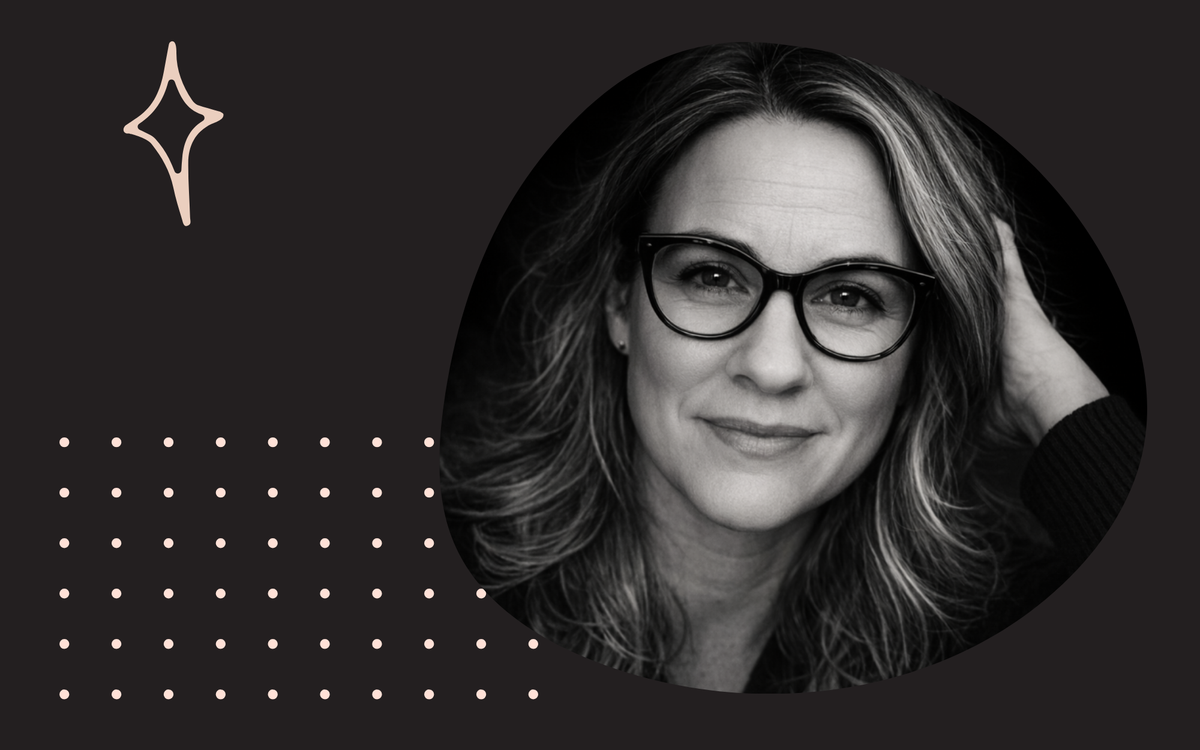
Clare Sadler has spent almost three decades working at the edges of human performance - with Olympic athletes, people in defence and intelligence‑related environments, critical incident responders, and senior leaders navigating high‑stakes complexity. As the founder of Beyond Instinct and a Human Systems Development specialist, she has built a career studying one question: what conditions cause access to capability to collapse under load — and what conditions allow the same system to unlock the hidden capacity people don’t always realise they have.
Her answer reframes the opportunity entirely. It’s not about skill gaps, mindset blocks or lack of motivation. It’s about architecture — the conditions that determine whether individuals, teams and organisations can access the capability they have, unlock hidden capacity and grow new capability when it matters most. In this feature, Clare breaks down the framework behind her work and what it reveals about the capacity you may never have realised was there.
Q: Most people try to perform better by working harder, or learning more skills. You're saying that the real lever is the human system itself. What are people missing about how capability actually works under load?
Performance isn’t driven by how much capability an individual, team, or organisation has — it’s driven by how much of that capability they are able to access in the moment. Effort, motivation and skill are outputs of a system that’s working well, not levers that create performance. They matter only when the system can access them.
People think capability is the problem. But under load, people don’t lose capability, they lose access to it because access depends on the state the system is in, not on how much capability they have. The real issue is access because it changes with load. Capability is universal. Access is state- and condition-dependent.
This means the biggest performance gap isn’t a deficit, it’s the largest untapped pool of hidden capacity inside every individual, relationship, team, or organisation. The gap isn’t between teams, organisations, people or skills. It’s between the capability the system has and the capability it can reach under load.
The human system stays functional by unconsciously predicting what it expects to happen and preparing for it in advance. Updating those predictions with new information costs energy, so prediction is the system’s primary way of managing its energy budget.
Every human system has a point where access collapses. As load rises, the system reduces what it can process and defaults to older predictions — accurate or not — because they cost less energy to run. Access drops long before capability changes. The capability is still there, but the system can no longer reach it. That loss of access is what causes effectiveness and performance to drop.
The opposite is also true. When the human system maintains the right conditions under load, it can afford to keep updating predictions even under pressure. This is what enables access, unlocks hidden capacity and enables new capabilities to grow that would otherwise remain out of reach.
Most people try to use the wrong lever - effort, skills, motivational tools, or hacks. More effort adds more load which makes collapse happen faster. More skills may increase capability, but they don't affect what can be reached under pressure. Motivation is simply effort by another name.
The real lever is strengthening the conditions that allow the human system to keep access open under load.
This architecture underpins every form of human performance — learning, creativity, strategic thinking, judgement and decision‑making, communication, teamwork, leadership and execution under pressure. It applies to every level of the human system: individual, relational, team and organisational.
Q: You work in high‑consequence environments — from elite sport and Olympic cycles to national security, critical incident response, and complex multi‑stakeholder systems. What do these contexts reveal about human capacity that everyday environments don’t show?
In everyday environments, the architecture is obscured. People compensate, work harder, and mistake effort for capability. Extreme environments strip away that illusion. Operating at the absolute edge, you see the human system in its purest form: a predictive, adaptive architecture constantly balancing uncertainty, energy cost, and consequence. You see how quickly clarity barrows, prediction becomes rigid and access collapses when the human system is overloaded.
What these environments taught me is that capacity isn't fixed, it’s conditional. The same individual, team or organisation can operate with extraordinary clarity one moment and lose access to basic capability the next, depending on what their system can stabilise under load. Under high load, people don’t rise to the occasion; they fall to what their system can carry before access collapses. Extreme environments force you to see the distinction between what collapses under pressure and what holds, and only architectural conditions hold.
I also learned that people with extraordinary talent and exceptional training experience the same architectural constraints as everyone else. The difference is environments like elite sport, olympic cycles, special operations, aviation, national infrastructure and defence require them to build systems — individually and collectively — that stabilise access under pressure. They don’t rely on willpower. They rely on architecture.
And perhaps most importantly: collapse often doesn’t show up in the crisis — it shows up after. The human system can hold extraordinary load in the moment, but this compensation only delays the cost. Without the right conditions the cost is paid later. Understanding that is essential for anyone leading, caring for others, or operating at the edge.
These environments reveal something universal: humans are capable of far more than they can access day‑to‑day, and access depends entirely on the conditions the human system can stabilise under load.
Q: For people who know they’re capable but can’t always access what they know they have — what’s the one architectural insight that changes everything for them?
The most important thing to understand is this: there is nothing wrong with you. When people can't access what they know they have, they assume it's a personal flaw - inconsistency, lack of skills, weakness or lack of confidence. But access isn't a reflection of character or competence. It's a reflection of system conditions. Skills matter, but they are irrelevant if your system can't access them.
Under load — emotional, cognitive, relational, organisational — the human system reallocates resources to manage energy and prediction. That reallocation reduces access to capability. Not because you’re failing, but because your system is prioritising the most energy-efficient path.
This shift happens unconsciously. People only notice the outcome: reduced clarity, narrowed bandwidth, loss of perspective, diminished presence, reactive decisions, and reduced ability to think strategically or see the whole picture. They assume the solution is to push harder. But the real solution is to restore the conditions that allow access.
The insight that changes everything is this: you don’t need more capability — you need access to the capability you already have. And access depends on which predictions your system defaults to as the lowest‑cost option under load.
A large part of my work is recoding predictions so the human system defaults to the ones that keep access open. Those predictions become the most energy efficient path for the system to run, access returns instantly — and is maintained even under load that would previously have shut it down.
When access stays open, the human system expresses itself through the Five Capabilities — clarity, bandwidth, perspective, presence and decision quality. People don’t just regain what they had; hidden capacity comes online, and new capabilities can grow because the system can finally afford to update again. This creates an instant step‑change in performance without requiring more effort or energy.
The shift begins when you stop pushing harder and start strengthening the conditions that keep access open under load. Transformation doesn’t come from adding more. It comes from restoring access.
This is part of our ongoing 20 Founders On a Mission series. New editions publish regularly. To be featured or nominate a founder, write to us at hi@foundedbywomen.org