From Network to Policy: How Shqipe Neziri Vela Is Reshaping Energy Leadership for Women Worldwide
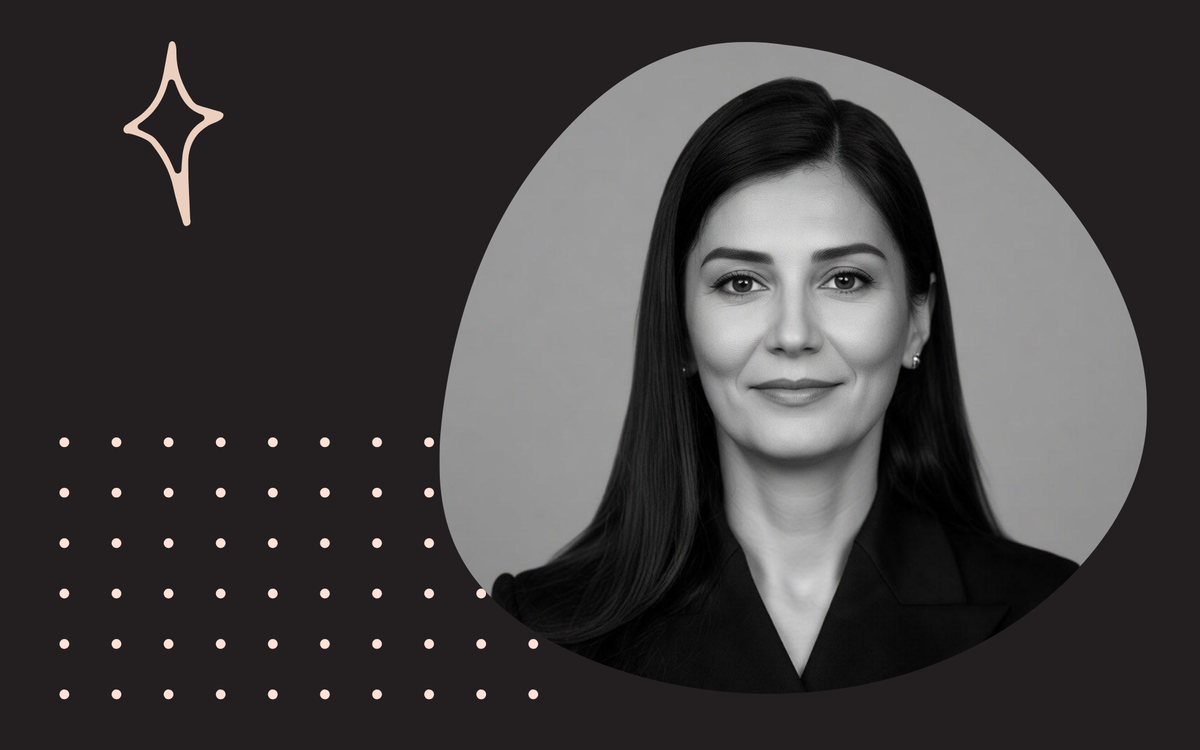
There are women who enter rooms - and women who change what happens inside them. Shqipe Neziri Vela is firmly in the second category.
With over two decades of experience spanning energy governance, anti-corruption, and international development across various countries worldwide, Shqipe has built a career defined not by proximity to power, but by the persistent, unglamorous work of redistributing it. As co-founder and chairperson of Kosovo Women in Energy and Mining (WEM), she turned an informal circle of isolated professionals into a network of 100+ members actively shaping national policy. As a programme manager at the EITI International Secretariat, an association of 57 states, she leads various funded initiatives holding governments accountable for how they manage their most valuable natural resources. And as a mentor to emerging leaders across Afghanistan, South Africa, Sudan, Kenya, and beyond, she is quietly multiplying her impact across borders and generations.
In 2025, Reuters named her one of the Top 10 Women in the Global Energy Sector - a recognition that reflects not just her individual achievements, but the movement she has helped build.
In this conversation, Shqipe shares what the early days of WEM actually looked like, what it takes to move from being present in male-dominated industries to shaping their direction, and how she sustains systemic impact across multiple roles - including, as she is clear to say, being a mother of two.
Q: You’ve spent 20+ years working across energy, extractive industries, and anti-corruption in many countries, and co-founded Kosovo Women in Energy and Mining to ensure women aren’t just present in the room but influencing policy. For female founders building networks and movements from scratch, what did the early days of WEM actually look like, and how do you turn a network of 100+ professionals into real policy change?
Kosovo Women in Energy and Mining (WEM) was established in February 2022 as a professional network of women working across Kosovo’s energy and mining sectors, bringing together experts from government, private companies, academia, civil society, and international organizations. Today, it includes over 100 voluntary members from Kosovo and abroad.
The early days of WEM were very informal and built on trust. It started with a small group of women working across Kosovo’s energy and mining sectors who rarely had a structured space to connect, despite being part of the same ecosystem. The initial focus was simply to bring together professionals who were already in the system but operating in isolation.
This network was created to address the lack of supportive professional networks and the absence of structured mentorship for women in energy and mining. As my own experience in the sector grew, so did my awareness of the gaps created by the limited presence of women in decision-making roles and the lack of clear pathways for professional advancement. Many talented young women were entering the sector, but they often faced barriers such as limited access to mentorship, weak support systems, and constrained career progression. At that stage, there was no immediate ambition for WEM to become a policy actor. The priority was to understand where women were positioned across institutions, map existing expertise, and identify structural barriers in both technical and leadership roles. This early work revealed both the depth of untapped talent and the lack of coordination across the sector.
Through our work, hundreds of students and early- to mid-career professionals have benefited from free trainings and mentoring. The network provides a space for women to share experiences, develop skills, and build long-term professional connections. Through capacity-building activities, mentoring, and engagement in international networks such as the Global Women’s Network for the Energy Transition (GWNET) and the International Women in Mining (IWiM), WEM has strengthened women’s participation in the energy and mining sectors while also contributing to shifting perceptions of women’s roles in these strategic fields.
One of the most encouraging outcomes has been seeing tangible change in young women entering the sector with greater confidence, ambition, and access to support than previous generations. Likewise, the growing presence of women in decision-making positions is a positive development. Through the network, we have created a space where women feel supported, included, and encouraged to take on larger roles, generating a long-term positive impact across the sector.
As the network evolved, the shift toward policy engagement happened organically and gradually became more structured. Instead of focusing solely on networking, WEM began aligning its work with specific policy processes and producing coordinated, evidence-based input. We have also contributed to working groups, including Kosovo’s Energy and Mining Strategy. Over time, WEM has become recognized not simply for its size, but for its role as a credible stakeholder that connects technical expertise with policy dialogue and reform processes.
Are you a woman leader with a story to tell? We'd love to feature you. Get in touch at hi@foundedbywomen.org
Q: You mentor emerging leaders from various countries, including Afghanistan, South Africa, Sudan, Germany, and Kenya, contribute to global networks like the Global Women’s Network for the Energy Transition and Women in Green Hydrogen, and served on the Advisory Council of International Women in Mining. You were named by Reuters among the Top 10 Women in the Global Energy Sector in 2025, and received the Equality in Energy Transitions Woman of Distinction Award from the International Energy Agency and the Clean Energy Ministerial. What have you learned about building influence across borders and cultures, and what does it actually take for women to move from being present in male-dominated industries to shaping their direction?
Building influence across borders requires consistency more than visibility. Working across countries and institutional contexts has shown me that systems differ significantly, but credibility, reliability, and technical clarity always translate. People may operate in different political and cultural environments, but they recognize rigor, fairness, and substance.
Cross-border influence is not built through occasional participation in high-level forums or networks. It is built through sustained contribution over time, showing up repeatedly in relevant spaces, delivering quality input, and being someone whose analysis others can rely on when decisions are being made. Trust is accumulated through consistency, not moments of exposure.
For women in male-dominated sectors like energy and mining, moving from presence to influence requires a shift in role identity. Presence is being invited into the room; influence is shaping what the room discusses, prioritizes, and ultimately decides. That shift happens when women are not only participating in conversations, but setting agendas, framing problems, and contributing solutions that decision-makers adopt.
A key barrier remains structural rather than individual. Many women are highly capable and technically strong, but lack sponsorship, meaning senior leaders who actively advocate for their progression into decision-making roles. Unlike mentorship, sponsorship directly affects access, visibility, and appointment to leadership positions, and is often the missing link in advancement.
There has been progress, particularly in the visibility of women in energy transition platforms and the growth of global networks such as GWNET and IWIM. However, representation at senior decision-making levels is still limited. Real influence is reached when women are consistently positioned not only as contributors or experts, but as decision-makers shaping institutional and policy direction.
Q: You balance leading programs at the EITI International Secretariat, mentoring students and early-career energy professionals, publishing and peer-reviewing research, and driving WEM’s mission simultaneously, while being a mother of two. For women navigating leadership across multiple sectors at once, what keeps you grounded, and what is your advice for women who want to make systemic impact without burning out?
For women navigating leadership across multiple sectors at once, what keeps me grounded is being intentional about how I work rather than trying to do everything at the same time. Over time, I’ve learned that clarity on priorities matters more than constant responsiveness, and that not every opportunity or demand requires immediate attention.
I am also a mother of two, and that part of my life is very important to me. It requires time, presence, and attention, and it has shaped how I think about focus and prioritization in a very real way. It is not separate from my professional life; it is part of what grounds it. There are moments when the pace becomes intense, but I’ve also learned to step back when needed, recalibrate, and return with focus. Taking a break when possible is important for sustaining long-term work across multiple roles and sectors.
Early in my career, I sometimes questioned whether the pace and complexity were sustainable. What kept me in the sector was seeing tangible outcomes, policy frameworks being shaped, renewable energy projects being implemented, and women advancing into leadership positions through structured support. That sense of impact made the work feel meaningful and worth continuing. Sustainability in leadership comes from structure, protecting focused time, delegating responsibility, and building trust in others to carry parts of the work. It also means being selective about commitments and understanding that saying no is part of maintaining focus, not limiting ambition.
For women who want to make systemic impact, my advice is to focus on depth over volume. Build strong technical and policy expertise, seek both mentors and sponsors, and take on roles that stretch capability without constant overload. Real impact is not about being everywhere at once, but about consistent contribution over time and building systems where others can grow and lead alongside you.
Are you a woman leader with a story to tell? We'd love to feature you. Get in touch at hi@foundedbywomen.org