From Retail to Royalty to Running Her Own Show: Astrid Davies on Leadership for "Accidental Leaders" and Why Groupthink Dooms Organizations

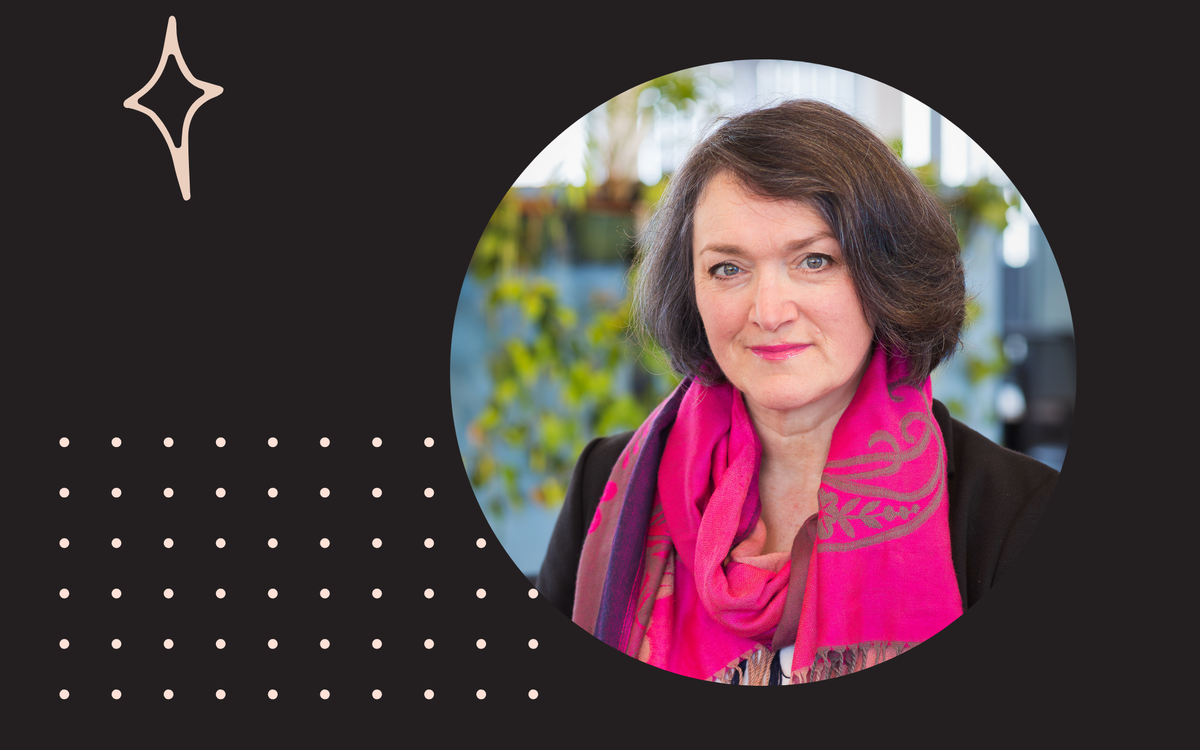
After 35 years leading high-performing teams across private, public, and voluntary sectors—navigating everything from high street retail to property (where she worked with Royalty and Hollywood A-listers)—Astrid Davies MA FIoL decided she wanted to "run her own show." In 2017, she founded Astrid Davies Consulting, an ethical leadership consultancy focused on responsible and sustainable leadership development.
Astrid's practice spans corporate teams, public sector organizations, and charity boards (which represent about a quarter of her client work), and she's particularly passionate about supporting "accidental leaders"—people who find themselves in leadership positions without formal training or preparation. She's also the creator of Future Leaders Breakfast®, a networking and leadership development series for young professionals new to management, and she serves as a mentor and guest lecturer at the University of Southampton, supporting Enactus entrepreneurs building social enterprises.
As a Fellow of the Institute of Leadership (FIoL), Astrid brings a no-nonsense, straight-talking approach to leadership development, tackling everything from the perils of groupthink and failure to speak truth to power, to building resilient teams that can weather change without burning out. Her philosophy? Leadership skills are like baking a cake—you can't just make up the recipe as you go along and expect it to work.
In this Q&A, Astrid shares what her "circuitous career journey" (from retail to property to public service) taught her about leadership, why the biggest mistake companies make when hiring C-suite talent is ignoring culture, and her urgent message about sustainability: "If our leaders across economies don't start taking this seriously, we'll be OK but our grandchildren will be living in Hell. I don't want that on my watch."
1. You've spent 30 years leading high-performing teams across private, public, and voluntary sectors before founding Astrid Davies Consulting. What prompted you to make the leap into consultancy, and how did your eclectic background shape the way you approach leadership development today?
I chose consultancy because, after 35 years of working for other people, I wanted to run my own show. That was partly to have control over the context and values which shape my company and partly so I could feel fully responsible and accountable for my work. This made it feel real and this desire is a reflection of the commitment that I bring to all my client work.
My circuitous career journey (I like eclectic) gave me many skills which I have chosen to transfer and harness, to shape my leadership development approaches. From high street retail, I took agility, responsiveness and being able to not take things personally. From my time in property I took the ability to work with people at all levels (including Royalty and Hollywood A listers) and to build political skills that have served me well. Both these contexts gave me huge levels of customer service experience, which I have used throughout my career. And in public service, I really took from that the importance of value for money, and also a deep appreciation of the challenges that people face in all walks of life. Leadership was a key thread throughout these different stages in my career, both developing my own and observing good (and the less good) examples of effective leadership in others.
2. Your client work spans private, public, and voluntary sectors (with charities representing about a quarter of your practice). Across these different environments, what are the most common leadership challenges you encounter, and how does your approach to leadership development adapt based on whether you're working with a corporate team, a public sector organization, or a charity board?
There are several leadership challenges, but I think the top three would probably be:
The perils of "groupthink". Affinity and confirmation bias (aka "people like us are right") is a sure way to arrive at poorly-informed and positioned strategic decision-making. It's easy to do but often very hard to challenge from within. That's where I come in!
Failure to speak truth to power. I often refer to the Challenger and Columbia disasters, where failure to speak truth to power at NASA led to very public loss of life. There HAVE to be leaders at the top of an organisation that are prepared to hear bad news. Any organisation is doomed if that isn't in place.
Taking responsibility, particularly in times of change. It is too easy for people to be passive (or even passive-aggressive) in the Board room and allow mistakes to go unchallenged because it wasn't that individual's place. Commitment to shared endeavour will always result in better outcomes for organisations and the people they serve.
My approach to leadership development remains largely the same, because the principles of effective leadership transcend the operational environment to a significant degree. That said, there are very different pressures on a leader in a charity that needs to raise cash to keep a hospice open every day, from a leader running a national accountancy practice. So, I would say that an effective leadership approach translates across sectors, but then the context in which that leadership takes place forms an important completing piece of the puzzle. And that differs from context to context, and from individual to individual. I find that profiling tools and other objective ways to demonstrate strengths can build bridges into other worlds and sectors.
3. You write about "accidental leaders" - people who find themselves in leadership positions without formal training or preparation. Why is this such a critical issue for organizations today, and what's your approach to helping these accidental leaders evolve into confident, purposeful leaders?
People are expected to lead effectively, but how can they, when they don't know what good is? If you were making a cake and didn't use the right ingredients because you were making the recipe up as you went along, it's unlikely it would work. Most things in life are like that and leadership is most certainly so.
So I see my role as first building confidence that accidental leaders are doing the best they can, and then helping them understand and develop their own parameters for what good means in their context. A good leader in a small local charity might well be very different from a good leader in a big law firm. They will, however, share some common threads of skill, competence and inclination: strong communication skills (listening, then speaking); strong observation skills (I encourage them all to "notice" what goes on in their work environment and that in itself can be transformative); strong appetite for accountability, so they know their role and fulfil it clearly and well; strong motivational skills (the ability to meet their team on their terms and bring them with the leader on the collective journey). I also always include an emphasis on purpose – what is it that drives them on? My practice focuses on responsible leadership, so I always emphasise sustainability too. If our leaders across economies don't start taking this seriously, we'll be OK but our grandchildren will be living in Hell. I don't want that on my watch.
Are you a woman leader with an inspiring journey to tell? Founded by Women is on a mission to elevate and amplify the voices of women making an impact.
If you're breaking barriers, driving change, or paving the way for others, we’d love to feature your story. Get in touch with us today!
👉 hi@foundedbywomen.org