From P&G and Big Pharma to Founding iWisdom: Ishil K. Ozturk on Building a Biopharma Consultancy That Advocates Instead of Advises, Navigating Male-Dominated Markets, and Why Business Development Takes Longer Than You Think
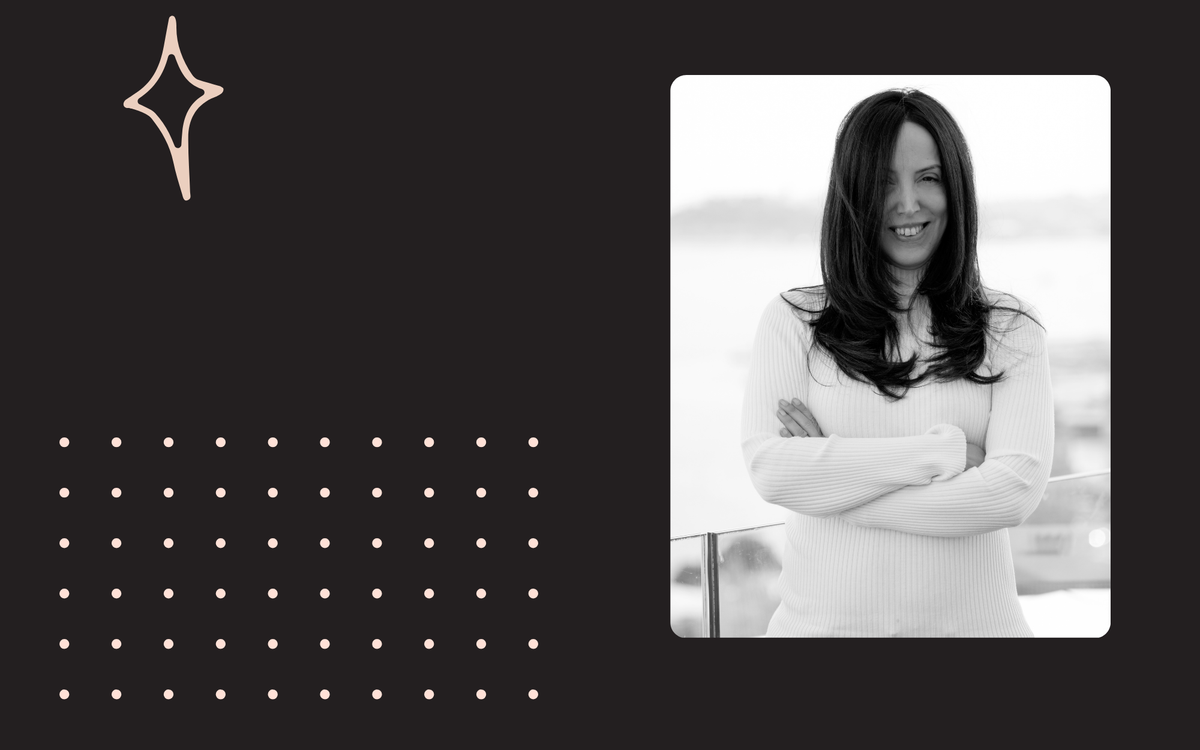
Ishil K. Ozturk knows what most consultancies get wrong: they deliver brilliant strategy, present polished slides, and disappear just as assets hit their most vulnerable phase (commercialization, governance battles, and investor scrutiny). After building her career at the intersection of management consultancy and operating roles at Procter & Gamble and Big Pharma, where she led global commercial operations, Ishil founded iWisdom to close that gap. iWisdom isn't a traditional consultancy. It's a biopharma growth accelerator that doesn't just advise; it advocates, staying with clients through the messy, high-stakes work of actually executing strategy.
Based in London with offices in Boston and Riyadh, iWisdom operates at the intersection of science, commercialization, governance, and capital. The firm works with biotechs, early-stage assets, and Big Pharma clients navigating complex portfolio decisions, regulatory advocacy, investor narratives, and commercial launches. Ishil's approach is built on hard-earned lessons: waiting outside SVP offices for hours to earn trust, rebuilding her consultancy from scratch after relocating and becoming a mother, and learning to navigate deeply male-dominated business cultures, from Big Pharma boardrooms to Middle Eastern markets, without fighting systems but by understanding and strategically working within them.
Her philosophy is pragmatic and unflinching. She doesn't work with average performers ("they will drain time, energy, and reputation"). She believes social development must come before business development when building senior relationships. She's unapologetic about the fact that "there is no perfect work-life balance," even when you try desperately. And she's learned the hard way that business development in biopharma takes 18 to 24 months, that budgets always cost double what you expect, and that "you will be hit many, many times" along the way.
For female founders building specialized consultancies, navigating male-dominated industries, or trying to monetize deep expertise without corporate infrastructure, Ishil's story offers rare honesty about what actually works when you're bootstrapping, outgunned, and operating in spaces where credibility isn't given. It's earned one relationship, one hard conversation, and one executed strategy at a time.
In this conversation, Ishil shares how she left Big Pharma to bet on herself, why iWisdom brought in a male regional partner to crack the Middle Eastern market (and why that was smart governance, not compromise), her framework for deciding which clients to take on, and the lessons she wishes she'd known earlier about building a purpose-driven consultancy that doesn't just survive but thrives.
Founding iWisdom - Building a BioPharma Growth Accelerator That Bridges Innovation and Commercialization
Q: You're the Founder and Head of US for iWisdom, a life sciences and biopharma consultancy based in London that operates across 85 countries with over 120 years of combined team expertise. iWisdom works at the intersection of commercialization, strategic advisory, and investment, helping biotech and pharma companies extract maximum value from their portfolios through governance, launch optimization, geographic expansion, and investor readiness. Your team has worked on over 50 assets with a combined $10 billion valuation and facilitated $2 billion in transactions. What inspired you to launch iWisdom, and what specific gap did you see in the biopharma consultancy landscape? How did you build a consultancy model that goes beyond traditional advisory work to actually advocate for clients within the industry? Walk us through your early days from concept to establishing credibility with major biopharma players, and share pivotal moments or lessons learned that shaped how you built the business.
Founding iWisdom: Building a Consultancy That Actually Stays With the Work
Seeing the Gap Up Close
I built my career at the intersection of management consultancy and operating roles, starting at Procter & Gamble and then spending many years working with and inside GSK. That dual exposure showed me something early on: Great strategy doesn't fail because it's wrong; it fails because no one stays to fight for it. Traditional consultancies are excellent at analysis and frameworks, but often step away just as assets enter their most fragile phase: commercialization, internal governance, and investor scrutiny.
Why I Built iWisdom
I founded iWisdom to close that gap. The idea was simple but unconventional: Don't just advise. Advocate. That meant standing behind assets, defending strategy in executive rooms, shaping investor narratives, and staying involved through execution, not just presenting slides and leaving.
The Early Days: Betting on Myself Before Anyone Else Did
One of the most defining moments was leaving traditional consulting to become independent. I was young enough to take the risk, and I worked relentlessly: long days, weekends, constant travel, showing up early, staying late, waiting outside VP and SVP offices for hours just to have a conversation. Trust didn't come from a title. It came from consistency, judgment, and delivering quality work over time.
When the President of Europe became Global CEO, leadership around him evolved, and so did the scope of my work. I began leading more global, higher-stakes programs, which forced me to shift my mindset from executing tasks to owning outcomes. That period taught me something important: credibility compounds, quietly.
Motherhood, Relocation, and Reinvention
A second pivotal moment came when I gave birth and relocated back to my home country. Overnight, I left behind certainty, systems, and familiar networks. It was a cultural shock but also a powerful lesson in resilience. I rebuilt from scratch: established a local consultancy, worked with high-net-worth pharma entrepreneurs, and learned how value creation looks outside Western pharma structures. Those four years fundamentally shaped how iWisdom operates globally today—adaptable, context-aware, and culturally fluent.
iWisdom Today: Purpose Meets Execution
After the pandemic, we returned to London, and a leadership shift at GSK opened the door to a new kind of collaboration around early commercialization and pipeline strategy. That's when iWisdom fully took shape as a biopharma growth accelerator sitting between science, commercialization, governance, and capital. We don't just advise on what should happen; we help make sure it does.
What I Learned Along the Way
In biopharma, credibility isn't built through branding or bravado. It's built by showing up repeatedly, staying when things get uncomfortable, and being willing to stand behind your point of view in rooms where it's not always welcome. iWisdom wasn't built overnight. It was built one relationship, one asset, and one hard conversation at a time.
As a Female Founder in BioPharma Consulting - Navigating a Male-Dominated Industry, Building a Global Network, and Establishing Thought Leadership
Q: As a female founder leading a specialized biopharma consultancy, you're operating in an industry where women remain significantly underrepresented in leadership positions, particularly in life sciences commercialization and investment advisory. iWisdom has built partnerships with major players like Greffex (advising on vaccine and gene therapy commercialization pathways), operates across multiple geographies (UK, US, MENA), and provides C-suite governance and investor-ready services. What have been your biggest challenges in scaling iWisdom? This could include establishing credibility with male-dominated pharma executives, fundraising or bootstrapping the consultancy, building a global team and network, or competing against larger established consulting firms. How did you overcome these obstacles? Specifically as a woman entrepreneur in biopharma, what strategies have worked for you in building trust with C-suite executives, investors, and pharmaceutical companies? What gender-specific challenges (if any) have you encountered, and how did you address them?
Scaling iWisdom as a Woman in Biopharma: Power, Trust, and Playing the Long Game
Acknowledging the Reality—Without Fighting the Wrong Battle
Yes, biopharma is still male dominated, and the "big boys' club" absolutely exists. Early on, I made a conscious decision not to fight the system, but to understand it. My strategy was pragmatic: acknowledge the power dynamics, map them carefully, and work with them rather than burning energy resisting them.
How I Built Credibility With Senior, Male-Dominated Leadership
I created a stakeholder map of key decision-makers across pharma, biotech, and investment. I cross-referenced that list with people who knew me from work, school and academic networks, and personal introductions. This allowed for high-trust, 1:1 entry points rather than cold institutional interactions.
I intentionally avoided starting relationships with "work." I almost never led with Zoom meetings. When meeting senior leaders, we talked first about life, curiosity, passion, and shared interests. Business always came later, and more naturally. I strongly believe social development before business development is one of the most effective ways to build real trust with senior stakeholders.
Navigating Regional and Cultural Differences
Expanding into the Middle East was one of the toughest challenges I've faced. It is the most clearly male-led business culture I've experienced. Initially, I lost time trying to understand and adapt on my own. The solution was partnership, not persistence alone. We brought in a regional leader with deep credibility and trust: a strong, experienced male executive who already had long-standing relationships. This wasn't a compromise of leadership; it was smart governance. It allowed iWisdom to move faster, with cultural fluency and mutual respect.
When things are going well, male-female dynamics often fade into the background. When conflict arises, they can resurface quickly. My approach has always been: build strong, mixed-gender executive teams, ensure legal and contractual rigor early, and never rely on goodwill alone. Structure protects credibility.
Competing Without Competing
We don't compete with large consulting firms in the traditional sense. Our value proposition is different: tailored programs, asset-level execution, and deep commercialization experience. We focus where large firms don't: biotechs, early commercialization, and situations requiring advocacy, not analysis. In Big Pharma, we only engage through trusted networks where our work is already understood.
The biggest differentiator for iWisdom has been real execution experience. Our teams are deliberately mixed: operators who have launched and commercialized, and consultants who can structure, position, and value. Knowing how and where to sell assets in the real world consistently wins trust.
Bootstrapping Lessons I Learned the Hard Way
Bootstrapping is especially difficult when you're heavily reliant on one large client. The income feels safe until it isn't. My biggest lesson: never stop business development. Even when workload is overwhelming, force yourself to spend at least 10% of your time networking, attending key events, and building future pipelines.
Business development in biopharma is slow: 18 months is optimistic, 2 years is normal. The key is not to give up too early. Relationships compound, but only if you keep showing up.
What Ultimately Worked
Respecting power structures without being defined by them, building trust socially before commercially, partnering intelligently where culture matters, and staying focused on execution, not optics.
Building a Purpose-Driven BioPharma Consultancy - Your Framework for Impact and Practical Advice for Women Entrepreneurs in Life Sciences
Q: iWisdom operates on a philosophy that "uncertainty has an upside," focusing on commercialization (scrutinizing every stage to extract maximum portfolio value), advisory (board-level guidance, lobbying, regulatory advocacy), and investment (crafting optimal investor narratives, JVs, and valuations). Your team doesn't just make recommendations but walks with clients along the way and leverages your network of partners and alliances. What's been your framework for making key decisions about which clients to take on, how to price services, building a multi-disciplinary team (medical, marketing, commercialization experts), and balancing purpose-driven work with financial sustainability? How do you think about building a consultancy that creates meaningful impact in bringing essential breakthroughs to market while remaining commercially viable? What practical, actionable advice would you give to other women entrepreneurs looking to build consultancies or service businesses in highly specialized, technical industries like biopharma or life sciences? What do you wish you'd known when you started, and what would you do differently knowing what you know now?
Building a Purpose-Driven Consultancy: How I Think About Impact, Discipline, and Sustainability
Why "Uncertainty Has an Upside"
iWisdom was built on the belief that uncertainty is where value is created, not avoided. That's why our work spans commercialization (scrutinizing every stage to extract maximum portfolio value), advisory (board-level guidance, regulatory advocacy, and strategic positioning), and investment (shaping investor narratives, JVs, and valuations). We don't just make recommendations; we walk with clients, advocate for them, and stand behind decisions when it matters.
How I Decide Which Clients to Take On
There is no single framework that fits all, and that's the real differentiation. What matters is the lens you bring, and how that lens evolves with experience. I'm very selective: I don't work with average performers; they will drain time, energy, and reputation. Time is limited, and impact requires excellence on both sides. Clients are long-term relationships. You advocate for them, they advocate for you. You are only as strong as the weakest link in the chain, especially in small teams.
Pricing, Sustainability, and the Reality of Monetizing Networks
Monetizing your network outside a corporate setting is harder than it looks. One key lesson: start thinking about this much earlier than you think you need to. That means being present at key events and finding creative ways to connect. You don't need to attend every conference, but being in the same city matters. Relationships compound over time, but only if you show up consistently.
Building the Right Team
Our teams are intentionally multi-disciplinary: medical, marketing, and commercialization. I am very strict on performance. One underperformer in a small team can weaken the entire chain. Do not underestimate how damaging this can be. Excellence is not optional in this kind of work.
Having young people and younger minds around has kept us fresh and deeply in tune with reality. Acknowledging and embracing generational differences has been a pure joy and one of the most meaningful parts of building iWisdom. Putting the young together with the mature has been a fantastic combination. We cherish the energy, curiosity, and new perspectives younger colleagues bring. At the same time, we work with experts who may have formally retired but are very much full of life, insight, and value. That mix has created depth, balance, and better decision-making across the firm.
A Hard Truth About the Future of Consulting
Consultancies will not survive without AI. This is not plug-and-play: it takes years to build properly and requires serious investment. My advice: do not underestimate the time, cost, or strategic importance of this shift. Start much earlier than feels necessary.
What I Wish I'd Known Earlier
There is no perfect work-life balance, even when you try desperately. The only way it works at all is through constant, honest conversations with your children and your partner. These relationships need to be nurtured continuously. My biggest source of strength through this journey has been my family. Without that support, none of this would be possible.
What No One Tells You at the Start
It will take longer than you think to get to where you want to get to. It will cost double what your original budget is. You will be tested many, many times along the way. You will be hit many, many times because you are in the middle of all these assignments. In big corporate cultures, have the right advocates who have your back. In smaller companies, go with the flow and trust that the tide will eventually turn in your favor. Your advocates will be a great source of energy, resilience, and faith. Never underestimate how much they matter. When choosing partners, ambition match and shared drive are the number one factors, and the right due diligence often happens through your social and professional network. I strongly believe in dinners as one of the best ways to truly get to know your partners.
Practical Advice for Women Building Specialized Consultancies
Start monetizing your network earlier than feels comfortable. Invest in partnerships and collaborations before you "need" them. Avoid average in clients, partners, and hires. Accept that frameworks must evolve. And build a support system outside your business with the same care you build inside it. Exercise more, breathe more, and build a steel-like nervous system. Keep going.
"You can't connect the dots looking forward; you can only connect them looking backward." (Steve Jobs) So you have to trust that the dots will somehow connect in your future.
Are you a woman leader with an inspiring journey to tell? Founded by Women is on a mission to elevate and amplify the voices of women making an impact.
If you're breaking barriers, driving change, or paving the way for others, we’d love to feature your story. Get in touch with us today!
👉 hi@foundedbywomen.org