From Laid Off and "Captive" in a Cubicle to Founding YellowBook-CPE: Leita Hart-Fanta on Teaching Yellow Book Standards with a "Three-Ring Circus," Surviving Breast Cancer, and Why Healthcare Should Never Keep You from Entrepreneurship
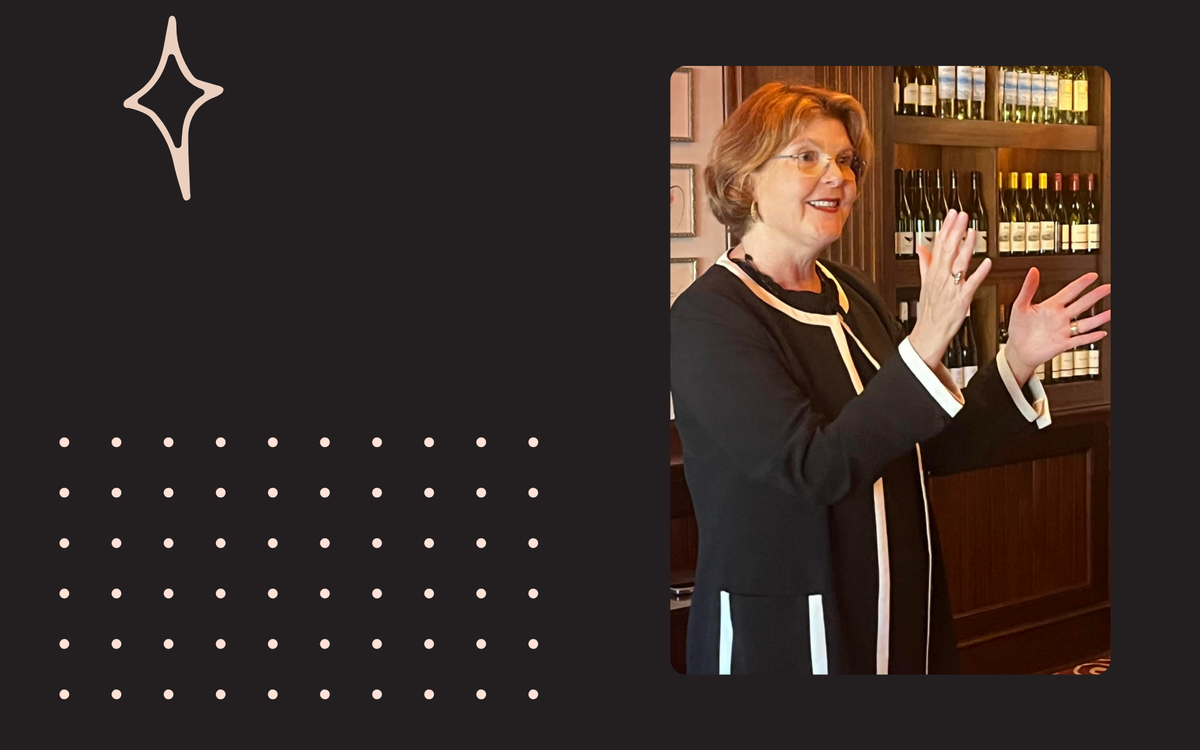
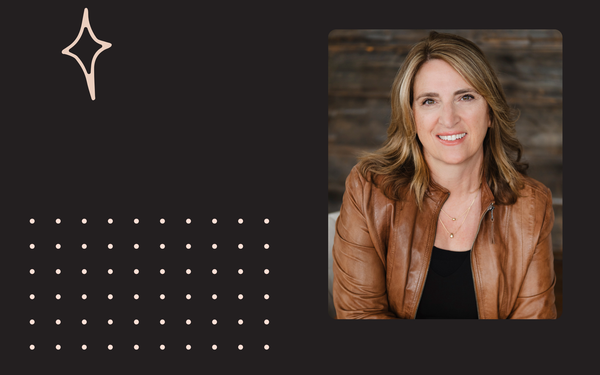
Leita Hart-Fanta, CPA is the founder of YellowBook-CPE.com, a government audit training company she launched in 1996 after seven years of feeling "captive" in traditional audit positions where she "went to work in the dark and left work in the dark." Today, YellowBook-CPE provides enjoyable, relevant, and NASBA-compliant continuing professional education to government auditors across all 50 states through live seminars, webinars, on-demand videos, and self-study texts.
But Leita's path to building a training empire wasn't linear. After graduating from the University of Texas at Austin with a degree in business (her father discouraged her from pursuing art history), she started her audit career in public accounting before moving to legislative auditing and federal grants controlling. Her first job out of college taught her that "stable audit positions are not stable" when her firm merged and she was laid off. That experience, combined with having two entrepreneur parents, planted the seed that "having one job was much shakier than having multiple clients."
The turning point came when Leita took the life-changing Johnson O'Connor aptitude test, which told her she was "made to be a teacher, marketer, and writer—NOT an accountant." The test literally said she should have been an art history professor (what she'd originally wanted at UT). "I cried at the results because they were so affirming of my instincts," she shares. After contemplating going back to school, she decided not to "ditch my hard-earned CPA and accounting degree but instead to use that knowledge to build a business."
Leita has since authored over 15 books, led over 3,000 conference sessions and seminars, and built a client roster that includes the US Department of Justice, the US Army, the US Department of the Interior, the Inspector General of the Texas Health and Human Services Commission, Walmart, Valero Energy, Deloitte, and dozens of state legislative auditors, city auditors, and county auditors. She regularly speaks for IIA and CPA chapters and is the instructor for Texas State University's Public Funds Investment Act program. She also hosts the "Auditors Save the World" podcast.
Students describe her teaching style as making "what I thought was going to be boring, over-my-head, and above my experience level a lot of fun and very understandable." One CPA firm owner notes: "Leita Hart-Fanta, as a teacher, has a way of explaining the concepts and providing examples that make learning fun and simple. In this last class we had a race to see who could answer correctly the most concepts we had just been taught—it was exciting."
Leita's approach to teaching dense audit standards involves what she calls a "three-ring circus": "In ring one, I tell you the facts and ask you questions. In ring two, you do silly exercises that help the facts sink in. In ring three, you practice what we learned and receive feedback from me." She uses technology like Mentimeter and Mural to keep things interactive, and before each course, she recites a "training manifesto" that includes: "Enjoy the crowd. Open the cameras and mics. Laugh often and hard. Show and guide. No shaming. Innovate in every class. Sing and play."
In 2024, Leita was diagnosed with breast cancer (she's "all better now!") and reassessed her activities, leading her to delegate more tasks and give other instructors platforms to shine on YellowBook-CPE. She's currently working on CPE tracking software and a certificate program set to launch in 2026.
Living in the Texas Hill Country with her fishing-obsessed husband and elderly pug, Leita remains passionate about helping auditors get training that doesn't feel like torture and about removing the barriers—especially healthcare—that keep people trapped in jobs that don't "jazz" them.
In this Q&A, Leita shares her journey from feeling captive in stable audit positions to building a training company that's survived 30 years, why she refused to hire bands that wouldn't play Beatles songs at her wedding (artistic integrity doesn't pay the bills at first), and why the "stupid healthcare system" is a "dark stain of shame" keeping people from entrepreneurship.
From Stable Audit Positions to Starting Your Own Training Company - Leaving the "Captive" Job Where You Worked in the Dark
Walk us through the decision to leave stable audit positions to start your own training company in the mid-1990s. What made you realize there was a gap in government audit training, and what advice would you give women in technical fields (accounting, auditing, compliance) who are considering building businesses around education and training?
My first job out of college taught me that "stable audit positions" are not stable. My firm merged with another firm and I was laid off. Add that to the fact that both of my parents are entrepreneurs, and I concluded that having one job was much shakier than having multiple clients. I figured that the likelihood of multiple clients all firing me at once was low. You know, the old "don't put all your eggs in one basket" saw? So, I was planning to be an entrepreneur very early in my career but was afraid to take the leap because so many folks argued that I should stay in my "secure" job with the state.
But the pain of the day-to-day secure job was what prompted my eventual move after having a "real job" for about 7 years. For my last "real job" I went to work in the dark and left work in the dark! I couldn't use my office phone for any personal business (this was pre-cell phones) and on my short lunch break, the line for the pay phone in the lobby was five people deep. I felt captive and yearned to take a walk in the sunlight. I also knew I wanted to have children. And there was no way I could have kids and be tied to a job like that.
So, I started exploring my options. I started using my time off to speak and build my resume. And then I took a few days off and took a life-changing test called the Johnson O'Connor aptitude test. This test told me that I was made to be a teacher, marketer, and writer—NOT an accountant. It literally said that I should have been an art history professor—which is what I was going for at UT before my dad told me he would not support that. I cried at the results because they were so affirming of my instincts. I can't recommend that test enough. Both of my kids took it when they were 16 to help shape their choices in college. After a year or so of contemplating going back to school to study art history or design, I decided not to ditch my hard-earned CPA and accounting degree but instead to use that knowledge to build a business.
My initial goal was to teach auditors to write as I had had a job as a writing coach and teacher at the Texas State Auditor's Office and really enjoyed it. But I soon found out that auditors thought they wrote just fine and didn't want training on that subject. Whoops! So I connected with a seminar company that provided CPE to CPAs across the country and taught budgeting, balanced scorecard and financial statement analysis for them. I traveled extensively for the next few years working for the AICPA, local chapters of Societies of CPAs, and Western CPE among others. Eventually, I started developing my own curriculum and started selling that to my customers.
What I developed was always based on a request. I didn't come up with my own ideas and try to push them on my customers. Instead, I responded to what they requested. That led me to getting work at Dell Computer and UT teaching Finance for Non-Financial Managers which led to me writing a few books. Over time, I realized that I wanted to work with auditors again—especially performance auditors because they are creative thinkers. And although I worked with Walmart and other corporations, I have more credibility in the government space. So I narrowed my focus to that crowd.
I'd advise anyone who wants to become an independent trainer to start by letting the customer tell you what they want and then refine your offerings over time. Don't be like some of those bands that I interviewed for my wedding who refused to play Beatles songs because it was an affront to their artistic integrity. Ha! Play the covers and make money at first. Once you get a reputation and the money starts flowing, you can be more selective. At first, your goal is to survive and then when you stick with it a while (5+ years) you can start refusing to do stuff you aren't jazzed about because there is plenty of work that you are jazzed about.
Teaching Dense Audit Standards with a "Three-Ring Circus" - Making Yellow Book Standards Stick
For female founders building education or training businesses in technical, complex, or traditionally "boring" fields, what's your framework for taking dense material (Yellow Book standards, GAAP, audit procedures) and making it stick? How do you balance being technically accurate while also being entertaining and memorable, and what advice would you give women about positioning themselves as instructors or educators when they're competing with traditional institutional training programs?
I study the heck out of the audit standards and know them as well or better than anyone. So, when I get asked a question, I know the answer. But I have a very narrow field of expertise! So, first of all, you have to know your content backwards and forwards.
And then I try to "play" with my audiences and have fun. We have all been in trainings where you were afraid you would fall out of your chair from boredom. Torture! So, I put on my goofy hat and say whacky silly things to keep their attention.
I think of my trainings like a three-ring circus. In ring one, I tell you the facts and ask you questions. In ring two, you do silly exercises that help the facts sink in. In ring three, you practice what we learned and receive feedback from me. And they never know what I am going to do next or what tricks I have up my sleeve. I love using technology—like Mentimeter and Mural—to keep things interactive and fun.
And before I begin each course, I say a little training manifesto that says: "Enjoy the crowd. Open the cameras and mics. Laugh often and hard. Do not force your opinions. Show and guide. No shaming. They do as they like. Innovate in every class. Remind folks you like their questions. Remember your privilege and gift. Sing and play. Check in on learning multiple times. Do silly things." If you love on your audience, they will love you back. I try to be very expressive and surprising in my presentations to make them more memorable.
It is pretty well impossible to beat the power of major brands of institutional training programs. You either join their roster (which I have) or you eat from the crumbs they leave under the table (which I have). There is plenty to go around but the large, trusted institutions get the lion's share. Do they deserve that trust? Not always. They get so big they often start phoning it in and disappointing their customers. And that is your opportunity. If you know your stuff and the audiences enjoy their time with you, enough business to sustain you will come your way. Over time, I have endeavored to become one of those trusted institutions myself—albeit a very tiny one.
From Solo Practitioner to Building a Team - Delegating, Surviving Cancer, and Why Healthcare Shouldn't Keep You from Entrepreneurship
For female founders scaling service-based or education businesses, what's your advice about knowing when to expand from solo practitioner to building a team and productizing your expertise? How did you decide which revenue streams to pursue (live training vs. self-study vs. corporate curricula development), and what would you tell women about maintaining quality and your unique voice as you scale beyond just delivering everything yourself?
This has been really hard for me to allow other folks to use my platform to present their content. At first, I got in there and tried to make other speakers as playful and interactive as I am and that did not work at all! Lots of hurt feelings and bad results all due to me trying to inflict help on them. Ha! So now we give instructors their own space and see what they can do. Sometimes these instructors aren't great and I have to fire them which is very unpleasant, but often they are better than me and the students love them. We have been experimenting with the volume of offerings and topics. It is a moving target and we don't have it mastered yet. But you have to start somewhere. And in writing this I realize that we are breaking one of my early rules of business—don't offer things that people don't want... don't "push" your content on others. So, I need to revisit that rule of thumb.
In studying brands, marketing, and succession planning, I decided that I wanted my company to be the brand, not me. Because if I'm the brand, the business dies when I die. I have a limited repertoire and limited energy to teach. In order to meet my clients' needs, YellowBook-CPE hires instructors in IT auditing, cybersecurity, agile, and leadership—none of which I feel like I have credibility around.
I am still teaching here and there and maybe my voice is still the "soul" of the company (I'm not objective about that), but since I wanted my company to grow and survive whatever happens to me, I had to recognize that I can only do so much. I can't both perform constantly and run the business. And in 2024, I was diagnosed with breast cancer (I'm all better now!) and reassessed a lot of my activities. Now I am proud to say that I delegate most tasks that I'm not jazzed about or don't have to do personally AND that I am giving other instructors a platform on which to shine. Delegation to super staff is absolutely the key to growth. And I have an amazingly competent and forward-thinking team.
I am always looking for new revenue streams and am working on CPE tracking software and a certificate program. Both should be out in 2026. I am big on getting started, experimenting, and adjusting. This last quarter, I think we learned a lot of hard and expensive lessons that will serve us well in 2026. You can plan all you want, but you can't plan all the risk away. So, I find that you have to try whatever it is and then tweak it... and tweak it... and tweak it.
Once a counselor told me that life is like sitting in a raft headed downstream. Sometimes you hit the bank and have to adjust to get back in the flow. Sometimes you hit rapids. Sometimes you get tangled up in a branch. Sometimes, you get to enjoy a gentle flow, but those little peaceful glides don't last long! You seldom get to stop paddling.
A business is like its own living person on its own river. The business has to be nurtured and cared for and it has to progress and grow, just like your personal life. In your personal life you have to resist stagnation and it must be resisted in business as well. Since receiving my cancer diagnosis, I have spent more time on personal growth and enjoyment and less about the business and the lack of nurturing and care on the business is showing up in the financials. So for the next year, I am working on taking care of both personal and business rather than one or the other. We'll see how that goes. And my business and personal life are intertwined and push each other on.
I will tell you that looking back over my career, as you have graciously prompted with your questions, I can see the Lord slowly showing me the next step. I didn't try to be a huge entity right away—by coming up with a fancy business plan and seeking venture capital. I have eschewed debt and control by another entity or person. So, I am not living large! But I just took the next logical step, which was always pointed out by the Lord. Any big mistakes I made I can now see were generated by fear. There is definitely something else (and I know it as God) bigger than us pulling the strings.
And one last thing related to fear. Many folks I talk to who say they want to own their own business say they can't work for themselves because they need the medical benefits provided by their employer. The stupid healthcare system and insurance system are dark stains of shame on our country. As if you couldn't tell, I am really pissed about how sucky the medical care situation is. If we all had access to medical benefits we wouldn't be bound to crappy employers. I have been on my own for 30 years now and have always had coverage. It is expensive. But not as expensive as selling your soul in a job that doesn't jazz you.
Are you a woman leader with an inspiring journey to tell? Founded by Women is on a mission to elevate and amplify the voices of women making an impact.
If you're breaking barriers, driving change, or paving the way for others, we’d love to feature your story. Get in touch with us today!
👉 hi@foundedbywomen.org