From Foundation to Freedom: How Elana Leoni Built a Mission-Driven EdTech Marketing Agency

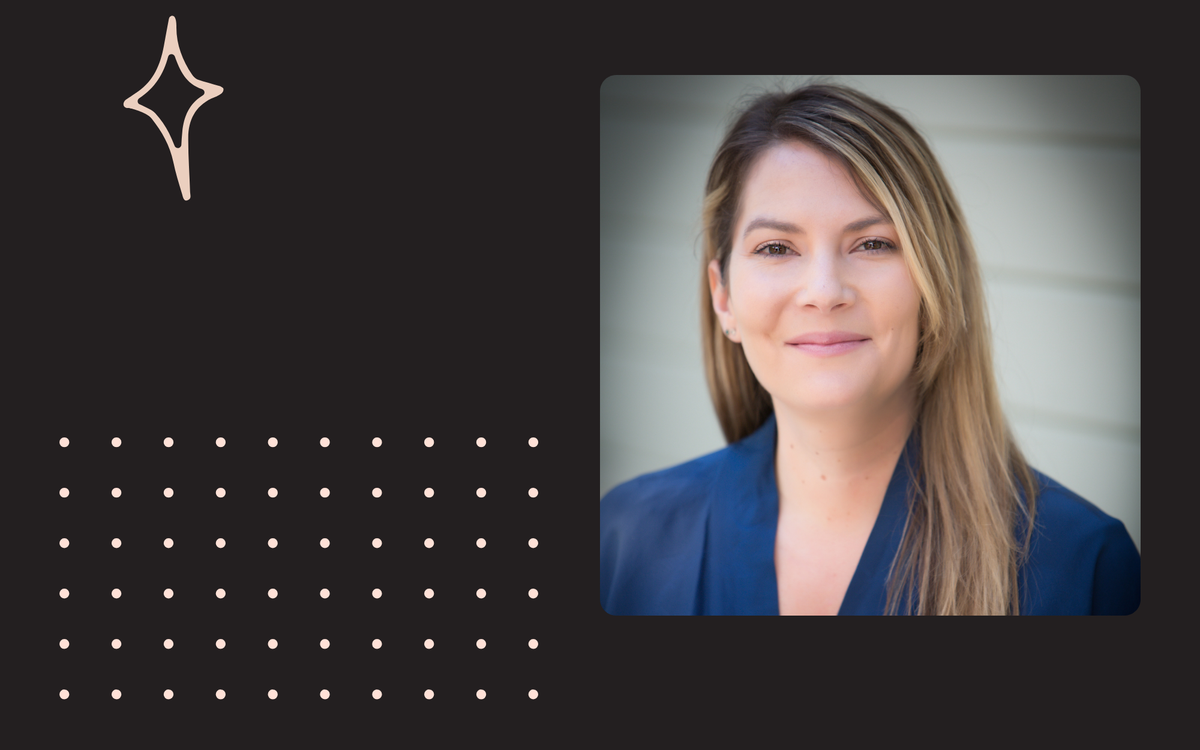
When Elana Leoni walked away from her role leading marketing at the George Lucas Educational Foundation, where she'd grown Edutopia's social media presence to reach over 20 million education changemakers monthly, most people thought she was crazy. Eight years at a nationally recognized brand backed by a billionaire founder doesn't exactly scream "time to start fresh."
But Elana had spent nearly a decade elevating educator voices and building authentic communities, and she knew her impact didn't have to stop at one brand. She saw an opportunity to work across the education ecosystem with EdTech startups, nonprofits, and mission-driven organizations of all sizes, helping them connect with diverse stakeholders while staying true to the human-centered marketing that drives real change.
Today, Leoni Consulting Group (LCG) has partnered with over 50 education brands in the past eight and a half years. The agency specializes in social media marketing, content creation, email marketing, and community building exclusively for the education space. What makes LCG unique isn't just their deep education expertise. It's their commitment to social impact. Through the LCG Foundation, originally established in partnership with Meta, the agency has given $498,500 directly to approximately 2,500 educators through micro-grants and classroom support, proving that profitability and purpose can coexist.
As a first-generation college graduate and daughter of an incarcerated parent, Elana brings a perspective to EdTech marketing that few can match. She understands firsthand how education can transform lives, and how critical it is that marketing in this space remains authentic, accessible, and equity-focused. From age six, she told anyone who would listen, "I just want to do something that makes money so my mom doesn't have to worry about money anymore." She sent schoolwork to her father in prison describing how she wanted to be a lawyer—or anything else that made money. That early drive shaped her path toward business, even as she minored in dance and French at Cal Poly San Luis Obispo, where she earned a scholarship as a "non-traditional business major" and became President of the Entrepreneurship Club. Though she would have chosen a more creative route if money hadn't been a concern, she eventually found ways to weave creativity into business—from analyzing how to turn around companies to developing engaging social media content.
In this conversation, Elana shares the real story behind leaving stability for entrepreneurship, how her personal experiences shape her approach to helping brands connect with diverse communities, and the hard lessons she's learned about balancing social impact with business sustainability in one of the toughest years the education industry has ever faced.
From Edutopia Empire to Agency Independence: The Transition Story
You spent eight years at the George Lucas Educational Foundation growing Edutopia's social media presence to reach over 20 million education changemakers monthly. That's an incredible platform and reach. What was the specific moment or realization that made you decide to leave that success behind and start LCG? How did you navigate the transition from having the backing of a major foundation to building your own client base from scratch?
First, I'd add an important nuance to the question. I didn't just grow Edutopia's social media—our charge, even though I probably didn't fully understand it at the time since I came in fairly junior, was to authentically elevate educator voices as much as possible to truly inspire others across the nation. How could we spotlight what truly works from educators' own voices and create this beautiful ricochet effect? We used social media to identify changemakers, those educators who didn't believe what they were doing was special. That was a truly amazing part of the work, and I feel humble to have been part of it. I eventually grew into a role leading all of their marketing efforts.
As for leaving, there wasn't one specific moment—there were multiple reasons. Something that kept itching in the back of my mind was feeling slightly typecast. I'd hear things like, "Oh, you can only do that with a big national brand that already has recognition," or "You can only talk to teachers." I knew I could do more. This brand was blessed with national reach, a billionaire at the helm with star recognition, and it talked really effectively to K-12 educators in the classroom. But I took that on as a challenge. I wanted to do more in the sphere of education, and I knew from my years at Edutopia that to truly make change in education, you have to talk to all stakeholders. You have to empower the ecosystem at large. I wanted to work with lots of brands that spoke to different stakeholders, with different products addressing different challenges. I'm able to say now that LCG has worked with over 50 brands in a very deep partnership capacity over the past eight and a half years.
I've also always been an entrepreneur in spirit. I started two companies before this—one was a cookie company with my family, and another was a tourism company with my best friend that lasted four years. I had excitement around doing my own thing and building a team from scratch where we could make impact together and really just focus on doing the work without managing huge departments or being in endless meetings.
My first move out of Edutopia wasn't actually to start my own thing—it was to step back and reflect on what I'd accomplished while taking a creative break and diving deeper into the foundation of marketing. I got an opportunity to attend the Executive MBA program at the Haas Business School at UC Berkeley (it's designed for returning professionals with at least 15+ years of experience). I learn by doing—that's why I love project-based learning and all the strategies Edutopia emphasized. During my time at Haas, I entered startup competitions. Our team won the Hult Prize regional competition at Cal with a startup called HomeFluent—a mobile product designed to help incoming refugees resettle quicker and more effectively by empowering case workers, NGOs, and refugees through an AI-Powered Chatbot. We went to nationals where we made it to the finals, and won the Dean's scholarship. We were developing it throughout, applying the principles we learned in school to the startup.
During all of that time, I thought, what better time would it be to really incubate my own thing and start something? It initially started as consulting to see how it works and to wayfind to a product-market fit of clients in education. I knew I would never want to be a one-person show—I love building teams and doing things together. So I slowly started building in more teammates as my demand increased, making sure it aligned with my passion and what I liked doing as much as possible. The Executive Program at Haas was 18 months, and during that time, I built it from a consultancy to be able to start with a very small list of clients as an agency once I graduated.
As for navigating the transition from foundation backing to building my own client base—that's a really valid question. A foundation is stable with guaranteed money and resources. Building your own client base from scratch was hard. I tell everybody: if you're going out on your own and people aren't already asking for your services, don't go out on your own yet. You have to have a built-in network of people who know you and your work, and who have indicated that if you went on your own, they would work with you. I started getting more of that towards my later years at Edutopia. Once I signaled to folks that I was leaving, a couple of them said, "Hey, yes, let's work together."
I was very externally facing at Edutopia. I collaborated with lots of organizations—from Meta to the Born This Way Foundation to CASEL to PBL Works—so many well-respected organizations in education. I was in a lot of those meetings and forged friendships and relationships. Being able to continue that in a very value-driven way after I left is how I was able to jump from having foundation stability to building my own client base.
I did a listening tour as soon as I got out, where I talked to people and said, "What would you do if you were me?" By doing that, I was really signaling to them, "Hey, I'm thinking about going on my own. If you know of anyone, let me know," kind of activating them as referrals, but also in a very curious, learner-driven way.
Some of my first clients were The Teaching Channel, who I collaborated with at Edutopia. There was a startup called Insight Advance that got bought by The Teaching Channel—the person who ran that organization worked closely with us from a partnership perspective. Meta loved how we worked together, and they became one of our biggest clients for five years. They became such a big client that we created the LCG Foundation together with their funding and guidance.
A lot of venture capitalists and investors in EdTech knew me because I ran and helped run unconference-type events on the West Coast called EdCamps—unconferences where people would go and learn together with no sponsorships, no sit-and-get, really owning your own professional development. I worked closely with EdSurge (which was later purchased by ISTE). I attended all of EdSurge's meetups—it's a very small space and I was active in the EdTech community, where they hosted many meetups and cutting-edge discussions. I had a big network in the EdTech space too. I built upon the existing relationships within Edutopia and the reputation I created through eight years of work around the service lines we still offer in our agency—creating really great content, social media, and now we're getting more into email marketing.
The First-Generation Graduate Advantage in EdTech Marketing
In your podcast appearances, you've mentioned being a first-generation college graduate and having a parent who was incarcerated. These experiences often provide unique perspectives that can be powerful in business. How have these personal experiences shaped your approach to marketing for education brands, and how do you help your EdTech clients connect authentically with diverse communities they might not naturally understand?
My father was incarcerated for eight years, and I was a first-generation college graduate—I was almost a first-generation high school graduate. My dad graduated, but really they just graduated him because he had an externship for the last two years.
For most of my career, including all of my career at Edutopia, I was embarrassed about being first-generation and having a parent who was incarcerated. Most people wouldn't have known that from my Edutopia work—it was something I felt shame over. It wasn't until I went to the Haas Business School that they really taught me that what has happened to you in life is what makes you incredibly unique, and that you have this unique perspective.
For me, I didn't have a lot of people telling me that education is the way, or really being in my corner emphasizing the power of education and believing in me. It wasn't that my parents didn't believe in me, but they didn't have that focus. They never graduated—it's not that they didn't value education, but they didn't know any better not to value it, if that makes sense. I didn't have a lot of the same opportunities that many kids did. It was just by chance that I happened to have a great teacher in fourth grade who believed in me and helped catapult me into an area where I then believed in myself. School became something I could use to sometimes escape chaos and just have joy from learning.
For me, it made me angry and lit a fire that so many people—it's by chance, it's by happenstance—if they happen to have a great educator who believes in them. But what if you don't have that equity? What if you don't have that access? So many first-generation kids don't. You can't even put into words all the obstacles they face. When I think about working with brands, particularly the nonprofits in education that LCG works with, I want to make sure we're selective and working with brands that truly move the needle in education and can really help make education as accessible and equitable as possible, while making education super relevant. Education right now needs to be as relevant as possible because the world is moving at an exponentially fast rate.
When it comes to being first-gen, I now take pride in it. When I think about education, I think about the school-to-prison pipeline. I think about so many children who are born into circumstances that don't allow them private tutors, SAT guides and test prep to get them into college, or parents who know how to work the system or what college is really for, or allow students to actually study instead of taking part-time jobs to support the family. There's so many things around this that I know can be hard. I just want to be able to show that I went through it—I think you have to see it to believe it.
These personal experiences shape my approach to marketing. I always try to get brands to be as human-forward as possible. I know that sounds jargony, but be a human first. Get rid of all the fancy jargon. Make the words accessible. It's really important in social media in particular—how do you stop the scroll in a way that's uniquely you? That can really attract a diverse amount of audiences. It's about keeping it real, keeping it human-centered as much as possible.
I've been talking with people about AI and its role right now, and how it's really forcing humans to understand that their unique superpower is being human themselves. Someone said something I liked: "Humanity is the algorithm in 2026." How can we embrace fully who we are, our voice that no machine can take, our unique perspective on life, and really build deep relationships that in education can last for decades with the goal of improving learning outcomes?
As for how we help EdTech clients connect authentically with diverse communities—usually clients come to us with their prioritized ICPs, their ideal customer profiles. I don't think just because I come from a background of being first-gen and having an incarcerated parent that I'm uniquely qualified to talk to all diverse communities. One of my superpowers is being a huge empathy-driven person. What we end up doing, if we feel clients don't connect or are unintentionally not connecting with their prioritized audiences, is a lot on the research side—doing interviews with their ideal customers and ideal users and really getting into the psyche of what moves them, what they like to do in their pastime. We build out really comprehensive personas through lots of interviews. We did this three or four times with Meta alone, with different types of educators and different types of people in the ecosystem.
If they don't naturally understand their audience, and if it's prioritized and aligned with their business outcomes and operational plans, we will do interviews. We'll use lived experience in education as well to say, here's what their background typically is, here's what motivates them.
I joined the board of Mt. Tam College, formerly known as the Prison University Project. I was on the board for four years. That is the only accredited university that is physically based inside a prison. When I was on the board, we got the university accredited through the College Board—it was huge, an amazing experience. I try to channel those types of experiences as a child of an incarcerated parent into situations like that, where I talk about the school-to-prison pipeline.
My work in the agency is proactive work—let's get ahead of it. Let's make sure education doesn't create more people in our prison population. The more educated, the fewer people in our prison population. That's a proactive approach. But what happens to the people in prison? What if education can fundamentally transform who they are? I'm not just talking about a career pathway when they get out—that's great—but them as humans. If you haven't seen that transformation, it is goosebump-worthy. I like to work on both ends of that spectrum, and I have worked with nonprofits that mentor children who have incarcerated parents as well.
Building Community vs. Building Revenue: The LCG Foundation Model
You've created something unique with the LCG Foundation, giving away significant funds to teachers and supporting educators while running a for-profit marketing agency. Many entrepreneurs struggle with balancing social impact and business sustainability. How do you structure the relationship between LCG's revenue-generating work and the foundation's giving? What advice would you give other service-based business owners who want to create meaningful social impact without compromising their bottom line?
Through the LCG Foundation, we've given away $185,000 directly to educators through micro-grants and classroom support. But the question remains: how do you run a foundation that gives to teachers and supports educators while running a for-profit marketing agency? Many entrepreneurs do struggle with balancing social impact and business sustainability.
This is a hard one. I have a community of agency owners, and we coach and mentor each other to stay as focused as possible. Do less, do less very well. This is an example of doing more because you can, but also because it really aligns with your heart.
When Meta first approached us with this opportunity, we had been a five-year partner with them—or at the time, maybe a three-year partner—and a trusted partner. They wanted to give away micro-grants to educators to help them with their everyday needs, financially unrestricted grants so they could choose to do whatever they wanted professionally. They asked us multiple times if we could be a partner with them, and I said no respectfully multiple times because it just didn't fit. We're such a small team—how do we spend more resources to divert the team's effort into something that's not growing the agency and the impact of the agency?
But by the third time, I started looking at it and really scoping out what it would take to create this and understanding why they wanted us to do it versus anybody else. Once I scoped it out, I got more excited about the idea of being able to do it as seamlessly as possible and in a way that brings such joy to educators. Yes, micro-grants are not going to change the world. A micro-grant could be anything from $50 to $600—it's not going to change an educator's life. But it is a moment in time where educators felt seen, they felt heard. They put a smile on their face. You wouldn't believe the stories we've gotten around that. I'm really proud of the work we've done, but it doesn't mean it hasn't caused a strain on the agency itself.
The way I had to structure it is making sure that our core agency employees were generally not working on foundation things unless it aligned with their areas of expertise. The foundation itself was hiring LCG agency. For example, if they needed marketing help to market the program, or they needed somebody to help build their community—those types of things that aligned with our area of expertise within LCG. So short story: it's very hard. It wasn't the most strategic move for a small agency, but it really aligned with our passion to make a difference, and I couldn't say no because I knew we could do it better than anyone else, while being really cognizant about not diverting the path of the agency and the resources of the agency as much as possible.
I think there's a fallacy in our education industry, sometimes particularly in EdTech. One thing that stood out to me is when I interviewed an EdTech founder who said he would survey his employees and ask, "What do you want to do at the end of the year? Would you rather give money to educators or charities in education, or would you rather have Starbucks gift cards for yourself?" Most of the employees said, "No, we probably want stuff for us, because what we do in education is so helpful for them. Our product or service is already benefiting them."
I think there's a fallacy there, because there is no silver bullet to fixing and improving education. It's a combination of so many multitudes of things over so many years of time to make an impact. The fact of the matter is, a lot of EdTech actually hurts and doesn't help education. An EdTech company that spends a lifespan of six years and wastes the time of educators, wastes the time of people doing the pilots, and then they just bottom out—their runway's gone—and sometimes they leave educators high and dry without a quick replacement to the technology the educators relied on.
I'm not saying that's all the case, but I just want to bring light to: just because you're in education doesn't mean you shouldn't give and that you shouldn't do everything you can to really support educators who are in the trenches all the time and don't feel seen, don't feel heard. In fact, a lot of times they're micromanaged and completely underappreciated, often in very toxic environments. How do we help them? Your product or service can only do so much.
For other service-based businesses that want to create meaningful social impact, I wouldn't advise them to create a foundation. It is a lot of work, a lot of upkeep, and unless they're consistently going to be doing it, I wouldn't advise that. But I would advise: whatever you do, there are ways to integrate giving. There are ways to talk about helping the space as a whole beyond your product. It could be donations. It could be giving X percent of your product profits. Kind of the old-school Salesforce model by Benioff—I think it was the 1% model where he donated 1% of his employees' time to nonprofits and 1% of his profits. Eventually, with the 1% of his profits, he created a foundation because it was so large.
Try to find ways, small ways throughout the year, to really give back and to tell the story of your giving back. It's not tooting your own horn—it's talking about it in an industry that typically doesn't do it as much as they should, in my opinion.
I think business owners need to think about what they absolutely need to do for their business to reach their goals. Do not stray from that so you're not compromising your bottom line. This year in particular is the hardest year education has ever faced. To give you a sense in terms of agencies, the majority of them had to let people go. The majority of them are barely breaking even at the end of the year or operating at a loss. The uncertainty in the industry has caused a freezing of spending—people just did not spend. Now we're getting slightly back into a new normal, but there's more uncertainty with the government shutdown.
Business first. We actually had to dial a lot of our foundation activities this year and a little bit last year to really hone in on stability and growth of our agency. Just because you have your eye on the prize for social impact doesn't mean you can't decrease it or halt it when you need to truly focus on your bottom line.
Are you a woman leader with an inspiring journey to tell? Founded by Women is on a mission to elevate and amplify the voices of women making an impact.
If you're breaking barriers, driving change, or paving the way for others, we’d love to feature your story. Get in touch with us today!
👉 hi@foundedbywomen.org