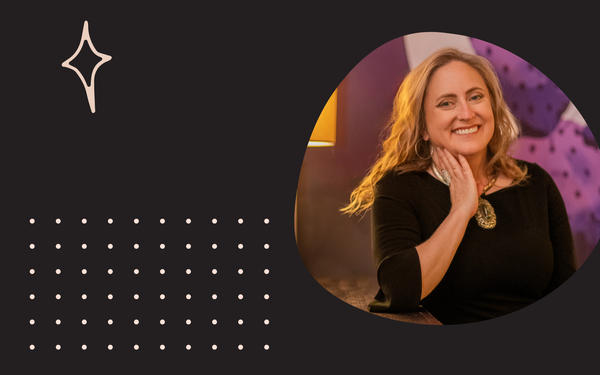
From Dual Bladder Cancer Diagnosis to Patient Advocate and Author: Margo Wickersham on Why Self-Advocacy Saved Her Life, Balancing Revenue Growth Consulting with Cancer Advocacy, and What "Self-Care Isn't Selfish" Really Means
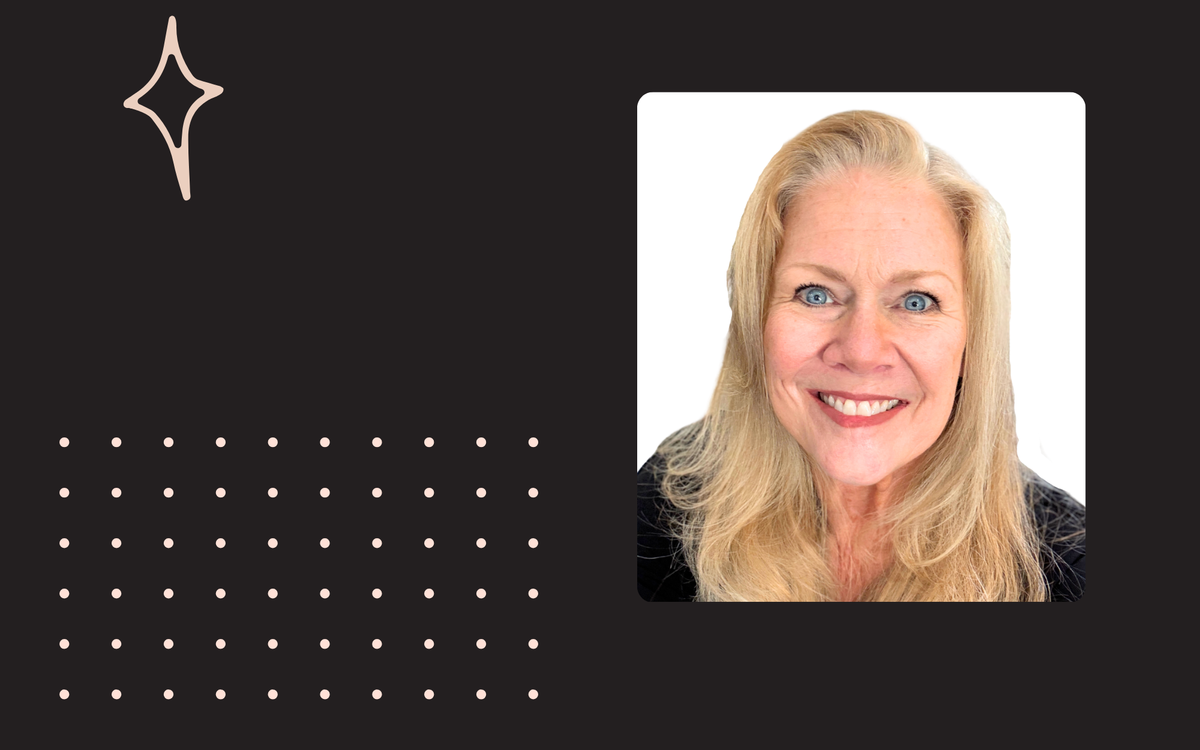
In November 2019, Margo Wickersham noticed blood in her urine. She thought she had a urinary tract infection. Three months later, she was diagnosed with bladder cancer. Her first doctor diagnosed her with Stage 1 High Grade Urethral Carcinoma and prescribed BCG therapy. But something didn't feel right, and Margo trusted her instincts.
A second opinion at MD Anderson saved her life. When Dr. Ashish Kamat's team reviewed the same slides her previous doctors had examined, MD Anderson pathologists found a second, usually fatal form of bladder cancer that the first doctor missed: plasmacytoid bladder cancer, which occurs in only about 1% of bladder cancer cases and almost always comes back. Her MD Anderson doctor told her she'd be gone in a year if she'd followed the first doctor's recommended treatment.
The diagnosis came during COVID. Margo endured eight weeks of aggressive chemotherapy, followed by a radical cystectomy and hysterectomy in June 2020. Her bladder, uterus, cervix, and all adjacent lymph nodes were removed. Despite crippling loneliness and despair from enduring many days and nights alone in the hospital due to quarantine, she survived. Six weeks after her surgery, while waiting to find out if she was cancer-free, her mother died. She never saw her again after December 2019 because of COVID restrictions.
Margo didn't set out to become a bladder cancer influencer. She set out to not die. But when she learned how common bladder cancer is (20-30% of bladder cancer diagnoses are underdiagnosed or incomplete) and how often it's misdiagnosed in women, leading to worse survival rates, she knew she would use her voice to raise awareness and help save lives. She wrote Gratitude in the Storm: When Not Dying Is Enough to Keep Fighting, sharing how fierce self-advocacy and gratitude saved her life.
Beyond her patient advocacy work, Margo is a revenue growth expert, keynote speaker, and fractional Chief Revenue Officer helping organizations transform how their teams work, connect, and thrive. She's led revenue growth for major companies (including managing Dell.com's redesign, increasing daily revenue by 500% from $1M to $5M) and held executive roles at Clearwater, Healthcare2U, and Blue Goji. She's a high-energy speaker who delivers clear, actionable techniques from a genuine desire to serve, and she's been praised for sharing her cancer journey with "raw vulnerability, humor, and gratitude."
Margo helps organize BCAN's Walk to End Bladder Cancer in Austin and participates in cancer advocacy work, but she's learned to set boundaries because "I need to take care of me so that I can also be there for other people." She lives with the reality that plasmacytoid bladder cancer has a very high recurrence rate. She puts her worries in a "Tupperware container" on a shelf, acknowledging them without letting them consume her. She's been cancer-free since her surgery, though she undergoes annual monitoring at MD Anderson with CT scans and blood work.
In this conversation, Margo shares the moment she realized she needed to get a second opinion and what fierce self-advocacy looked like during COVID, how she balances revenue-focused consulting with patient advocacy without burning out, and what sustainable self-care actually looks like when you're living with the reality that cancer might come back. For women facing serious health challenges, building businesses that blend professional expertise with personal mission, or managing demanding careers alongside personal crises, Margo's story offers practical, raw, and honest guidance about trusting your instincts, setting boundaries, and creating a life that's worth fighting for—not just surviving, but truly thriving.
"Did You Set Out to Become a Bladder Cancer Influencer?" - From Life-Threatening Diagnosis During COVID to Patient Advocate and Author
Q: You didn't set out to become a bladder cancer influencer—you set out to not die. Bladder cancer came for you during COVID, and your first doctor diagnosed you with Stage 1 High Grade Urethral Carcinoma and prescribed BCG therapy. A second opinion at MD Anderson saved your life when doctors found a second, usually fatal form of bladder cancer (plasmacytoid) that the first doctor missed. Your MD Anderson doctor said you'd be gone in a year if you followed the first doctor's recommended treatment. After enduring treatment in isolation due to hospital quarantine, you survived and wrote Gratitude in the Storm: When Not Dying Is Enough to Keep Fighting. When you learned how often bladder cancer is misdiagnosed in women, you knew you would use your voice to raise awareness and help save lives. Walk us through the moment you realized you needed to get a second opinion, and what fierce self-advocacy looked like during COVID. For women facing serious health challenges or advocating for themselves in any high-stakes situation, what advice would you give about trusting your instincts and demanding better answers—even when it feels uncomfortable?
A: I’ll share 3 important pieces of advice for advocating for yourself.
1. Get a second or third opinion. A surprising percentage of diagnoses are incomplete or incorrect - up to 24%. I learned that 20% - 30% of bladder cancer diagnoses are underdiagnosed. That doesn't sound like a huge risk. But, the stage and type of cancer determines which treatment will be most effective. What would have worked for Stage 1 High Grade bladder cancer would have had no impact on the second form of bladder cancer my MD Anderson doctors found. It matters, so get another diagnosis or two.
2. Trust your instincts. Your mind and body are designed to quickly assess your environment to keep you safe. Your systems are collecting and processing massive amounts of information you're unaware of and at speeds that might surprise you. Tune and listen to those instincts. Trust your gut. I can't emphasize this enough because society has conditioned women to be nice girls and complying has often come at the high price of disregarding our instincts. Scientists have observed this in women across education levels and age. I mention this because I want to encourage women to respect our own instincts without criticizing themselves for not doing so sooner. Those unintended traps don't serve us. We are hard enough on ourselves! Rather than getting the "how or why of how we got here", I encourage focusing on the "what now" perspective, instead. We can acknowledge our concern that seeking a second opinion might hurt the doctor's feelings by without allowing it to hinder our self advocacy. We can push through the discomfort and prioritize our own health first. We are worth it!
3. Become informed. Use Dr. Google sparingly, since it can be helpful but also misleading. When we begin a journey down a new health journey like cancer, we don't know what we don't know. I knew that blood in my urine was probably a urology problem, so I made an appointment with a local urologist. After I received the first cancer diagnosis, what I didn't know, that I didn't know, was that there are oncologist urologist specialists who have much deeper expertise in bladder cancer. When our lives are on the line, we owe it to ourselves - and those who love us - to find the best specialist we can to diagnose and treat us. Self care isn’t selfish.
Non-profit organizations that focused on specific conditions are fantastic sources of information. They provide valuable and verified resources to patients and caregivers. I encourage women to take advantage of the work that others have done to help educate you about treatment options, trials and support. I felt grateful to have access to the Bladder Cancer Advocacy Network (BCAN.org). The organization and its site offered so many valuable resources, especially since so many programs were suspended during COVID. BCAN provided me with invaluable data, patient support and comfort during my lonely journey through bladder cancer. A search for patient support organizations is an excellent use of Google and a great way to educate yourself.
From Revenue Growth Expert to Patient Advocate - Building a Speaking and Consulting Career That Bridges Business Strategy, Gratitude, and Cancer Advocacy
Q: Beyond your patient advocacy work, you're a revenue growth expert and keynote speaker helping organizations transform how their teams work, connect, and thrive through gratitude and resilience. You've led revenue growth for major companies (including managing Dell.com's redesign, increasing daily revenue by 500% from $1M to $5M) and worked in executive roles at Clearwater, Healthcare2U, and Blue Goji. For female founders building businesses that blend professional expertise with personal mission (like cancer advocacy, resilience training, or other purpose-driven work), how do you balance revenue-focused consulting with patient advocacy? What advice would you give women about monetizing their expertise while staying true to mission-driven work that might not immediately generate income?
A: That is a great question. It's easy to overcommit and feel overwhelmed. What's worked well for me is to look at my time and energy as fixed resources. A pie chart works great to visualize this. The optimal amount of time devoted to philanthropy vs revenue generating work is personal. I like the 5% of a 40 hour week, about 2 hours per week for charity or volunteer work. Make it yours. This strategy is manageable and helps with consistency.
The standard range for percentage of time spent on revenue generating activities is 30 - 35%, which allows for 60% to 65% of work time allocated for doing your work. Then track you time. I find this helpful for keeping activities aligned with intentions. Make it your own, but the approach is a good framework and provides helpful guard rails for your time.
Self-care includes self compassion. I love the trending support for leaders to say “No” to more inbound requests of their time and resources. Women can feel torn between doing what’s expected of us and stretching ourselves too thin. Raise you hand if you’ve ever overcommitted and stressed about it. Reprising the self compassion mantras that encourage women to be kind to ourselves as we navigate conflicting demands for our time and energy. It’s ok that we experience some struggle to strike the balance. It’s ok when our best efforts for balance come up short. Balance isn’t static—it requires flexibility. It’s organic and fluid. Re-evaluate and adjust as necessary.
I find it helpful to have a go-to response for requests of my resources. Try this and tweak it to match your voice. “I’m honored by the request, but my philanthropic commitments are currently full.”
"Self-Care Isn't Selfish" - Practicing Gratitude, Managing Cancer Recurrence Risk, and Building a Life Worth Fighting For
Q: You've been candid about living with the reality that plasmacytoid bladder cancer always comes back. You've said you put worries in a "Tupperware container" on a shelf—acknowledging them without letting them consume you. You participate in cancer advocacy work and help organize BCAN's Walk to End Cancer in Austin, but you also protect yourself by setting boundaries because "I need to take care of me so that I can also be there for other people." For women building businesses, managing health challenges, or balancing demanding careers with personal crises, what does sustainable self-care actually look like? How do you set boundaries around advocacy work, decide what's "enough" in terms of giving back, and create a life that's worth fighting for—not just surviving but truly thriving?
A: For me, sustainable self-care begins with telling the truth.
Plasmacytoid bladder cancer doesn’t come with a neat “happily ever after.” It has a very high recurrence rate. I live with that reality. I just don’t allow it to occupy every minute of every day. There’s an important distinction there.
That’s where my “Tupperware container” comes in. The worries are real. I don’t deny them or pretend they don’t exist. Instead, I consciously place them in a container, put the lid on, and set it on a shelf. I can take it down when I need to—scan time, a new symptom, a hard conversation—but it doesn’t get to spill into my daily life or rob me of my peace. That isn’t denial. It’s intentional survival.
Gratitude plays a big role in this, but not the glossy, inspirational-quote version. The gritty kind. Some days gratitude is simply, “I’m still here.” Other days it’s coffee on the porch, laughing with my husband, or walking our dogs. Gratitude keeps me rooted in the present instead of constantly borrowing fear from the future. And like everything else in this life, it requires intention.
Advocacy has been deeply meaningful to me, especially my work with BCAN and helping organize the Walk to End Bladder Cancer in Austin. But I’ve also learned—sometimes the hard way—that I can’t say yes to everything just because it matters. If I burn myself out advocating, I’m no good to anyone, including myself.
So I’ve gotten very clear about my boundaries, including the amount of resources I am willing to commit to advocacy work.
- I give in ways that align with my energy and this season of life.
- I take breaks when cancer-related content starts to feel heavy.
- I remind myself that rest isn’t quitting—it’s refueling.
People often ask, How do you know what’s enough? Enough is when my giving doesn’t come at the expense of my health, my marriage, my joy, or my peace. Enough is when I can show up fully without resentment. Enough is when I still have something left for myself at the end of the day. Tuning in to my emotions and my body, so I can adjust as necessary to stay healthy.
And creating a life worth fighting for—that’s really the heart of it.
I stopped postponing joy for “someday.” I prioritize connection. I do work that feels purposeful. I protect my time and energy fiercely now because I understand how precious they are. I don’t just want to survive cancer. I want a life that feels rich, meaningful, and truly mine. I want to thrive.
For women building businesses, managing health challenges, or carrying invisible loads: self-care isn’t selfish. It’s strategic. It’s what allows you to keep going without losing yourself. You are not required to earn rest by suffering enough. You are allowed to build a life that feels good now—because that life is exactly what makes the fight worth it.
Are you a woman leader with an inspiring journey to tell? Founded by Women is on a mission to elevate and amplify the voices of women making an impact.
If you're breaking barriers, driving change, or paving the way for others, we’d love to feature your story. Get in touch with us today!
👉 hi@foundedbywomen.org