From Corporate HR to Building Bruford's: Linda Hughes on Alignment, Partnership, and Why Clarity Matters More Than Activity

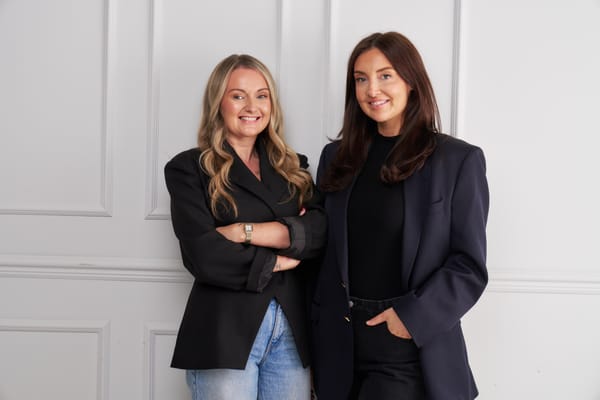
Linda Hughes spent much of her career being brought into organizations when progress had stalled. As a senior HR leader at companies including Oxford City Council, Lucy Group Ltd, and Atlas Copco, she saw the same pattern repeat. Capable people. Strong intent. High effort. Yet work felt heavier and outcomes weaker than they should have been.
The issue was rarely commitment or capability. It was the growing gap between what leaders said mattered and what shaped decisions day to day.
That gap became the foundation for Dynamic Coach Group, which Linda co-founded with her husband Nick. Linda focuses on how strategy shows up through culture, talent, leadership, and employee experience. Nick works on scaling, strategic direction and execution. Together, they help leaders protect and grow what they've built by getting clearer about priorities, decisions, and how the business really operates.
But Linda's work goes beyond advisory services. She and Nick also co-founded Bruford's, a hospitality and community space combining a coffee shop, co-working environment, and a holiday cottage. Built from scratch, Bruford's operates on the same principles Linda brings to client work: clear purpose, practical decision making, and multiple income streams to avoid over reliance on any one source.
Running a customer-facing business with payroll deadlines and daily trade-offs has shaped how Linda understands leadership pressure beyond boardrooms. It has reinforced the difference between good ideas and decisions that actually hold under pressure.
In this conversation, Linda shares why she stepped away from corporate leadership, why alignment matters more than activity when it comes to growth, and what she's learned about making a partnership business work without losing clarity when ambition, decisions, and personal relationships overlap.
From Corporate Leadership to Founder
What was the moment, or the realisation, that made you step away from corporate leadership and build your own business? And how did your sense of impact and value shift when you made that move?
For most of my career, I was in roles where I was expected to make strategy real through people. That meant balancing commercial pressure, operational demands, and leadership behaviour all at the same time. Over time, I became the person people brought in when things felt messy or stuck and they needed clarity again.
What I kept seeing was that people weren’t the issue. The strategy often made sense, but it lost shape as it moved through the organisation. Leaders were trying to do the right thing, but not always in a joined-up way. The impact showed up commercially, even if no one named it straight away. Margins thinned. Decisions slowed. Teams worked harder for less return.
Starting Dynamic Coach Group came from realising that this is where I add the most value. I’m not interested in people work for its own sake. I care about helping leaders protect and grow what they’ve built by improving decision quality and strategic alignment.
Working independently meant I could focus on that across different organisations and stand behind the outcomes, not just the intention.
For women thinking about making a similar move, I’d say be very honest about the value you bring. Leaders don’t invest in expertise; they invest in better decisions and better outcomes. Making the shift isn’t about freedom. It’s about owning your judgement and being prepared to stand by it.
Why Alignment Has Become Central to Your Work
When a business feels stuck or under pressure, how do you go about understanding what’s really getting in the way? And why does alignment matter more than activity when it comes to growth?
I usually start by assuming it’s not a people problem.
When organisations are under pressure, the symptoms look familiar. Engagement dips. Delivery feels heavy. Leaders start talking about capability or motivation. But when you slow it down, the issue is often that people are working without enough shared clarity. Priorities compete. Decisions aren’t consistent. Leaders send mixed signals without realising it.
I look at how clear the direction is, not how clear people think it is. I pay attention to how decisions get made, what gets prioritised when things are tight, and where time and energy are going that don’t really move the business forward.
Because of my background, I’m often asked to work on culture or diversity. Those things matter, but they only work when they’re part of how the business operates. Diversity isn’t something you roll out. You see it in whether different views are genuinely heard and whether challenge improves thinking or gets shut down.
When alignment improves, a lot of behaviour changes without being forced. People stop filling the gaps left by confusion and start focusing on what matters. Culture becomes something you experience, not something you manage.
Building a Business Together Without Losing Clarity
What have you learned about making a partnership business work in practice, especially when ambition, decisions, and personal relationships overlap?
It works because we’re honest about the fact that it’s not always smooth.
Nick and I are clear about what each of us is responsible for, whether we’re working with clients or running Bruford’s. I focus on how the business works through people and leadership. He focuses on decisions, momentum, and scale. In a hands-on business-like hospitality, that clarity really matters because problems show up quickly and margins don’t give you much room to hide.
Bruford’s has been a reality check in the best possible way. You can’t talk in theory when you’re dealing with customers, staffing, costs, and cash flow every day. If decisions drift or roles blur, you feel it straight away. It’s reinforced for me that alignment isn’t a concept. It’s practical. It shows up in who decides what and how quickly.
Working with a spouse means you get to the truth fast. There’s no pretending. If something isn’t working, it gets said. That can be uncomfortable, but it also avoids things dragging on.
For women thinking about going into business with a partner, I’d say shared ambition is the easy bit. What really matters is whether you can challenge each other, hold each other to account, and stay focused on what the business needs when things get tough. When that discipline is in place, partnership becomes a commercial advantage, not an emotional risk.
Are you a woman leader with an inspiring journey to tell? Founded by Women is on a mission to elevate and amplify the voices of women making an impact.
If you're breaking barriers, driving change, or paving the way for others, we’d love to feature your story. Get in touch with us today!
👉 hi@foundedbywomen.org