From Camden Council to MBE: Dr Shabnam Ahmed on Building School of Shabs, Pioneering Anti-Racism in Social Work, and Why Safety Isn't Universal
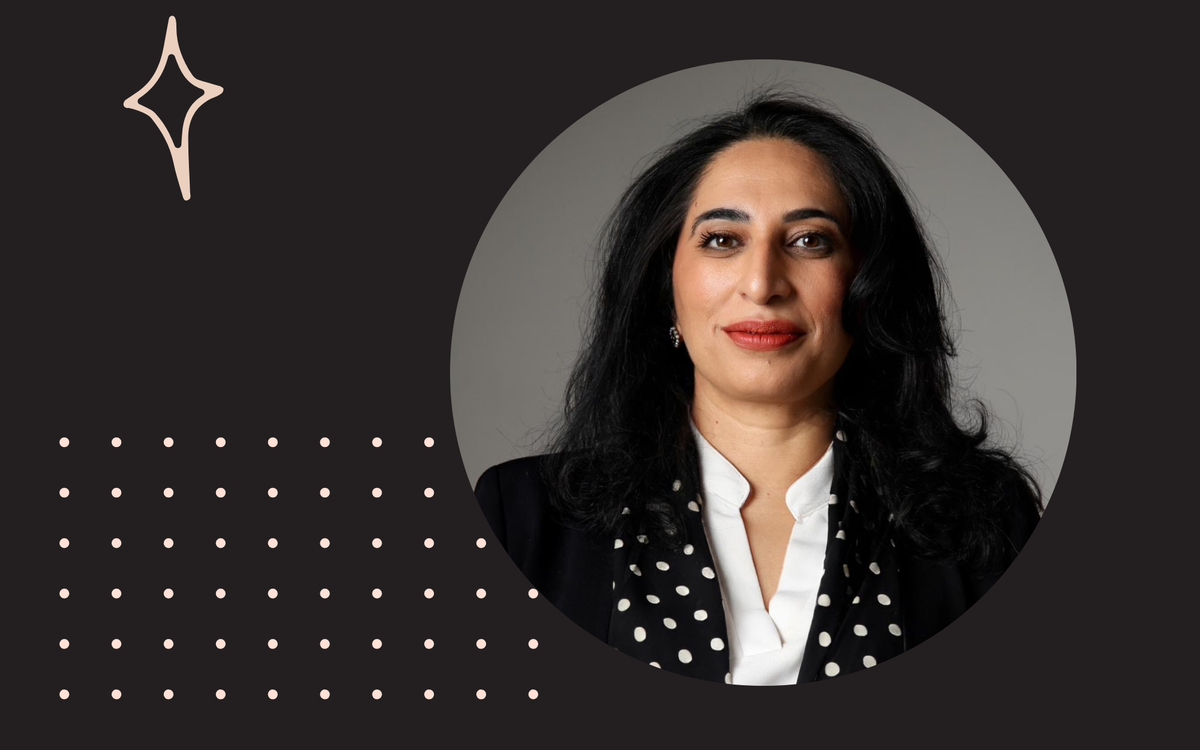
After 26 years shaping social work practice at Camden Council, Dr Shabnam Ahmed didn't just leave to start a business. She crystallized decades of frontline expertise, doctoral research, and anti-racist advocacy into School of Shabs, a training company reshaping how practitioners across England approach supervision, equity, and professional development.
Dr Ahmed's journey defies the traditional entrepreneurial narrative. She didn't quit her day job to chase a startup dream. Instead, she spent years deliberately integrating her roles: team manager, doctoral researcher, YouTube educator, and national anti-racism framework architect. Each role informed and amplified the others. The result? A professional doctorate completed without corrections (a rarity in academia), an MBE for services to social care and anti-racism, and the co-creation of the BASW's endorsed Anti-Racism Supervision Template now being implemented across Social Work employers throughout England.
Her research reveals what many South Asian women in professional spaces already know but rarely see validated: that safety, courage, and vulnerability aren't universal concepts. What looks like confident self-advocacy to one person can feel culturally or professionally perilous to another. This insight, grounded in rigorous academic inquiry and lived experience, now shapes everything from her supervision frameworks to the workshops she delivers internationally.
In this conversation, Dr Ahmed walks us through the practical mechanics of building a business without abandoning frontline work, the process of creating systemic change in established institutions, and why she believes the intersectional perspective of minoritized women isn't a limitation to overcome but the innovation our systems desperately need.
From 26 Years at Camden Council to Founding School of Shabs - Building a Social Work Training Company While Leading Practice Within Adult Safeguarding and Earning an MBE
You were part of the leadership team in adult safeguarding at Camden London Borough Council, where you've worked for 26 years (the last four in management roles). You're also a registered social worker, practice educator, best interest assessor, and were a team manager. Alongside your full-time role at Camden Council, you founded School of Shabs, a training company and YouTube channel where you share creative ideas for social work supervision, wellbeing, stress management, and anti-racist practice. In 2024, you were awarded an MBE in the New Year Honours for services to social care. For female founders building training businesses or consulting practices while working full-time in demanding leadership roles, what inspired you to launch School of Shabs alongside your Camden Council position? Walk us through how you balanced building a training company with while contributing to leadership in adult safeguarding for a major London borough, and what advice would you give women about turning their professional expertise into entrepreneurial ventures without leaving their day jobs?
School of Shabs, which is my official business name, was initially launched as a YouTube channel in 2019. At the time, I was working as a team manager for Camden Council’s largest locality adult social work team. I had also started my professional Doctorate in Social Work. Alongside these roles, I was actively leading race equality education within Camden and became a member of the Black and Ethnic Minority Professional Symposium (BPS), a group within the British Association of Social Workers, which is a safe online space for Black and Ethnic Minority social workers to educate, empower and equip themselves to navigate the various institutional and structural obstacles they face as professionals. The BPS is a necessary opportunity to role-model Black and ethnic minority excellence, professionalism and unity.
My core drive has always been to seek knowledge and apply it critically and creatively to improve practice. I embodied this throughout my time in Camden, translating insights into action through direct work, creating an e-learning module for Awareness around Modern Slavery, team leadership, service-wide training, and published writing. School of Shabs then, emerged as a creative platform to fuse these passions, allowing me to share decades of practice, supervision expertise, and leadership insight, particularly around wellbeing and anti-racist practice, at scale. Through YouTube, it allowed me to teach, inspire, and empower practitioners globally, while remaining engaged and committed in supporting the frontline work as a team manager and later as a safeguarding lead.
My first career after my undergraduate degree in Psychology was actually in higher education: I was approached by a professor to join a teaching team for a module called Entrepreneurship and Innovation to combine insights from psychology to the world of business. I was nervous but accepted, and those two years teaching were some of the most formative and rewarding of my life. I loved supporting students, sharing ideas, and creating a space for learning and innovation.
I left academia after two years because my father was unexpectedly diagnosed with a terminal illness, and I chose to care for him full-time. That period of my life taught me about priorities, resilience, and the good power in health and social care services. These are lessons that have shaped everything I do professionally and personally. This position of lived experience, of what it feels like to become a carer, was like no other. I am a firm believer that there is no substitute for how one’s lived experiences shape our world, practice and at the strategic level how these insights can help shape decisions and policy which resonate with people’s experiences and expectations.
The You Tube Chanel which currently houses 18 educational videos quickly garnered the attention of senior leaders in social care, universities, learning academies and training departments, who then approached me to deliver key notes and deliver workshops.
Initially I balanced this with my leadership role in Camden and what enabled this was, structure, discipline, boundaries and integration rather than separation. My years of working in a leading outstanding council informed the education I offered, and the creative, reflective practice I developed through School of Shabs enriched my leadership at Camden. After a year I was a recipient of an award (National Institute Health Research) and a fellowship with Kings, which enabled me to reduce my hours at the council and devote more time to my doctoral study. Alongside this, I was able to manage the demand for teaching opportunities, which included attending and speaking at conferences internationally. Eventually in December 2024 after 26 years of service to the London Borough of Camden, I made the decision to part ways to fully concentrate on my consulting practice and research.
For women considering building a business or consulting practice while maintaining other demanding roles my advice is:
- If this is your calling, your passion, please do not ignore it, explore these feelings.
- Start small, leverage your expertise: Focus on areas where your experience can make the most impact.
- Integrate rather than separate: Let your professional role and entrepreneurial work inform each other.
- Set boundaries which allow you to do both without compromising the other.
- Create a third space to ground, build and nourish your thoughts: I utilise the concept of third space in multiple ways through my work, for the purpose of what we are talking about here, I am referring to a space where you connect with those that hold you, lift you, provide you with good challenge, those that inspire you and those you might collaborate with.
School of Shabs has allowed me to come full circle really, returning to teaching, coaching, mentoring, and sharing knowledge, while continuing to influence and shape the practices in health and social care, something that I remain deeply committed to. Receiving an MBE in 2024 was an honour, but the real reward is seeing practitioners grow, reflect, and deliver better outcomes for the people who access health and social care.
Creating the Anti-Racism Supervision Framework - How Your Work with BASW's Black and Ethnic Minority Professionals Symposium (BPS) Influenced Social Work Practice Across England
In 2022, motivated by the tragic murder of George Floyd and the Black Lives Matter movement, you co-created the Anti-Racism Supervision Template and guidance with BASW's Black and Ethnic Minority Professionals' Symposium (BPS). The template was designed to "integrate anti-racism into the supervisory space" and has been shaped by practitioners, social work students, managers, and practice educators across England. You also recently helped develop the "Shades of Bias" toolkit to help social workers process and respond to discrimination, oppression and racism in their workplaces. Your research for your doctorate (which you completed without corrections) focuses on South Asian women's experience of supervision in adult social work, and you've said "safety, courage and vulnerability is not a universal concept." For female founders creating frameworks, tools, or resources that address systemic issues in their industries, how did you identify the gap in social work supervision around anti-racism, and what was your process for developing a framework that would be adopted nationally? What challenges did you face getting buy-in from social work organizations, and what advice would you give women about creating change in large, established systems? How does your research on South Asian women inform your approach to anti-racist practice?
The gap in social work and supervision on anti-racism came into sharp focus after the murder of George Floyd and the global Black Lives Matter reckoning. In my practice and research, I saw that while the profession champions social justice, its supervisory spaces often sidelined conversations about race and culture. Practitioners, particularly those from Black and minoritised backgrounds, were navigating racism in isolation, without a structured, safe space to process these experiences, a fundamental contradiction to the values of social work. The need wasn't for more passive "cultural competence," but for proactive embodied practice of anti-racism: to challenge bias, support staff, ensure equitable decisions for those the professional professed to support, and to hold a mirror up to the systems that reproduced and sustained racism.
This conviction led me to leverage my networks and my "Third Space" with BASW’s Black and Ethnic Minority Professionals Symposium (BPS) to co-create what is nationally recognised as the Anti-Racism Supervision Template in social work. From the outset, this was a collaborative, practitioner-led endeavour. We held consultations across England with social workers, students, managers, practice educators, principal social workers, and academics. The template was built from the ground up, shaped by those most impacted by racism, ensuring it was a useable practical tool, not just passive theoretical guidance. The template’s true power lies in its translation from a document into transformational practice. I believe it is structurally changing supervision by supporting and guiding reflective spaces and social work supervision, to explicitly name and address racism. Supervisors and practitioners now have a concrete framework to:
- Proactively discuss racial identity and its impact on the relationship with those they entered the profession to support.
- Critically analyse decisions through an anti-racist lens, disrupting bias in risk assessment and resource allocation.
- Process workplace racism with support, reducing the emotional labour and isolation borne by minoritised staff.
- Set anti-racist objectives as a core part of professional development, moving from passive awareness to accountable action.
I recognised early that a template alone isn't enough. The key has been breathing life into it through exploratory workshops, so I have designed and tailored training and workshops, which I have been facilitating with local authorities and other social work organisations for over 3 years now. In these sessions, we move from theory to practice, embedding the framework into real life supervision policies. This active implementation is why the template has been widely adopted; some organisations have invited me back multiple times. It's not an add-on, but a vital enhancement that strengthens the core function of supervision improving practice for the people we serve. Its principles also provide a parallel impact for equity across all protected characteristics.
The main challenge is moving beyond institutional inertia and defensiveness. Gaining buy-in requires shifting the perception of anti-racism from a "special interest" to a fundamental standard of professional excellence.
My advice for women driving this kind of change in established systems is:
1. Build Coalitions from Your ‘Third Space’: Do not work in isolation. Forge alliances both within and outside the system. My most powerful space was the collaborative, trust-based "Third Space" with the BPS, rooted in shared purpose.
2. Anchor Everything in Lived Experience: The standpoint must always be the lived reality of the issue. It provides an undeniable evidence base and moral authority.
3. Frame Change as Essential Improvement: Present your framework as strengthening and enhancing existing good practice, not attacking it. We positioned the template as the how to achieve the profession's own stated commitments to justice equality and equity.
4. Cultivate Courageous Steadfastness: Prepare for resistance. As I often say, "safety, courage and vulnerability are not universally the same for everyone." Navigate differing perceptions of risk with empathy, but remain steadfast. Your resilience and robustness will model the change you seek.
5. Pilot and Adapt: Test your framework in real settings, listen to feedback, and refine it. Practical utility drives adoption. We are set to review the document this year.
Completing Your Doctorate on South Asian Women and Intersectional Disadvantages - Balancing Research, Leadership, Entrepreneurship, and Advocacy
You recently completed your doctorate without corrections on a topic addressing South Asian women and the intersectional disadvantages to their career progression. You've been vocal about how "safety, courage and vulnerability is not a universal concept" and how your research confirms the unique challenges faced by South Asian women in professional spaces. Throughout this journey, you've balanced doctoral research while leading practice within an adult safeguarding team at Camden Council, running School of Shabs, delivering training through your YouTube channel, and serving as a member of BASW's Black and Ethnic Minority Professionals' Symposium. For female founders juggling multiple roles while pursuing advanced education and building businesses, how did you manage completing a doctorate while maintaining your leadership position and growing your training company? What did your research reveal about the specific barriers South Asian women face in career progression, and how has this research influenced the work you do through School of Shabs and your anti-racism advocacy? What would you tell other South Asian women (or women from minority backgrounds) about building careers and businesses in spaces where they may not see themselves represented?
Starting the doctorate while working in local government, running School of Shabs, and engaging in advocacy wasn't about perfect balance, it was about purposeful integration. I refused to silo these parts of my life; instead, I allowed them to inform and fuel one another. My day job in Camden, provided the real-world context that grounded my academic research. School of Shabs and the training work became the translational engine with the aspiration that my research which considered intersectionality and anti-racism would become accessible and actionable for practitioners and leaders. The key was seeing this not as separate workloads, but as one interconnected mission viewed through particular lenses, for the roles to feed each other, turning a potential burden into a source of unique insight. There did, however come a point, when I had to make a decision about how realistic it was to be able to continue to do all of this with equal rigour and passion, given the deadline for my doctorate was also fast approaching. The final decision to bet on myself and grow my work through School of Shabs was deeply connected to my sense of ikigai: the intersection between what I love, what I’m good at, what the world needs, and what I can be paid for.
I recently passed my Doctorate without corrections, which I am told is extremely rare in academia, something I am extremely proud of. My research has illuminated that for South Asian women, career progression in social work is hindered not by a single barrier, but through intersectional disadvantages. As mentioned previously, what safety, courage and vulnerability look and feel like is not the same for everyone. My study demonstrates that experiences of racism and sexism are frequently minimised in society and at work, actions that are deemed professionally courageous (e.g., self-promotion, challenging authority) can feel culturally or personally risky, carrying fears of being negatively labelled for South Asian women in social work. Another key theme is that of Representation, there is good power in seeing people who look like you in leadership positions, it matters not only in who leads, but in whose knowledge is valued. My research and it’s recommendations are a call to open up space for South Asian social workers to be heard, supported, be visible, and to ensure that the next generation does not have to work harder simply to belong.
My role as an educator will continue to evolve and I will now be broadening my services because the insights on power, silence, and intersectional disadvantage from social care are critically relevant to every field where people lead, collaborate, and innovate. I will remain committed to ensuring that my workshops are ethically informed, grounded in lived experience, and shaped by what this research has taught me about power, identity, and leadership.
To South Asian women and women from minority backgrounds building careers and businesses where representation is scarce, I would offer this:
- Reconnect with your purpose: Your ikigai will sustain you through long hours and competing priorities.
- Redefine Your Credentials: Your lived experience at the intersection of cultures is not a deficit; it is a unique form of expertise. It grants you dual vision, an ability to see gaps in the system and innovate solutions that others might miss. This is your entrepreneurial and leadership superpower.
- Curate Your "Third Space" Intentionally: You cannot thrive in isolation. Consciously build your own "Third Space”, a trusted coalition of mentors, coaches, sponsors, and peers (both within and outside your community) who understand your specific context. This network isn't just for support; it's your strategic advisory board.
- Lead with Your Inquiry, Not Just Your Advocacy: When entering spaces where you aren't represented, lead with the powerful questions your perspective allows you to ask. "How might this policy impact women, women who are marginalised in leadership”, "What barriers exist here that we are not seeing?" This positions you as a crucial problem-solver, not just a voice for a minority.
- Whether formal or lived, ground your actions in evidence: When you can articulate the "why" behind a barrier or a solution, as my doctorate allowed me to do, it becomes harder for your insights to be dismissed. Data as in lived experiences and testimony can help disarm bias. Your unique perspective is not the obstacle; it is the very innovation our systems desperately need.
The path from my desk in Camden, to the pages of my doctorate, to the helm of my own enterprise reveals a core truth: our most critical expertise is rarely found in a single role. It is forged at the demanding, fertile intersections where our professional duties, our intellectual inquiry, and our personal purpose collide and combine.
Are you a woman leader with an inspiring journey to tell? Founded by Women is on a mission to elevate and amplify the voices of women making an impact.
If you're breaking barriers, driving change, or paving the way for others, we’d love to feature your story. Get in touch with us today!
👉 hi@foundedbywomen.org