From 2 AM Talk Shows to VP of Operations at TrialX: Priya Menon on Producing 300+ CureTalks Episodes, Leading Global Operations at TrialX from India, and Why Patient Empowerment Drives Better Research
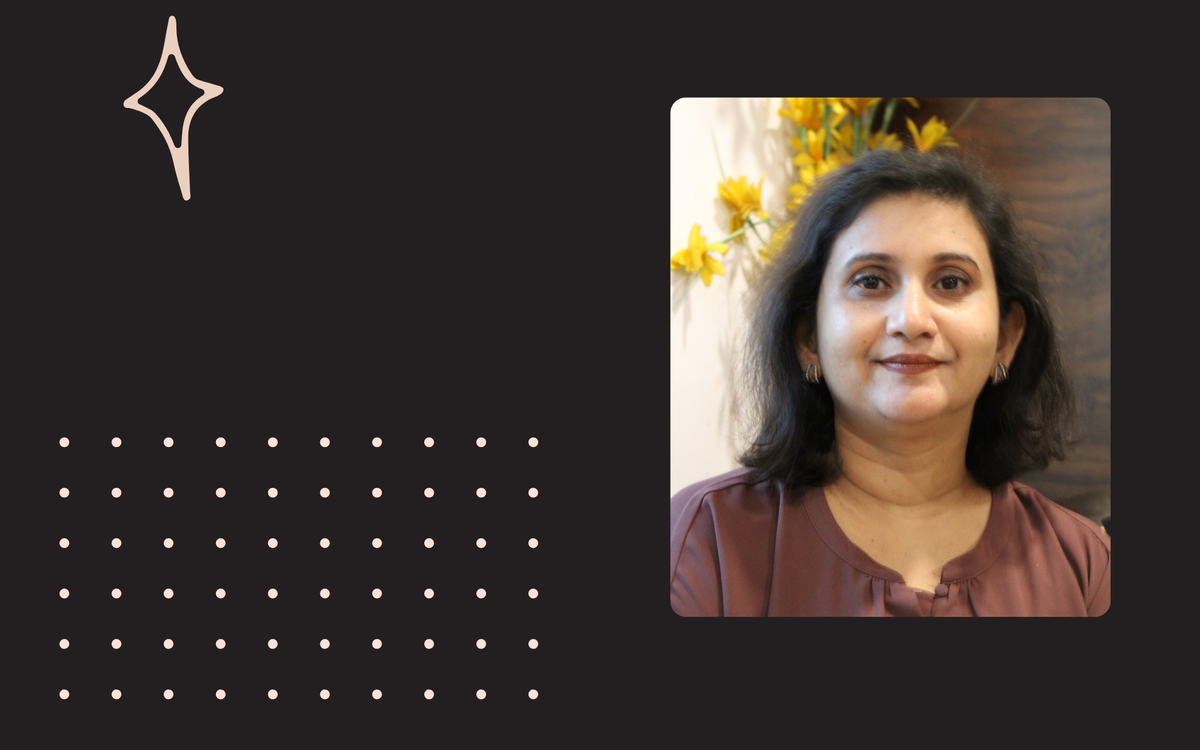
Priya Menon is Vice President of Operations at TrialX, a clinical research and space health informatics company, and Producer and Host of CureTalks, an online healthcare talk show platform where she's produced and hosted over 300 episodes on cancer research and medical breakthroughs for US audiences. But her path to building a global healthcare career from India has meant waking up at 2 AM IST to host live sessions at 4 PM EST, consistently, for over a decade.
With a background in life sciences and certifications from the Indian Institute of Management Bangalore, Priya serves as VP of Operations at TrialX, where she focuses on human resources, compliance, and company operational leadership for a company that works on patient recruitment for clinical trials. Her operational work is informed by something many healthcare technology leaders lack: years of direct engagement with patient communities through CureTalks.
CureTalks is a natural extension of TrialX's patient-centric mission. While TrialX builds technology that connects patients to clinical trials "on earth and beyond," and CureTalks empowers patients with the knowledge they need to engage meaningfully in their own care and treatment decisions. Over more than a decade, Priya has interviewed leading researchers, clinicians, and patient advocates on topics ranging from reversing blindness with FDA-approved retinal gene therapy to CAR-T treatments, HIV cure research, space health and precision medicine in cancer. The CureTalks community has become more than an audience. It's become a family, with many patient advocates, listeners, and experts participating for years, some from the very beginning.
What makes Priya's work unique is how she bridges the creative side of producing healthcare talk shows with the operational rigor of running compliance and operations for a clinical trials technology company. Her belief is simple but powerful: when patients are informed, systems work better. Conversations around consent become clearer, engagement becomes more genuine, and participation in trials becomes more confident and collaborative. The insights gained from interacting with patient communities feed directly into how TrialX thinks about operational design.
For Priya, building a global career from India while serving US audiences has reinforced a core truth: meaningful healthcare work transcends borders. When you stay committed to purpose, even at 2 AM, distance becomes secondary to impact.
In this Q&A, Priya shares her journey from life sciences to operations leadership, what it takes to build a career across countries and time zones, and why she views operations not as a support function but as a strategic driver of impact.
From Launching CureTalks to VP Operations at TrialX - Building a Healthcare Media Platform That's Produced Over 300 Online Talk Shows
Q: You are VP of Operations at TrialX (a clinical research technology company in New York) and Host & Producer at CureTalks, where you've produced and hosted over 300 online talk shows for US audiences on cancer research and medical breakthroughs. CureTalks brings together doctors from institutions like Harvard Medical School and Mayo Clinic, researchers, patients, and advocates to discuss healthcare topics in plain language. For female executives building media platforms or content businesses in healthcare, what inspired you to launch CureTalks and how did you attract world-class medical experts to participate? Walk us through your journey from launching the first talk shows to producing 300+ episodes, and what advice would you give women about creating healthcare content that makes complex medical topics accessible to everyday people?
CureTalks emerged during brainstorming conversations at TrialX, at a time when we were thinking deeply about patient engagement and access to clinical research information. What became immediately clear was the growing disconnect between what was happening inside research labs and what patients and caregivers actually understood or could act on. Scientific progress was accelerating, but the information reaching people was fragmented, technical, and often inaccessible.
That insight led to what would eventually become CureTalks — initially as a blog focused on clinical trials. The intent was simple but urgent: to bridge the gap between research and real-world understanding. As conversations around the blog grew, it became clear that written content alone wasn’t enough. People wanted to hear directly from researchers, ask questions, and engage in real time.
CureTalks gradually evolved into interviews with Principal Investigators and researchers over Skype, and in 2012, into live, on-air discussions via BlogTalkRadio. At the time, using live online radio for healthcare conversations was still a new and largely unexplored medium.
What set CureTalks apart was its patient-driven format. Each session featured an invited panel of patient advocates who engaged directly with the medical or research expert, while a live audience listened in. There were no intermediaries or scripted filters — patients asked their questions themselves. Anyone could dial in live and speak to the expert. For 2012, this level of direct access was rare.
The very first CureTalks session focused on Multiple Myeloma, a cancer affecting plasma cells. To assemble a patient advocate panel, I reached out through ACOR and Facebook. The response was overwhelming. Complete strangers offered guidance, encouragement, and support — many of whom became long-standing panelists and contributors to CureTalks over the years. It highlighted just how deeply patients wanted clarity around emerging drugs, ongoing trials, and the right questions to ask their physicians.
CureTalks became a platform with no middlemen. Patients heard directly from the researchers and doctors working on the science. Over time, we hosted leaders such as Carl June, widely known for his work in immunotherapy, to discuss CART cell therapies and Nobel Laureate Drew Weissman, who spoke about mRNA vaccines. During the pandemic, we launched a dedicated COVID series to help people understand vaccines and evolving symptoms at a time when accurate information was critical.
What stood out consistently was the willingness of medical experts to participate. Clinicians and researchers from across the world — from Australia and India to Europe and the United States — generously shared their time and knowledge because they believed in the mission. They recognized the value of informed patients.
Medical science is inherently complex. When people are healthy, they may not engage deeply with details like drug mechanisms, safety, efficacy, or side effects. But when illness enters the picture, the lack of accessible, trustworthy information becomes stark. CureTalks helped break down that complexity without diluting the science, making research understandable and actionable.
Over time, CureTalks evolved from online radio to video-based conversations, but its core remained unchanged: community and trust. The reach extended far beyond live audiences. Panelists downloaded episodes and shared them within support groups; blogs were written by listeners; people wrote in seeking guidance. The platform earned credibility through consistency.
We were also intentional about spotlighting under-discussed areas. Dedicated series on women’s health addressed topics like endometriosis, fertility, egg freezing, cervical cancer, and breast cancer — areas where information gaps are particularly pronounced. We talked about rare diseases, gene editing, microgravity and more.
Alongside this work, my role as VP of Operations at TrialX gave me a systems-level understanding of how clinical trials operate reinforcing my belief that communication is not ancillary in healthcare; it is foundational.
For women looking to build healthcare media or content platforms, my advice is to lead with empathy, build credibility through consistency, and embrace the role of translator. Making complex science accessible isn’t about simplifying it — it’s about respecting people enough to invite them into the conversation.
Making Medical Research Understandable - How You Help Patients Navigate Cancer Treatment, Clinical Trials, and Medical Breakthroughs
Q: Through CureTalks, you've covered topics from new cancer treatments and clinical trial opportunities to helping patients understand their diagnosis and treatment options. Your mission is to "heal the world through information, discussion and sharing of knowledge." For female executives creating healthcare education content or working in patient advocacy, how do you take complicated medical research and turn it into content that patients and families can actually understand and use? What's your process for choosing topics that matter most to patients, and how do you find the right medical experts who can explain things clearly? What are the biggest misconceptions you've encountered about clinical trials, and how do you help patients feel more confident about participating in medical research?
At CureTalks, our guiding belief has always been that information itself can be healing — if it is accessible, timely, and trustworthy. Medical research is complex by nature, but patients and families don’t need less information; they need better translation. Our work has always focused on turning cutting-edge science into conversations people can understand and use in real life.
The process of doing this well is detailed and intentional. We stay closely attuned to what’s happening in the medical ecosystem — from FDA approvals and emerging therapies to major research breakthroughs. At the same time, we remain deeply embedded in patient communities. By actively engaging in patient forums, advocacy groups, and online discussions, we listen carefully to what patients are asking, what they are confused about, and where clear information is missing.
That combination — science on one side and lived patient experience on the other — helps us identify topics that truly matter. Once a topic is identified, we brainstorm internally to define the right focus. Often, the question isn’t what to cover, but how to frame it so it’s meaningful to someone navigating a diagnosis, a treatment decision, or a clinical trial conversation with their physician.
Finding the right expert is just as critical as choosing the right topic. We deliberately seek out clinicians and researchers who are directly involved in the work — people who have authored the studies, led the trials, or treated patients with the therapy being discussed. Many of the experts we invite — including those from institutions like UPenn, UCSF, Harvard Medical School and Mayo Clinic — are not only leaders in their field, but also educators at heart. Their willingness to explain, clarify, and stay engaged with patient questions is what makes the conversation effective.
Equally important is the role of patient advocates. We actively search social media, blogs, and community forums to identify advocates who are deeply engaged in a specific disease area and can add value to the discussion. These advocates are not passive participants — they help shape the conversation. Before each session, we collate questions from all panel members to ensure that the discussion addresses the widest possible range of patient concerns. The live Q&A, however, is always impromptu — allowing real-time fears, doubts, and clarifications to surface organically.
My background in life sciences gave me a strong foundation to understand the healthcare domain — from clinical research and drug development to medical terminology — which made it possible to translate complex research accurately while keeping patient realities front and center.
One of the biggest areas where this approach has made a difference is in conversations around clinical trials. A common misconception we encounter is that clinical trials are a “last resort,” unsafe, or that participants are treated like test subjects without agency. Many patients also believe trials are only for those who have exhausted all options, or that they will receive a placebo instead of care.
Through CureTalks, we address these fears directly by bringing in the people who design and run the trials. We explain trial phases, safety protocols, informed consent, and how standard-of-care treatments are often part of trial design. By hearing directly from researchers and clinicians — without intermediaries — patients begin to understand that clinical trials are not experiments done to them, but research conducted with them, under strict ethical and safety oversight.
What consistently helps patients feel more confident is transparency. When they understand why a trial exists, what question it is trying to answer, what protections are in place, and what participation truly involves, fear gives way to informed choice. CureTalks creates a space where those conversations can happen openly.
For women creating healthcare education content or working in patient advocacy, my advice is this: listen before you speak, collaborate before you explain, and never underestimate the intelligence of your audience. Patients don’t need simplification — they need clarity, context, and respect. When you center their questions and invite experts who are willing to meet them where they are, meaningful understanding follows.
At its core, CureTalks is about empowering people with knowledge — because when patients are informed, they are better equipped to advocate for themselves, participate in research, and make decisions with confidence.
Leading Operations at a Clinical Trial Recruitment Technology Company: Building a Global Career from India While Serving US Audiences
Q: As VP of Operations at TrialX, you oversee company operations, HR, talent management and compliance for a company that helps connect patients with clinical trials and supports medical research. You have a background in life sciences and certifications from IIM, Bangalore and you're based in India while producing content for US audiences. For female executives building international businesses or working in operations roles, what's your advice about building a healthcare career across different countries and time zones? How do you balance the creative side (producing talk shows) with the business side (running operations), and what would you tell women about creating healthcare solutions that serve both patients and the medical community?
Building a global healthcare career while being based in India has meant learning how to operate a mission-driven technology company across borders, time zones, and cultures. As VP of Operations at TrialX, I oversee company operations, HR, talent management, and compliance for a platform that helps connect patients with appropriate clinical trials, primarily in the US but across multiple geographies.
My background in life sciences has helped me understand the broader healthcare and clinical research landscape, but my role at TrialX is firmly focused on building strong internal systems — ensuring that teams are supported, processes are scalable, and compliance is embedded into how the company operates. In a patient-facing technology business, trust is built not only through the product, but through how responsibly the organization functions behind the scenes.
Working across time zones is one of the everyday challenges of this role. Producing CureTalks sessions for US audiences often meant waking up at 2 a.m. IST to go live at 4 p.m. EST, and doing that consistently for over a decade. That level of commitment is only possible when the work feels deeply purposeful. Over time, the CureTalks community — including hosts, patient advocates, experts, and listeners — has become a family united by a shared belief in patient empowerment.
CureTalks is not a creative endeavor separate from my operational role; it reflects TrialX’s ethos that informed patients make better decisions. By helping patients understand their conditions, treatment options, and the role of clinical trials, CureTalks supports TrialX’s broader mission of improving trial awareness and participation. Patient education and recruitment are closely connected — when people understand their choices, engagement becomes more meaningful.
For women building international careers or stepping into operations and leadership roles, my advice is to appreciate the power of operational excellence. Operations is not just about keeping the lights on — it shapes culture, enables scale, and protects trust. Managing people, compliance, and processes across geographies requires empathy, clarity, and consistency.
I would also encourage women to see healthcare technology as a space where business discipline and human impact coexist. When company operations are strong and aligned with a patient-first philosophy, technology can serve both the medical community and the people it ultimately exists to help.
Building a global healthcare career from India has reinforced my belief that meaningful impact often happens quietly — through systems that work, teams that feel supported, and patients who feel empowered to participate in their own care.
A Closing Note
Finally, it’s important to say that CureTalks has been a collective effort. Every conversation is the result of collaboration between the internal team, hosts, patient advocates, researchers, clinicians, and an engaged global audience, all working toward a shared goal: empowering patients with knowledge so they can play an active role in their own health and treatment decisions.
The strength of CureTalks lies in this ecosystem — where experts are generous with their time, advocates bring lived experience to the table, and patients feel heard rather than spoken to. That spirit of partnership is what has sustained the platform over the years, and what continues to make meaningful, patient-centered conversations possible.
Are you a woman leader with an inspiring journey to tell? Founded by Women is on a mission to elevate and amplify the voices of women making an impact.
If you're breaking barriers, driving change, or paving the way for others, we’d love to feature your story. Get in touch with us today!
👉 hi@foundedbywomen.org