From Investing in 75 Fintech Startups to Co-Founding ResilienceVC: Tahira Dosani on Building Fintech That Makes People Better Off, Not Stuck

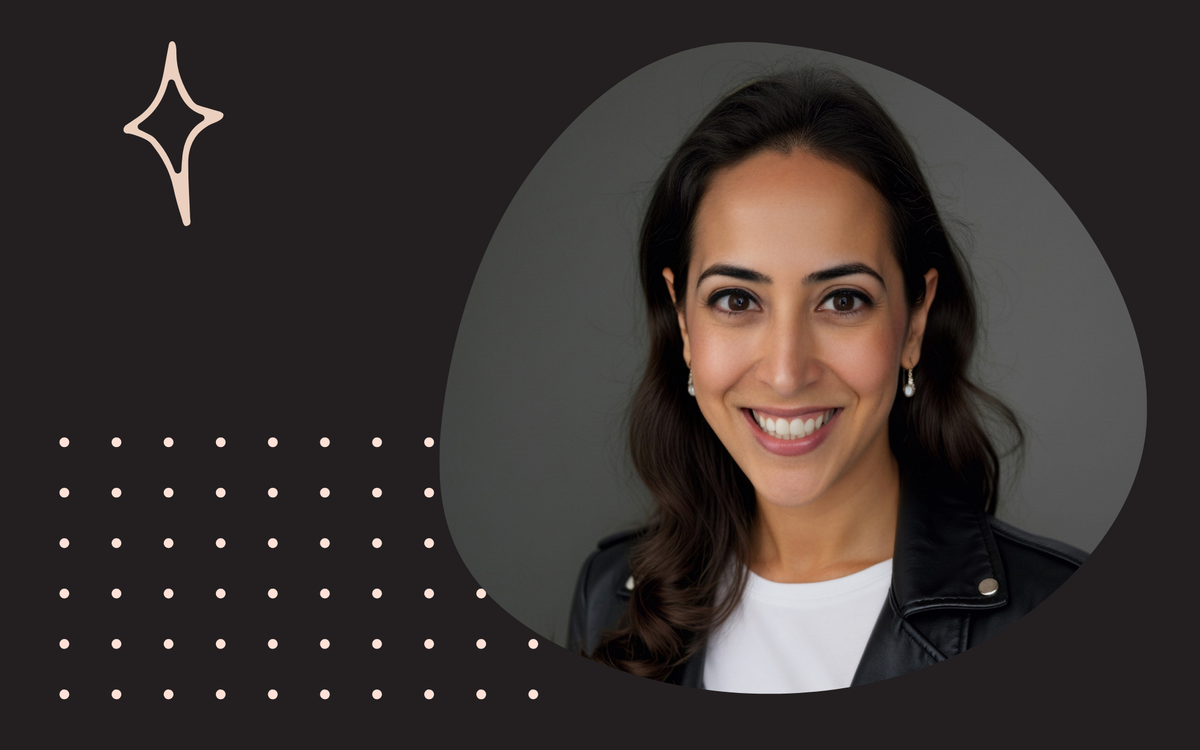
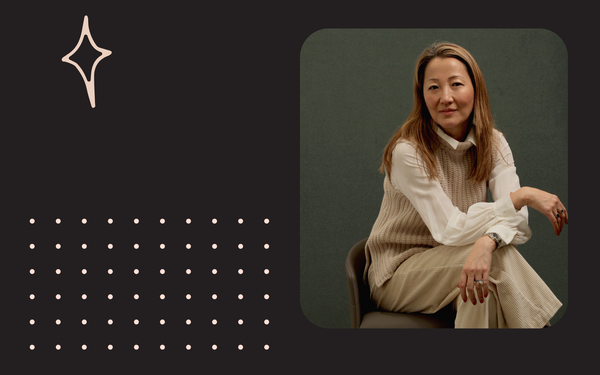
Tahira Dosani has spent her career betting on the idea that serving the customers everyone else calls "too risky" is actually the biggest opportunity in fintech. She has backed more than 75 early-stage fintech startups, including four unicorns, through roles at Accion Venture Lab and LeapFrog Investments. She then co-founded ResilienceVC, and in 2024, ResilienceVC closed its debut fund with $58M of AUM dedicated entirely to early-stage fintech that builds financial resilience for American consumers and small businesses.
In this Q&A, Tahira breaks down what separates fintech that genuinely helps people from fintech that just extracts fees from them, and why the real test is what happens to a company's revenue when its customers' lives improve. She also gets specific about what she looks for in a founder before committing to a decade-long relationship, why lived experience with a problem isn't the same as product advantage, and how she's trying to lower the barriers that keep women out of venture, both as founders raising capital and as investors trying to break in.
Whether you're building a fintech startup, raising your first fund, or just trying to figure out how to get a seat at the table without an existing network, Tahira's answers offer a rare, unfiltered look at how a working investor actually thinks.
Know a founder (or are one) doing incredible work? Founded by Women Awards are open for entries. If you're building something bold, leading with purpose, or driving change in your industry, we'd love for you to enter. 👉 foundedbywomen.org/awards
Q: You've invested in over 75 early-stage fintech startups (including four unicorns) across roles at Accion Venture Lab and LeapFrog Investments, plus launched Afghanistan's first mobile payments platform at Roshan. You co-founded ResilienceVC (closed debut fund with $58M in November 2024) focusing exclusively on seed-stage embedded fintech that builds financial resilience for low- and moderate-income Americans and small businesses.
For female founders building fintech solutions for underserved markets, how do you advise them to position their startups to investors who might see "serving 70% of Americans living paycheck-to-paycheck" as too risky rather than recognizing it as a massive market opportunity?
What's the difference between fintech that drives real resilience versus fintech that just extracts fees from vulnerable customers?
A: When an investor says targeting a certain segment is “too risky,” often what that investor is trying to get at is whether that segment can be profitably served. Whether or not they say it out loud, they are assuming that acquisition cost is too high relative to lifetime value for a customer who is low income and therefore is likely to have lower balances, smaller transaction sizes, etc. It’s clear that it’s a large market - that’s rarely the issue, but underserved segments are underserved precisely because it historically hasn’t been profitable to serve them. So if you’re building for that market, you have to make the case that you can acquire these customers effectively and scalably at a low cost, leverage technology (including AI) to ensure that your cost to serve that customer remains low, that you can achieve high retention, and that you can therefore reach healthy margins and growth while serving this segment.
This is why distribution matters as much as product when you’re talking about these markets. And in an AI-driven world where product moats are rarely sustainable and someone can vibe-code a version of your product in a weekend, that’s even more true. Finding the right channels, meeting customers where they are, and leveraging trusted relationships to reach and sell customers is absolutely essential.
The response to "these customers are risky or expensive to reach" can’t be framed as a mission statement or simply a big market, it has to be addressed with a robust distribution strategy with the unit economics and CAC analysis attached.
On the question of resilience vs extraction, the test I generally use is to look at what happens to the company's revenue when the customer's situation improves. Extractive models earn more when the customer stays stuck. Overdraft, rollover fees, late fees, subscriptions with high passive churn among people who forget to cancel are all examples of this. In those businesses, the customer becoming better off is a revenue loss for the company. Resilient models earn more when the customer does better, through volume, retention, a lower loss rate, or the customer graduating into a new product. That alignment is what I look for when I invest.
Q: You've said ResilienceVC underwrites "the founder's ability to navigate pivots and regulatory shifts over a 5- to 10-year journey" because the average VC-founder relationship now outlasts the average U.S. marriage. You also emphasize "founder-market fit" and track diversity intentionally (ResilienceVC is 100% BIPOC-owned, 50% female-owned, 40%+ individual LPs are women). For female founders raising seed capital, what signals do you look for that tell you a founder can navigate a decade-long journey versus just having a compelling initial idea? How should founders demonstrate "founder-market fit" when their lived experience with the problem is their biggest competitive advantage, and what are the red flags that tell you a founding team won't make it through the inevitable pivots?
No one can predict a ten-year outcome from a single pitch. What one can assess is how a founder takes in new information, responds to feedback, handles uncertainty, and navigates complexity. These can be important indicators of success and likelihood of a founder’s ability to navigate the long and bumpy journey of entrepreneurship.
During diligence I will often share feedback on an element of the pitch, platform, or product. What I am watching for is how the founder is responding to and engaging with the questions I ask. The response I want is a founder who takes the point seriously, tells me which parts she thinks are right and which parts she does not, and comes back a week later having actually looked into my feedback. A clear rationale for her view and openness to be convinced if I can provide a compelling argument are wonderful to see; defensiveness or obsequiousness are both red flags.
Another signal that can be valuable is evidence of prior long duration commitment to something hard. Not necessarily a company. It can be an academic program, a career pivot that took four years to pay off, an athletic endeavor. What I am looking for is a track record of staying in a difficult situation past the point where quitting was reasonable and defensible.
Another is to look at who she hires early, and whether those people are better than she is at their function. A good founder also has to be a good leader and attract top talent.
On founder-market fit and lived experience: I think lived experience is critical, but lived experience alone is not sufficient. Having been the customer gives you an information advantage. It does not automatically give you a product advantage. The founders for whom it becomes a real edge are the ones who can point to a specific decision they made that a smart outsider would have gotten wrong. A pricing choice, a channel, an onboarding step they cut, something they refused to build. The origin story is great, but you have to go beyond that to how that lived experience translates to the non-obvious call.
Q: Beyond investing, you're an Adjunct Professor teaching venture capital and impact investing at Georgetown and Johns Hopkins, you mentor for Techstars, and you've intentionally reduced minimum check sizes to enable broader LP participation (especially women). You accept unsolicited proposals through your website rather than relying solely on network referrals to diversify your pipeline. For female founders who feel locked out of the "boys club" of venture capital, what's your advice for breaking into VC networks when you don't have traditional connections? How can women position themselves as credible investors or LPs when they're told they need more "experience" but can't get that experience without access?
The question on how female founders can navigate the VC world without deep existing networks is an important one. Much of the industry is relationship-based, and it can be tough to navigate if you don’t have connections. However a growing number of funds are cognizant of this dynamic and are taking steps to be more accessible to founders who aren’t already networked in the venture world. Taking unsolicited pitches on our website, via email, and via LinkedIn is one example. Others do things like publishing their thesis and priority focus areas so founders can better self-select or standardizing due diligence processes so that they can mitigate bias in the questions that get asked as they screen companies. We find that relatively straightforward actions like these improve our ability to both see more deals and ensure that high quality deals can succeed through our process even if the founder comes from outside traditional venture networks. Also note that who sits at the table does change what arrives in the pipeline. We are a diverse team, which inherently gives us access to more diverse sourcing networks and channels. The approaches funds take to this tells you a lot about what they value and emphasize, so pay attention to those signals.
For founders, certainly prioritizing the funds who are more likely to take an unsolicited pitch or invest in founders who aren’t tied into existing networks is important given your limited resources. But beyond that, you have to find ways to stand out and to try and find paths to funds that seem aligned from a thesis perspective. Pick a specific topic you know something real about and become visibly useful on it. Write the thing nobody else has bothered to write about your customer or distribution in your category. Answer questions in public. Help other founders in your category with the boring parts. This helps you build relationships with other founders, and they are often a very effective route into a fund. A note from a company we backed gets taken very seriously.
But this takes time and effort and while it works, it is slow. And I realize that the burden of doing all of it falls disproportionately on people who did not start with the network. Telling women to out-work a structural problem is not a solution to the structural problem. It is a strategy for individuals operating inside one while it gets fixed slowly. I teach at Georgetown and Johns Hopkins partly for this reason. The mechanics of how venture actually works, how funds make money, what a GP is optimizing for, how terms function, are treated as insider knowledge and there is no good reason for that. These are teachable things and I want to help build the next generation of talent in this space.
Becoming an investor or an LP is also tough, because the experience paradox is real. Nobody hands you capital to develop judgment. You have to develop judgment first, mostly on your own time, and then have a record of it to show. The practical routes into that are more numerous than they used to be. Scout programs let you write small checks against someone else's balance sheet and build a track record with a paper trail. Syndicates let you invest at check sizes that are genuinely accessible. Angel groups will take you if you show up and do the work, and the work is where the learning is. Doing diligence on companies you find interesting is a great way to build a real skill set, because it forces you to write down a view and then find out whether you were right.
The reframe I would offer is that credibility in this business is a record of judgment, not a credential or a title. A candidate who can show me ten companies she looked at, what she concluded, and how they turned out, is more credible than someone with a decade at a brand-name firm and no articulable view. That record is something you can start building this month with no capital at all.
On the LP side, one of the structural barriers is check size. Minimums are often set at a level that filters out anyone who is not already wealthy, and the effect falls hardest on women, who are disproportionately building wealth in first-generation rather than inherited form. We lowered our minimum check size deliberately (and then halved it again for women and people of color), and it changed the composition of our LP base. More than 40% of our individual LPs are women, which is well above where the market sits, and it is a direct consequence of that check-size decision.
Are you a woman leader with an inspiring story? Founded by Women elevates the voices of women making an impact.
Breaking barriers or paving the way for others? We'd love to feature you. Get in touch! 👉 hi@foundedbywomen.org