"Be the VC You Didn't Have": Shruti Shah on Move Loot's Painful Exit, Proximity to Problems as Competitive Advantage, and Building Pre-Seed Companies for Sustainability Over Unicorn Theater

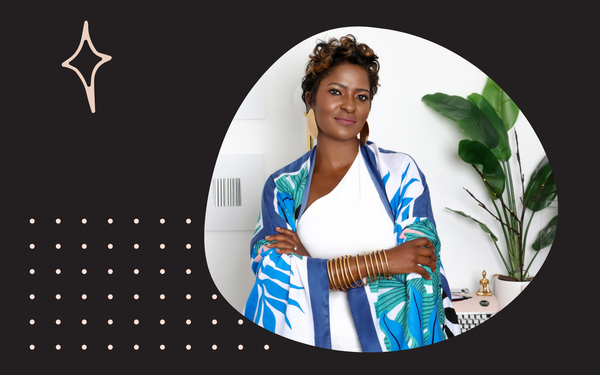
Shruti Shah knows what it feels like when investors override your instincts and how steep the price is when you let them. As co-founder and COO of Move Loot, a Y Combinator-backed online marketplace for used furniture, Shah and her team raised $22 million and led national expansion, building a capital-intensive logistics business from scratch with customers who loved the service. But when later-stage investors changed their minds about the strategy and pushed the team to shift the model, it took them off their center of gravity. Move Loot wound down in 2016. Not the ending Shah hoped for, but one that fundamentally rewired how she sees the founder-investor relationship.
Today, as Co-General Partner at Symphonic Capital alongside Sydney Thomas (whom she joined in 2022), Shah has a clear mission: "to be the VC I didn't have." Symphonic closed its first fund at $13.5 million (backed by Bank of America, Illumen Capital, Uplifting Capital Management, Candide Group, Mary Reynolds Babcock Foundation, and Known Financial) in a challenging fundraising environment for women-led emerging managers. The firm invests in pre-seed and seed stage companies building AI-enabled health tech, fintech, and climate tech businesses, focusing on founders with proximity to the problems they're solving, particularly those serving overlooked and underserved communities beyond Silicon Valley.
Before Move Loot, Shah taught 2nd, 4th, and 5th grade in Baltimore through Teach for America and worked at NewSchools Venture Seed Fund investing in education technology companies. She earned her B.A. in Political Science with a minor in Entrepreneurship from UNC Chapel Hill and her M.S. in Education with a focus on Urban Education from Johns Hopkins University. She was honored by Forbes as a 2016 30 Under 30 recipient in Retail and E-Commerce and by the Aspen Institute as an Aspen Ideas Festival Scholar in reimagining capitalism.
Here, Shah breaks down the painful Move Loot lesson that most VCs haven't lived inside the chaos of not making payroll or had to tell a team you're pivoting because someone with capital said you should. She explains what "proximity to the problem" actually means when evaluating founders and why female founders often undersell the expertise born from their lived experience. And she shares how Symphonic defines success for a pre-seed fund intentionally building for the long view, where every founder teaches them something they fold back into supporting the next founder, and where endurance and institution building matter more than unicorn theater.
From Co-Founding Y Combinator-Backed Move Loot to Co-General Partner at Symphonic Capital – Building the VC You Didn't Have as a Founder
You co-founded and served as COO of Move Loot, a Y Combinator-backed online marketplace for buying and selling used furniture, where you raised $22 million and led national expansion before winding down in 2016. You've said you joined Sydney Thomas at Symphonic Capital in 2022 "to be the VC I didn't have" when you were building Move Loot, after a group of investors changed their minds about your strategy and asked you to change the business model in ways that didn't work.
You were honored by Forbes as a 2016 30 Under 30 recipient in Retail and E-Commerce and by the Aspen Institute as an Aspen Ideas Festival Scholar. For female founders who have experienced the painful side of venture capital (investors changing direction, business models forced to pivot, companies sold for parts), what did you learn from Move Loot's journey that directly informs how you support founders now? Walk us through how that experience shaped Symphonic's approach to pre-seed investing, and what advice would you give women about controlling their own destiny, trusting their gut, and structuring processes to get to break even as quickly as possible?
When I say I joined Symphonic "to be the VC I didn't have," I mean it in the most literal sense. At Move Loot, we built a national, capital-intensive logistics business from scratch — we were solving a real problem, we had customers who loved us, and we moved fast. But when a group of later stage investors changed their minds about our strategy and pushed us to shift the model, it took us off our center of gravity. It was a painful, clarifying lesson: when you let people who aren't close to the business override your instincts, you pay the price — and the price is steep.
That experience didn't just shape how I invest. It rewired how I see the entire founder-investor relationship.
Most VCs haven't built companies. They've pattern-matched them, advised them, sat on boards — but they haven't lived inside the chaos of not making payroll, or had to tell a team you're pivoting because someone with capital said you should. That distance can calcify into a kind of unintentional cruelty: well-meaning advice that sounds strategic but is disconnected from the reality of what it actually takes to execute. I don't think most investors are malicious. I just think they lack a cultivated empathy gene for what founders are actually up against.
So Sydney and I have built Symphonic to operate differently. Here's how that shows up:
1. We center the founder's lived expertise — not our own preferences.
I know what it feels like to have someone with a board seat but limited context dictate choices that fundamentally alter the trajectory of your business. It's disorienting. It makes you second-guess yourself when you shouldn't. Today, We are intentional about being advisors, not operators-by-proxy. My job is to pressure test assumptions, provide frameworks, surface blind spots, and clear roadblocks — not to steer the ship. You're the one who knows where the icebergs are. I'm here to help you navigate around them, not to grab the wheel.
2. I help founders build toward break-even sooner than they think they need to.
Because I lived through a capital-intensive model in a "growth at all costs" era, I now believe deeply — almost religiously — in designing companies that have a path to sustainability early. Not because it sounds conservative or risk-averse, but because it buys you freedom. Freedom to say no. Freedom to choose your investors. Freedom to build the business you actually want to build, not the one your cap table is forcing you toward. For women especially, who often raise less and face more scrutiny at every stage, profitability isn't just a milestone — it's power.
3. I emphasize alignment and transparent communication from day one.
Move Loot taught me that misalignment doesn't show up suddenly. It accumulates quietly — in small moments, in language that sounds supportive but isn't, in strategic "suggestions" that chip away at your conviction. At Symphonic, we actively screen for investors and co-investors who align with our approach, and we work with founders who want a thought partner, not a puppet master.
We ask founders early:
- What are the non-negotiables in your business model?
- What assumptions are you willing to test?
- Where are you willing to flex, and where do you need us to hold the line with you?
These aren't rhetorical questions. They're the foundation of how we work together.
Advice to women founders
Trust your gut — it's built from lived pattern recognition.If something feels off in your fundraising process, it is. Don't talk yourself out of it. Don't let someone with a term sheet convince you otherwise.
Structure for sustainability.Don't build a business dependent on investor approval to survive. Build one that can hit break-even earlier than you think you need to. It changes everything.
Own your strategy, even as you stay coachable.Listen to input, not directives. There's a difference. You're the one closest to the customers. You're the one who knows what's working and what's theater.
Choose investors who respect your expertise.Ask them: Tell me about a time you disagreed with a founder and how you handled it. Their answer will tell you everything.
Move Loot didn't end the way I hoped. But the experience has made me a better investor - one who views founders as partners, not bets. One who remembers that every founder is doing something really hard: putting something they created out into the world, which means opening themselves up not just to opportunity, but to criticism, rejection, and doubt. As VCs, we owe it to founders to be kind, present, thoughtful, and supportive. That's not soft. That's the work.

Symphonic Capital's $13.5M First Fund and Investing in AI-Enabled Health Tech, Fintech, and Climate Tech for Overlooked Communities
Symphonic Capital closed its first fund at $13.5 million (backed by Illumen Capital, Uplifting Capital Management, Candide Group, and Known Financial) in a challenging fundraising environment for women-led emerging fund managers. You invest in pre-seed and seed stage companies building AI-enabled health tech, fintech, and climate tech businesses, focusing on founders with proximity to the problems they're solving. You've said that many of the problems that need solving exist outside of Silicon Valley, and Symphonic invests beyond the coasts. For female founders building companies that serve overlooked and underserved communities, what does "proximity to the problem" actually mean when you're evaluating founders? How should founders articulate their unique insights or lived experience when pitching investors, and what are the early warning signs that a founder has genuine understanding versus surface-level awareness of the communities they're serving?
At Symphonic, proximity to the problem isn't a buzzword. It's the center of our investment philosophy — and it's one of the most misunderstood concepts in venture.
For founders building for overlooked communities — especially women and people of color — your insight is often your superpower. But you have to articulate it in a way that helps investors see what you see. Not because your insight isn't valid, but because most investors haven't lived in the world you're building for. They need you to close the gap.
What proximity really means to us:
Direct lived experience. You've personally felt the pain point or navigated the system you're trying to change. You're not building for a demographic — you're building for yourself, and people like you.
Deep professional experience. You've spent years inside the environment where the problem lives — clinics, schools, financial institutions, social services, community organizations. You know the informal rules, the workarounds, the reasons things are the way they are.
Embedded relationships. You're in continuous dialogue with the community — not just at user research time, but always. You're not extracting insights. You're part of the conversation.
Long-term pattern recognition. You know why previous solutions failed. You can map the constraints in a way an outsider wouldn't see, because you've lived inside those constraints. That's not anecdotal. That's strategic.
How founders should articulate this
Investors want clarity, not hero narratives. They want to know: Why you? Why now? And what do you see that I don't?
Here's how to answer those questions in a way that lands:
"Why you?" What unique insight did your lived or professional experience give you? Be specific. Not "I understand this market," but "I spent five years navigating this broken system, and here's what I learned that shaped the product we built."
"Why now?" What's changing — regulatory, cultural, technological — that makes your solution newly possible? Timing isn't just about market readiness. It's about inflection points you can see because of your proximity.
"What are outsiders consistently getting wrong?" This is where depth of understanding shows up. If you can articulate the thing everyone else misses, you signal that your proximity is an advantage, not just a story.
"What did you build because of your proximity?" Not anecdotes — product choices. Features. Workflows. Pricing models. Things that wouldn't exist if you hadn't lived this problem.
Early signs the founder has real proximity vs. surface-level awareness
Real proximity:
- Knows the customer's decision-making constraints in granular detail.
- Understands the messy, offline workflows that aren't in pitch decks or market reports.
- Can explain unit economics grounded in real behavior, not hoped-for behavior.
- Has early users who trust them because they already know the community — trust is built before the product even launches.
Surface-level:
- Over-indexing on "the market is huge" instead of "here's how the customer actually buys."
- Relying on academic research or reports instead of lived insight.
- Using generic impact language without specificity.
- Cannot clearly articulate why previous attempts failed.
A note to female founders
Female founders often undersell the expertise born from their lived experience. We're taught to be humble, to not center ourselves, to lead with data instead of intuition. But here's the truth: your lived experience is data. It's pattern recognition. It's insight that can't be Googled.
My advice: Don't minimize it. Operationalize it. Show how it shaped your product, your go-to-market, your pricing. Make it impossible for an investor to ignore. It's one of your biggest differentiators — own it.
Pre-Seed With a Long View – How Symphonic Provides Operational Guidance and Defines Success Differently Than Traditional VCs
Sydney Thomas has said that Symphonic isn't focused on finding two unicorns to return the fund, but instead seeks broader, more sustainable success across the entire portfolio because that drives the most impact and outsized returns long-term. You meet regularly with founders to provide operational guidance through each stage of growth, and you've structured the firm with experts dedicated to solving problems in People/Talent, Business Operations, and other critical areas. For female founders navigating pre-seed fundraising, what operational support should they actually expect from early-stage investors versus what sounds good but never materializes? How do you help founders define clear metrics for success at the earliest stages, and what's your framework for deciding when to double down on portfolio companies versus when to acknowledge something isn't working? What does "success" look like for a pre-seed fund that's intentionally building for the long view?
Early-stage founders often hear promises like "We're hands-on," only to find out that means one quarterly check-in and a Slack channel no one responds to. It's frustrating. It's also avoidable.
At Symphonic, we intentionally built the opposite model — because we believe early operational guidance has outsized returns when applied early, before bad habits calcify and before small problems become existential ones.
What founders should actually expect from early-stage investors
Most investors will say they're supportive. Ask them to show, not tell:
- How often do you meet with your founders?
- Who are the functional experts on your team, and how do founders access them?
- What are examples of problems you've helped founders solve in the last 30 days?
- How do you help with hiring? Pricing? Go-to-market? Financial modeling?
If they can't point to real case studies — not vague statements, but actual examples — it's probably not real.
How we support founders operationally
Regular touchpoints. Weekly or biweekly calls in the earliest days. Not because we're micromanaging, but because early-stage companies move fast and the margin for error is thin. We want to catch things early.
Dedicated experts across talent, people, ops, and fundraising. You shouldn't have to figure out how to structure equity on your own, or how to price your product, or how to hire your first Head of Sales. We've done it. We'll help you do it.
Structured playbooks for going from MVP → traction → repeatability. There's a method to moving from "this works for 10 customers" to "this works at scale." We help you build that muscle.
A relentless focus on metrics that drive the business — not vanity KPIs. We care about the metrics that predict success, not the ones that make slide decks look impressive. There's a difference.
How we help founders define success early
At pre-seed, success is not revenue at all costs. It's learning fast, reducing risk, and compounding insights. We work with founders to define a 12–18 month roadmap with:
- 3–5 North Star outcomes: What does success look like?
- A handful of leading indicators that predict traction: What tells you you're on the right path before the lagging indicators show up?
- Key questions the business must answer: Pricing elasticity, ICP validation, retention drivers, cost to scale the business
- Critical hires and the timing of each: Who do you need, and when?
This isn't bureaucracy. It's clarity. And clarity at the pre-seed stage is a competitive advantage.
Our framework for doubling down vs. acknowledging something isn't working
We ask:
- Is the founder still learning quickly?
- Is the insight getting sharper or fuzzier?
- Are we seeing consistent signals from the market — even if they're quiet?
- Has the founder adapted with clarity, not chaos?
- Is the team energized or discouraged? (Energy is data.)
When those answers point toward momentum — even quiet momentum — we lean in. If the core insight is disproven and the founder is spinning instead of synthesizing, we have honest, compassionate conversations early. Not because we want to cut our losses, but because we owe it to founders to be truthful about what we're seeing.
What success looks like for a long-view pre-seed fund
- A portfolio where a high percentage of companies reach meaningful follow-on rounds.Not every company will. But if we're doing our job, most should.
- Founders who want us involved in their next companies or refer us to their friends because they felt truly supported.This is the metric that matters most to me. If founders come back or refer us to their founder friends, we did something right.
- Companies that become sustainable, even if they don't become unicorns overnight. Venture is obsessed with outliers. We're interested in endurance and institution building.
- Insights that compound across the portfolio and create a flywheel for Fund II and III. Every founder teaches us something. We take those lessons and fold them back into how we support the next founder.
Are you a woman leader with an inspiring journey to tell? Founded by Women is on a mission to elevate and amplify the voices of women making an impact.
If you're breaking barriers, driving change, or paving the way for others, we’d love to feature your story. Get in touch with us today!
👉 hi@foundedbywomen.org