Nine Years, Two Organisations, One Mission: How Melissa Kramer Is Closing the Gender Gap in UTI Research

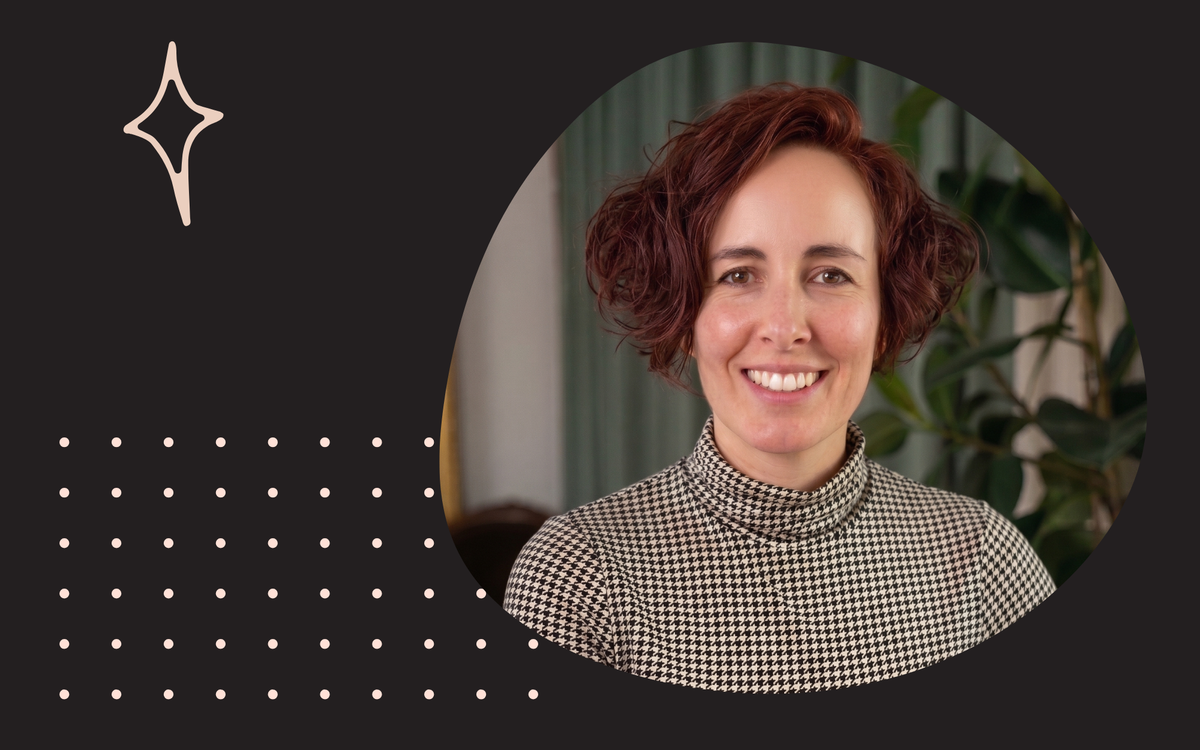
When Melissa Kramer sought help for recurrent UTIs and endometriosis, she encountered what too many women do: inadequate testing, misdiagnosis, and dismissal. The more she researched, the clearer it became that her experience wasn't just bad luck. It reflected something systemic - a gender gap in healthcare and health research that has left conditions disproportionately affecting women chronically underfunded and underexplored.
In 2016, she founded Live UTI Free to begin changing that. What started as a platform for better patient information has grown into a leading global patient research organisation, connecting thousands of women with the clinical studies that need them - and shaping how researchers engage with patient communities in the process. That work eventually led her to found PARED Insights, where her team has developed and validated the RUTISS and RUTIIQ: the first patient-reported outcome measures specifically designed for recurrent UTI, tools that didn't exist before she built them.
Nine years in, Melissa operates at both ends of the problem - a global patient community on one side, a research recruitment and outcomes organisation on the other - in a position few people occupy. In this interview, she shares what drove her to build both, the two connected problems she's working to solve, and where she's pushing next.
This is part of our ongoing 20 Founders On a Mission series. New editions publish regularly. To be featured or nominate a founder, write to us at hi@foundedbywomen.org
What inspired you to start?
My own experiences with recurrent UTIs and endometriosis, which were met with inadequate testing, misdiagnosis, and dismissal, were the spark. The more research I conducted, the clearer it became that my experience wasn't just bad luck. It reflected something systemic: a gender gap in healthcare and health research that has left conditions disproportionately affecting women chronically underfunded and underexplored. I started Live UTI Free in 2016 to change that, beginning with access to better information. It has since grown into a leading patient research organisation with a vast global community, and a platform through which we've been able to connect patients directly with the research that needs them. That work eventually led to the founding of PARED Insights, where we've developed and validated the first patient-reported outcome measures specifically for recurrent UTI (the RUTISS and the RUTIIQ), and we're actively expanding that repertoire to better capture the full patient experience across multiple areas of women's health.
What problem are you solving?
For the past 9 years, I've been working to solve two deeply connected problems. First: patients with recurrent and chronic UTI, and increasingly, overlapping pelvic health conditions, are still widely underserved. In a landscape of underresearched women's health conditions, one of the biggest challenges is the lack of differential diagnosis; symptoms are too often attributed to the most familiar label or psychological origins rather than being comprehensively investigated. Live UTI Free bridges that gap by providing reliable information, community, and access to research. Second: health research itself is subject to a recruitment crisis. Studies frequently fail because researchers can't reach or retain enough participants. Through Live UTI Free and PARED Insights, we're changing how researchers engage with patient communities and, in the process, making studies more accessible, more patient-centred, and more likely to succeed.
What's next for you?
I'm focused on continuing to leverage the organisations I've built to create change at both ends of the problem: the patient experience and the research pipeline. Having a foot in both worlds, through a global patient community on one side and a research recruitment and outcomes organisation on the other, puts me and my team in a rare position to connect these communities in ways that actually move things forward. There is still much research to be done, and so many patient voices that need to be heard, but we have created change, and that's where I intend to keep pushing.
This is part of our ongoing 20 Founders On a Mission series. New editions publish regularly. To be featured or nominate a founder, write to us at hi@foundedbywomen.org