Jools Barrow-Read on Building RedWizard and the Future of External Workforce Governance
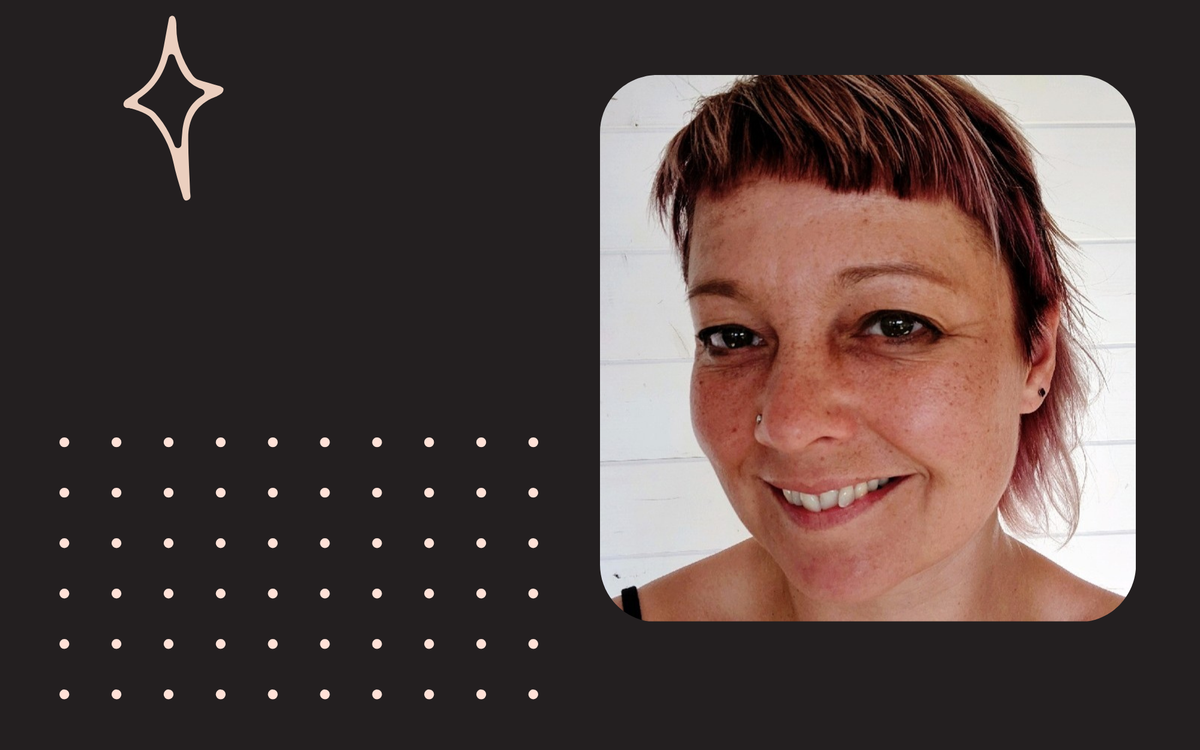
Jools Barrow-Read founded RedWizard in 2014 after years spent designing PMO topologies for large organisations, where she saw firsthand that even the best-designed structures fail without strong connections between the parts. That insight became the foundation of RedWizard, a UK-based consultancy helping businesses navigate the increasingly complex world of contractors, freelancers, agency workers, and SOW suppliers.
Rather than treating governance, compliance, and workforce strategy as separate problems, Jools built RedWizard around the idea that the external workforce is an ecosystem, one where information flow, decision-making, and accountability all have to work together. That thinking has shaped RedWizard's proprietary Concerto® model, which maps how different parts of an organisation's external workforce capability connect and influence one another, giving leaders a clearer path to reducing risk and using external talent strategically.
In this interview, Jools shares what inspired her to start RedWizard, the problem she set out to solve, and what's next as she scales Concerto® and RedWizard's new capability-building platform, Learn, alongside the hands-on consulting work that has defined the business since day one.
Know a founder (or are one) doing incredible work? Founded by Women Awards are open for entries. If you're building something bold, leading with purpose, or driving change in your industry, we'd love for you to enter. 👉 foundedbywomen.org/awards
Q: What inspired you to start RedWizard?
My route into this work was not especially linear. I trained at Chelsea School of Art and, before I ever found myself in PMO, I ran an independent record label out of Lisbon. So, I think I have always been drawn to work that brings different people, ideas and moving parts together. When I later returned to London and fell into PMO, that instinct became much more structured.
RedWizard really came from the work I was doing then, designing PMO structures for complex organisations. I was never just looking at one service in isolation. I was looking at how all the parts fitted together across departments, portfolios and programmes, and I learnt very quickly that the thing that made the difference was not the framework itself. It was the connection between the moving parts.
When I was asked to build a PMO in the external workforce space, I could see the same issue everywhere. Businesses needed flexibility, but the way they managed that external workforce was often fragmented. Different teams owned different bits, processes did not join up, and important tasks were getting stranded between functions. RedWizard was built to help organisations bring more coherence, visibility and right-sized governance to the workforce they already depended on.
Q: What problem are you solving?
We help businesses get far more confident about how they use a flexible external workforce: contractors, freelancers, agency workers and SOW suppliers. Most organisations rely on that talent, but many are still trying to manage it through processes and ownership models that they either outgrew some time ago or never really developed at all.
That creates a very practical problem. Legislation is changing, different functions are responsible for different parts of the journey, and no one is ultimately accountable. So, the workforce is essential to the business, but it is not always well understood. That is when compliance risk increases, cost control becomes harder, and opportunities to use external talent well are missed.
What we do is help organisations build maturity around that. That means clearer governance, better visibility, stronger decision-making and a joined-up operating model. It is not governance for governance's sake. It is about making sure people know what good looks like, decisions are made in the right place, and the business can use external talent with confidence.
I think this matters even more now because work itself is changing. More people want choice in how they work, and AI is forcing organisations to think differently about what gets done by employees, what is borrowed or bought from outside, and what might be automated altogether. Our role is to help businesses make those choices deliberately, safely and in a way that works for both the organisation and the people doing the work.
Q: What's next for you?
The next chapter is about scaling Concerto® and our Learn programme, while still doing the consulting work that has always been at the heart of RedWizard.
Concerto® is the model I have wanted to get out of my head and into the world for a long time. We are in Phase 1 today. At this stage, the AI-enabled conversation engine helps clients reach out to lots of people across their business and gather input on the current state of their external workforce practices. The model currently includes 40 external workforce capabilities, and we continue to refine those and add new capabilities as the industry itself matures.
The assessment in the tool is deliberately quite structured at the moment. It reports maturity indicators for each capability tested, rather than pretending the AI can yet understand all the relationships across the full ecosystem on its own. The consolidated output goes to a dedicated Concerto Consultant, someone who understands the client's industry, who can then contextualise and interpret what the tool has surfaced. That human-in-the-loop element is really important. It means clients get the benefit of technology at scale, but also the judgement and experience needed to make sense of what the findings mean for them.
Learn is the capability-building piece. A lot of managers are expected to engage and manage external workers without ever really being taught how to do it well. Learn is designed to make that knowledge practical and accessible, whether someone wants to read, watch, or just get quick guidance at the point they need it. Compliance is often where organisations start, because that is where the immediate risk is, but the bigger opportunity is helping managers build confidence and make better day-to-day decisions.
The consulting work will continue alongside that, because that is still core to who we are. We are not a consultancy that hands over a paper and walks away. We get embedded, work as an extension of the client's team, and help them make the change happen. That execution focus is what built RedWizard, and I do not see that changing.
Over time, the valuable experience and case studies from client work will feed back into the model, helping us refine and strengthen those notional relationships between capabilities. As clients act on the recommendations, we can learn more about the patterns consultants already recognise through experience: where one capability influences another, what tends to unlock progress, and what creates friction. The more we can capture and evidence that, the more Concerto® can evolve into an assessment tool that organisations can use more widely as part of a subscription-based service.
That is the direction of travel: combining AI-enabled reach, a strong external workforce capability model and expert human interpretation, then learning from real client outcomes so the platform becomes more powerful over time. For me, it is about connecting what businesses need, how people want to work, and the governance that makes it all sustainable.
Are you a woman leader with an inspiring story? Founded by Women elevates the voices of women making an impact.
Breaking barriers or paving the way for others? We'd love to feature you. Get in touch! 👉 hi@foundedbywomen.org