From Systems to Self-Authorship: How JJ Byun Built a Bridge Between Cultures and Careers
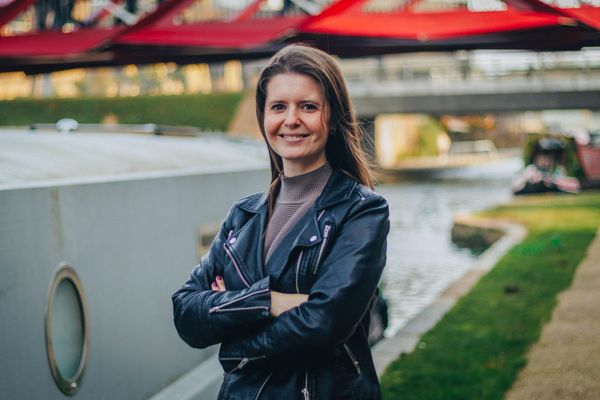
After a 20-year career spanning people-centred systems, complex project delivery, organisational transformation and leadership development across Asia and Europe, JJ Byun, Founder and Managing Director of BYUN & CO, began asking a different kind of question - not how systems change, but how people do. That curiosity, shaped by years of moving between South Korea and the UK, became the foundation for BYUN & CO, a practice that brings project management, coaching and mindfulness together under one idea: meaningful change has to happen in people, not just in the structures around them.
Within BYUN & CO, she later created Lifescape Rising, a space dedicated to exploring the human side of transformation - helping people recognise the invisible expectations, roles and definitions of success they have inherited, and become more conscious of what they choose to carry forward. It is work rooted in her own experience of standing between two cultures, and in a belief that self-authorship means staying connected to where you come from while learning to recognise and trust your own voice.
In this Q&A, JJ shares how mindfulness and coaching can shift the outcome of even the most pressured leadership moments, and offers a piece of advice for women building businesses from varied, non-linear careers: stop trying to make your story simpler, and start looking for the thread that is uniquely yours.
Know a founder (or are one) doing incredible work? Founded by Women Awards are open for entries. If you're building something bold, leading with purpose, or driving change in your industry, we'd love for you to enter. 👉 foundedbywomen.org/awards
Q: What led you to found BYUN & CO after 20 years across people-centred IT systems, project delivery, and executive coaching?
For much of my career, I worked in the world of change.
I began in South Korea in people-centred IT systems, then moved across Asia and Europe through complex project delivery, organisational transformation and leadership development. I learned how to create structure, navigate complexity and turn ambitious ideas into action.
As my career evolved, I became curious about another layer of change.
Organisations could redesign systems, introduce new strategies and launch major transformation programmes, while the people inside them could still be responding from familiar pressures, expectations and deeply established patterns.
That stayed with me.
Living and working across different cultures also made me more aware of the invisible systems we carry inside us - the expectations we absorb, the roles we learn to play, the definitions of success we inherit and the ways we learn to belong.
Moving between East and West often felt like standing on a bridge.
On one side were the relationships, values and ways of seeing that had shaped me in South Korea. On the other were ideas I encountered through living and working in the UK - around individuality, voice, choice and self-definition.
I became fascinated by the bridge itself.
How do we honour where we come from while becoming more conscious of who we are becoming? How do we recognise the influences that have shaped us and develop a greater capacity to decide what we want to carry forward?
Those questions drew me more deeply into coaching, mindfulness and adult development, and eventually became part of why I founded BYUN & CO.
BYUN & CO brings together my work in project management, transformation, coaching and mindfulness around one central interest: how meaningful change happens in people as well as in organisations.
Within BYUN & CO, I later created Lifescape Rising as a space to explore the human and developmental side of that question.
I think of Lifescape Rising as a landscape for inquiry.
Like any landscape, our lives are shaped by many forces – history, culture, relationships, experience, what has taken root and what has been carried from elsewhere. Much of this shaping happens long before we consciously decide what we believe or how we want to live.
Lifescape Rising creates a space to look at that landscape with greater awareness: to understand what has shaped us, recognise what still feels meaningful, question what may no longer fit, and become more conscious of the direction we choose.
That is where my interest in self-authorship sits.
For me, self-authorship means being able to stay connected to the people, cultures and worlds around us while developing our own perspective, values and direction.
It is learning to hear the many voices that have shaped us while becoming more able to recognise our own.
That question continues to sit underneath much of my work:
How do we remain connected to the worlds that shaped us, while becoming increasingly able to author the life that comes next?
Q: Can you share an example of how bringing mindfulness and coaching into complex project or leadership work has changed the outcome for a client?
I remember working with a leadership team during a particularly demanding period of delivery.
On paper, everyone knew what needed to happen. The plan was there. The expertise was there. The commitment was there.
And yet, the harder everyone worked, the more stuck things seemed to become.
Working hours grew longer. Decisions became more urgent. People held more tightly to their own areas of responsibility. Conversations that had once felt straightforward became guarded.
You could almost feel the pressure entering the room before anyone spoke.
The question everyone kept asking was, "How do we fix this?"
Yet the pressure itself was beginning to influence how the team was thinking, listening and responding to one another.
That became the turning point.
We slowed the pace of the conversation. We made room for each person to speak without immediately being challenged or corrected, and I kept bringing the discussion back to curiosity rather than blame.
By listening closely, allowing a little more silence, and resisting the urge to rush towards the next solution, we created enough trust for people to say what they had been holding back.
Then we began asking different questions.
What are we assuming here?
What are we defending?
What are we finding difficult to say?
What are we reacting to?
The mood in the room began to shift.
People spoke more honestly. They listened to one another differently. They also began to see themselves inside the situation rather than looking only at the problem in front of them.
One person recognised how quickly they became defensive when their area was questioned. Another realised they had been avoiding a difficult conversation because they wanted to preserve harmony. Others began to see how urgency was affecting the quality of their decisions.
The project itself was still complex. The team, however, was meeting that complexity differently.
That is where mindfulness and coaching became very practical.
Mindfulness helped people notice their reactions while they were happening. Coaching gave them enough room to explore those reactions and ask, "Is this the response I want to choose?"
From there, responsibilities became clearer. Conversations became more direct. Decisions that had been circling began to move, and energy that had been tied up in tension could return to the work.
This is one of the things that continues to fascinate me about inner development.
Sometimes the shift is almost invisible from the outside.
A person notices the impulse to defend and chooses to listen. Someone feels the urge to stay silent and decides to speak. A leader catches the instinct to control and becomes curious instead.
That small space between reaction and choice can change the direction of a conversation - and sometimes the direction of an entire project.
Q: What's one piece of advice you'd give other women looking to build a business that draws on such a varied career background?
For a long time, I thought having a varied career meant I needed to find a simpler way to explain myself.
I would look at all the different chapters and wonder, "Which one am I supposed to lead with?"
Eventually, I realised that a career story does not have to be reduced to one label.
There is only one person who has lived your exact combination of experiences - the places you have lived, the work you have done, the people you have met, the challenges you have faced, the questions you keep returning to, and the particular way all of those things have shaped how you see the world.
There is no other you.
And I think that is easy to underestimate when we are building a business.
We can spend so much time trying to fit ourselves into an existing category that we overlook the perspective that is uniquely ours.
So I would encourage women with broad or non-linear careers to look at their experience differently.
Instead of asking, "How do I make all of this look consistent?", ask:
What has kept calling my attention across different chapters of my life?
What do I understand now that I could only have learned through this particular journey?
What do I care enough about to take forward?
That is where your story starts to find its shape.
And then comes intention.
You get to decide which parts of your experience belong in the story you are telling now, what meaning you give them, and where you want that story to lead.
For me, that is the difference between simply recounting a career and giving it direction.
Your business does not have to contain everything you have ever done. It can become an expression of what those experiences have taught you and what you now feel drawn to create.
So my advice would be: do not make yourself smaller to make your story easier to explain. Find the thread that is uniquely yours, give it direction, and let that become part of the business you build.
Are you a woman leader with an inspiring story? Founded by Women elevates the voices of women making an impact.
Breaking barriers or paving the way for others? We'd love to feature you. Get in touch! 👉 hi@foundedbywomen.org