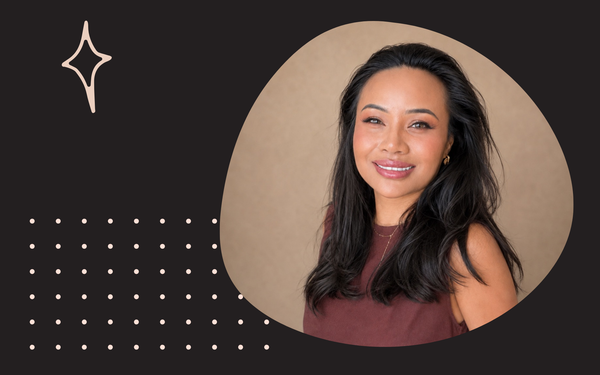
From Operations to Ownership: How Radiance Mack Built a Business Out of Being the One Who Holds Everything Together

Every growing company reaches a point where its founder becomes something more than a leader: an operating system that everyone quietly depends on to keep the pieces connected. Radiance Mack knows that role intimately. Before starting her own business, she spent years in cross-functional operating positions where she was, time and again, the person who knew what was actually going on, not because of a title, but because she was the one holding the threads between departments, decisions and people.
That experience led her to found The Mack Standard, built around a simple but uncomfortable question: why does the founder have to carry all of this in the first place? Rather than helping founders manage the weight of being indispensable, her work is about identifying where a business has become overly dependent on one person's memory and instinct, and replacing that dependency with clearer ownership and stronger structure.
In this Q&A, Radiance shares the signals that show a founder has become their company's single point of failure, and makes the case for why operational skill, so often dismissed as just being detail-oriented or good at keeping things together, is in fact a form of judgment and pattern recognition worth building a business around.
Know a founder (or are one) doing incredible work? Founded by Women Awards are open for entries. If you're building something bold, leading with purpose, or driving change in your industry, we'd love for you to enter. 👉 foundedbywomen.org/awards
Q: What led you to found The Mack Standard after working in cross-functional operating roles, and what pattern of founder dependency did you keep seeing?
I kept ending up in the same position: being the person who knew what was actually going on.
Not because I had the biggest title, but because I was the one connecting the pieces. I knew what the CEO was waiting on, what another department had dropped, which decision was holding something up, which conversation had not happened yet and what was likely to become a problem next.
After a while, I realized I was not just doing operations. I was filling the space between all of the systems, people and departments that were supposed to be working together.
And I kept seeing the same thing with founders. The business could be growing, the team could be talented, there could be five or ten different software platforms in place, and somehow the founder was still the only person who really knew how everything connected.
That is exhausting, but more importantly, it is risky.
At some point I stopped asking, “How do I help the founder carry this better?” and started asking, “Why does the founder have to carry all of this in the first place?”
That question is really where The Mack Standard came from.
Q: Can you share an example of a practical signal that tells a founder they've become the company's operating system, and what they should do about it?
A very simple one is this:
If your team cannot move until they hear from you, you are probably too embedded in the operating system.
If people are constantly asking, “What do you want me to do here?” “Did anyone follow up on this?” “Who owns that?” “Are we still doing this?” or “Can you remind me what we decided?” that is usually not a people problem.
It is a structure problem.
Founders are often told they need to delegate more, but delegation does not work if the business still depends on information that only lives in the founder’s head.
The first thing I would do is pay attention to what keeps coming back to you. The same questions. The same approvals. The same fires. The same updates you have to chase.
That repetition is data.
It tells you where the business is overly dependent on you and where you need clearer ownership, better decision rules, stronger visibility or a more defined operating process.
The goal is not to disappear from your company. The goal is to stop being the only reason it keeps moving.
Q: What's one piece of advice you'd give other women looking to build a business around operational expertise like yours?
Stop dismissing what you are good at just because it comes naturally to you.
A lot of women are the person behind the scenes keeping everything together. We remember the details. We catch what other people miss. We know who needs to talk to whom. We fix things before they become visible problems.
And because we are good at it, people sometimes treat it like it is just part of our personality.
It is not.
That is judgment. That is pattern recognition. That is operational intelligence.
The real shift for me was realizing I did not want to spend the rest of my career simply being the person who could carry more than everyone else.
I wanted to build something from what I knew.
So my advice would be: pay attention to the problems people repeatedly trust you to solve. Then ask yourself how you can turn that into a method, a product, a system or a business that does not require you to personally hold everything together forever.
There is a difference between being indispensable and building something valuable.
I would choose the second one.
Are you a woman leader with an inspiring story? Founded by Women elevates the voices of women making an impact.
Breaking barriers or paving the way for others? We'd love to feature you. Get in touch! 👉 hi@foundedbywomen.org