From Healthcare to Self-Mapping: How Sara Ellis Built Stone & Sky Around the Human Translation Method
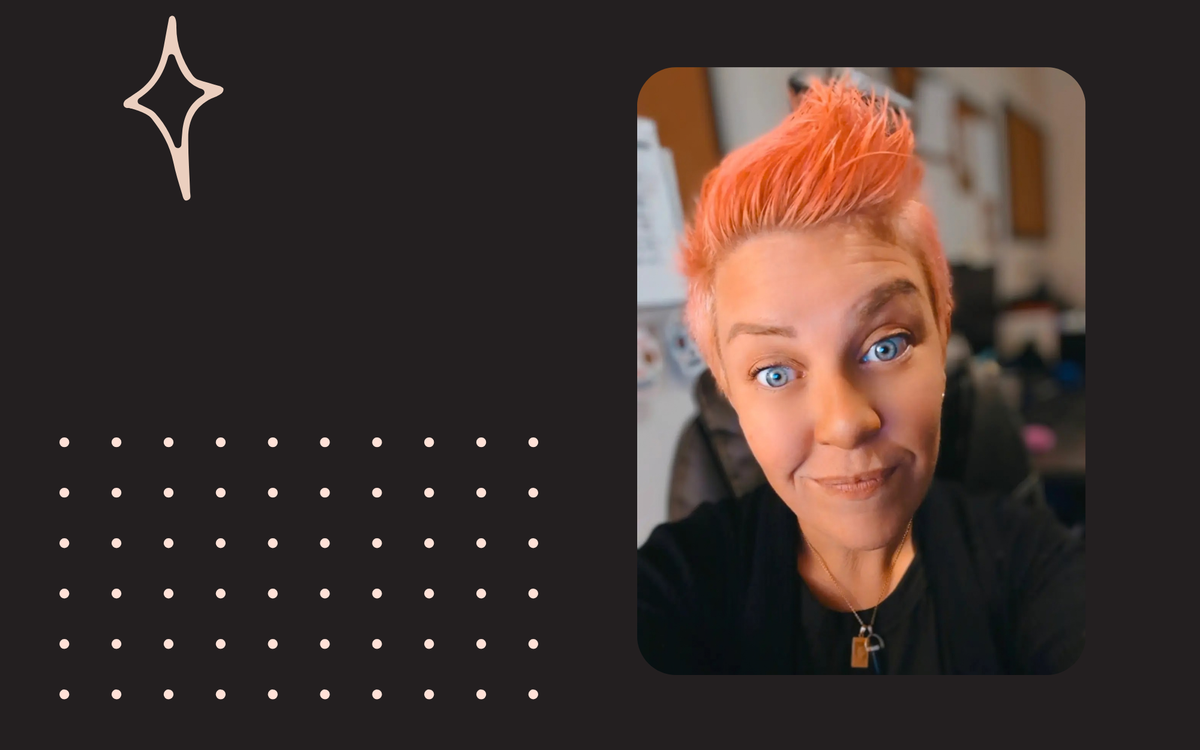
Sara Ellis spent most of her adult life in healthcare, much of it in women's health, supporting people through pregnancy, infertility, loss, diagnoses, and menopause. Along the way, she learned that two people can share the same diagnosis on paper and still have completely different stories, and that the most useful thing she could often do was listen long enough to understand what someone was really asking.
That lesson became the foundation of Stone & Sky Self-Mapping, the Maine-based personalized self-mapping company Sara founded after leaving healthcare. At its core is her Human Translation Method, built on a simple principle: no framework should ever become more authoritative than the person it describes. As Sara puts it, "The person is the authority. The chart is the map."
In this Q&A, Sara shares how translating complex information for patients shaped the way she built her product and intake experience, why she designed Stone & Sky to leave room for "I don't know" and "it's complicated," and what she'd tell other women who want to turn an instinct from a completely different field into a business of their own.
Know a founder (or are one) doing incredible work? Founded by Women Awards are open for entries. If you're building something bold, leading with purpose, or driving change in your industry, we'd love for you to enter. 👉 foundedbywomen.org/awards
Q: What led you to found Stone & Sky after years working in healthcare, and how did translating complex information for patients shape your Human Translation Method?
I spent most of my adult life working in healthcare, and one of the biggest things it taught me is that knowing what something is called and understanding what it means to the person living it are two very different things.
Especially working in women’s health, I met people during some of the most personal parts of their lives. Pregnancy, infertility, loss, diagnoses, procedures, pain, menopause, fear, and sometimes just finally trying to get an answer for something they had been experiencing for years.
You learn pretty quickly that two people can have the exact same diagnosis in their chart and not have the same story at all.
The medical information mattered, obviously. But so did everything surrounding it. What had happened before they got to us. What they were afraid of. What they had already been told. What they understood. What they didn’t. What was happening at home. Sometimes the most important thing I could do was listen long enough to understand what they were actually asking me.
Then I went through my own period of trying to understand myself. I had been diagnosed with ADHD when I was young, but I wasn’t diagnosed autistic until I was 35. Suddenly I had language for parts of myself I’d been living with my entire life.
And even then, I realized that having the right label didn’t magically explain me.
Around the same time, I was getting much deeper into astrology and my own birth chart. I kept finding pieces that resonated, but I didn’t want another system telling me who I was supposed to be. I wanted to understand why certain things felt so recognizable in the context of the life I had actually lived.
That’s really where Stone & Sky came from.
The Human Translation Method grew from the belief that no framework should ever become more authoritative than the human being it’s describing. A diagnosis can give you language. A birth chart can give you a map. Your family history can show you where something may have begun. But you are still the person who lived the life.
That’s why one of the central ideas behind Stone & Sky is: The person is the authority. The chart is the map.
I’m not trying to tell someone who they are. I’m trying to help them recognize themselves.
Q: Can you share an example of how that healthcare background changed the way you approached building the product and web experience itself?
One of the biggest ways it shaped Stone & Sky was that I refused to build something where the system knew more about the person than the person was allowed to tell me about themselves.
That’s surprisingly easy to do.
I could take someone’s birth information, generate a chart, interpret all of the placements, and produce something that was technically personalized. But it still wouldn’t necessarily be them.
So Stone & Sky asks about the life around the chart. What feels true about you? What doesn’t? What keeps happening? What did your family teach you? What are you trying to understand? What do people misunderstand about you? What have you had to adapt around? What parts of yourself are you only beginning to recognize?
Those answers can completely change how I translate the same piece of symbolic information for two different people.
That philosophy eventually affected the website and intake experience too. I don’t want someone entering Stone & Sky to feel like they’re taking a test where they’re supposed to know the right answer. There has to be room for “I don’t know,” “it’s complicated,” “both,” or “none of these quite fit.”
Healthcare taught me that the information you collect about somebody only becomes useful when you understand the human context around it.
So even though Stone & Sky looks very different from anything I ever did in a medical office, I’m still doing something that feels incredibly familiar: listening to what someone is telling me, noticing the pieces that connect, and helping translate all of that information back into something that feels recognizable to the person living it.
Q: What’s one piece of advice you’d give other women looking to build a business around a skill or instinct they developed in a completely different field?
Pay attention to the thing people have always come to you for, especially if you’ve never thought of it as a skill.
I thought I was leaving healthcare and starting something completely unrelated. It took building Stone & Sky for me to realize that I had carried the most important part of my work with me.
People have always told me their stories.
And somewhere along the way, I became very good at listening for what was underneath them. I notice connections. I remember the little detail somebody mentioned twenty minutes ago. I ask another question when something doesn’t quite fit. And I care a lot about whether the person I’m talking to feels understood rather than simply explained.
None of that appears on a medical assistant job description.
But it turned out to be the foundation of an entire business.
So I think my advice would be not to look only at your résumé when you’re trying to figure out what you have to offer. Look at what you’ve been practicing without realizing you were practicing it.
Sometimes the thing you’ve been becoming good at for twenty years has been hiding underneath all the job titles.
Are you a woman leader with an inspiring story? Founded by Women elevates the voices of women making an impact.
Breaking barriers or paving the way for others? We'd love to feature you. Get in touch! 👉 hi@foundedbywomen.org