Audrey Hackett on Why ESG Is the Hard Science Nobody Talks About
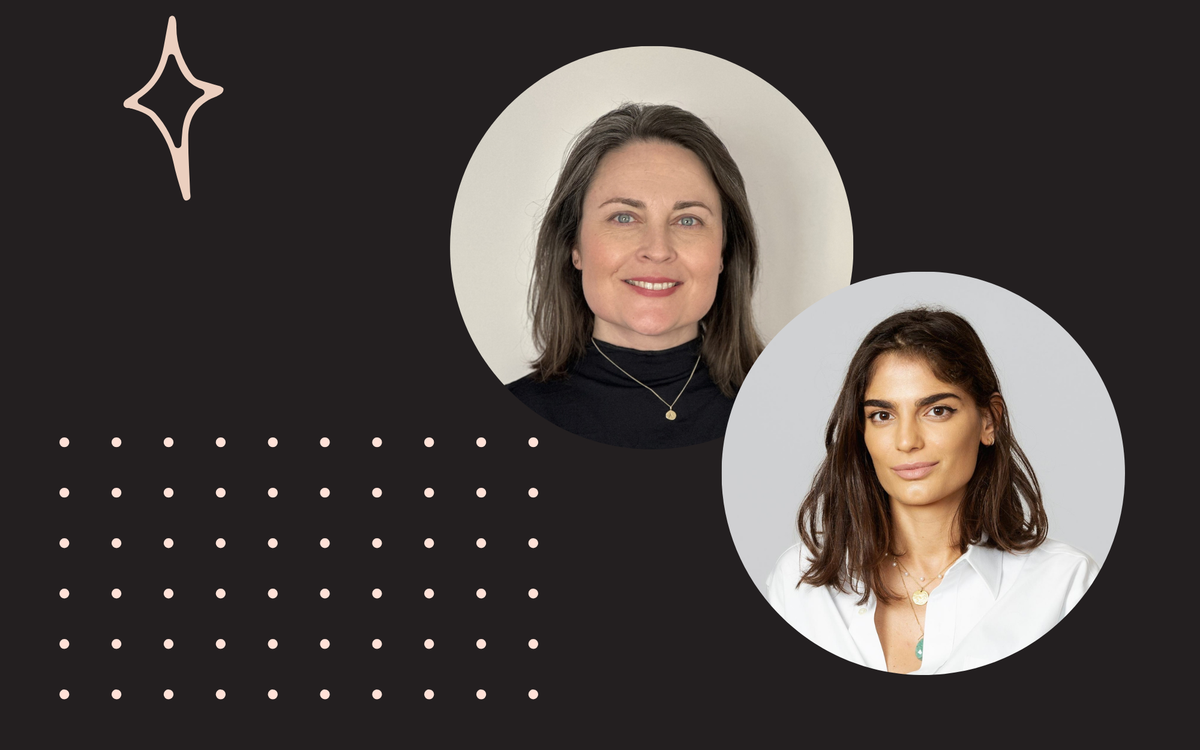
When it comes to large-scale renewable energy projects, most conversations about risk focus on the technical: wind resource data, engineering specs, financing structures. Audrey Hackett believes the industry has it backwards. As co-founder of Solenne Solutions, she has built a consultancy around a simple but often overlooked idea: that understanding and earning the trust of local communities is not a "soft" add-on to project development, but one of the hardest and most consequential problems a company will face.
Audrey's conviction comes from years spent in the field. As Chief ESG Officer at CWP Global, she designed environmental, social and governance strategies for green hydrogen projects in some of the world's most remote and under-developed regions, working alongside her now co-founder, Mia Kovacic. Together they saw how early, deliberate stakeholder engagement could shape not just a project's reputation, but its commercial and regulatory outcomes.
In this Q&A, Audrey walks us through the story behind Solenne's founding, shares a detailed example of how a proactive community engagement strategy transformed a wind project in Newfoundland, Canada, and offers advice for women building specialist consultancies in technical, male-dominated fields.
Know a founder (or are one) doing incredible work? Founded by Women Awards are open for entries. If you're building something bold, leading with purpose, or driving change in your industry, we'd love for you to enter. 👉 foundedbywomen.org/awards
Q: What led you and Mia to co-found Solenne Solutions, and how did your background as Chief ESG Officer at CWP Global shape the approach you take with clients now?
At CWP Global, Mia and I worked together on a portfolio of large-scale green hydrogen projects in some of the world's most remote and under-developed regions. As Chief ESG Officer, my remit was to design and implement fit-for-purpose environmental, social and governance strategies for each project to mitigate strategic and tactical risks in a way that matched the pace of the development budget. While there, Mia and I saw first hand the value of taking early, deliberate action to understand local stakeholders and to build engagement plans that, combined, pave the way for smoother project development. There is still a misconception that ESG is a soft science but at Solenne we fundamentally disagree. We see non-technical risk as the hard stuff. Understanding your wind resource is easy: you have measuring equipment (1) and modelling software (+ 1) giving you an accurate picture of the power generation potential of a site ( = 2). Grasping and distilling community dynamics and perspectives into a single sentiment rating is literally impossible but you have to spend time trying to solve what is essentially a differential equation with an infinite number of variables! A wind project with insufficient wind will fail just as a wind project with insufficient community respect, trust and support inevitably will. Part of Solenne's mission is to push for equality between technical and non-technical risks and elevate the complexity and specialism involved in the minds of financial decision makers.
Q: Can you share an example of how getting ESG strategy and communications right early has made a real difference for a project you've worked on?
Mia and I collaborated on CWP Global's Gwinya project in Newfoundland, Canada. I had already established a set of principles for how the company would work with Indigenous Communities and a policy on water stewardship for all projects. My approach to project-level ESG strategies always starts with understanding the lay of the land regarding risks and opportunities. Therefore, before any external engagement took place, I undertook a detailed stakeholder analysis with our local representative and an external contractor originally hired to manage State environmental permitting. Examining the range of potential stakeholders and their possible reactions to a significant infrastructure project broadened and deepened our understanding of the local social and environmental ecosystem. The project was in the planning stage, and the State had issued a request for tenders for wind projects, so we had competitors. Designing an engagement plan that prioritised First Nations and emphasised transparency was crucial not only to establish our values and credentials with the local communities but also to serve as a key differentiator for CWP Global in the eyes of local regulators. To do this, we mapped each project element, e.g., the wind farm, linear infrastructure, water and so on, to a key stakeholder perspective and developed our project messaging around how we planned to manage these elements to address concerns. We then scheduled a programme of public consultations and extended invitations to a broad section of the community, including local universities and businesses. In advance, we prepared written non-technical summaries of the proposal that were shared digitally and in hard copy. A key design element of this process was intentionally allowing time for reflection and follow-up questions after the consultations finished which was made possible by keeping an updated webpage and a locally-staffed email account. Anecdotally, at one of these sessions, the local university asked a stream of highly technical questions relating to our approach to social performance, international standards and human rights. I am glad to say, I passed their test! The outcomes included a much better understanding of the strength and specificity of concerns held by the local hunting lodge owners which turned out to be more manageable than we had originally suspected; general acceptance of using existing power lines to run our project's pipelines; an unexpected offer of support with skills development; and a much clearer picture of which elements of the project vision were actually possible, allowing for more realistic scoping of technical and non-technical studies. There was no regulatory requirement to hold public consultations when we did, nor was there a commercial impetus since development was very early stage. However, we believed it was the right thing to do and the intelligence we gathered was incredibly useful in informing the project's engineering and commercial design.
Q: What's one piece of advice you'd give other women looking to build a specialist consultancy in a technical field like ESG?
My advice would be to communicate your value in language that resonates best with financial decision makers. Focus your messaging on how your service offering can further either project development, or other company objectives, by tying deliverables to specific milestones. It's not always possible, but if you can, try to quantify this value in concrete terms such as risk mitigated, delays avoided, smoother permitting processes, clearing cash call hurdles and so on. To do this well, you will need a solid understanding your client's business model so take the time to find out as much as you can about that before you make your pitch.
Are you a woman leader with an inspiring story? Founded by Women elevates the voices of women making an impact.
Breaking barriers or paving the way for others? We'd love to feature you. Get in touch! 👉 hi@foundedbywomen.org