Alicia Garcia-Romero of SUPERNATURAL on Building a Stone-Like Material That Pulls Carbon From the Air

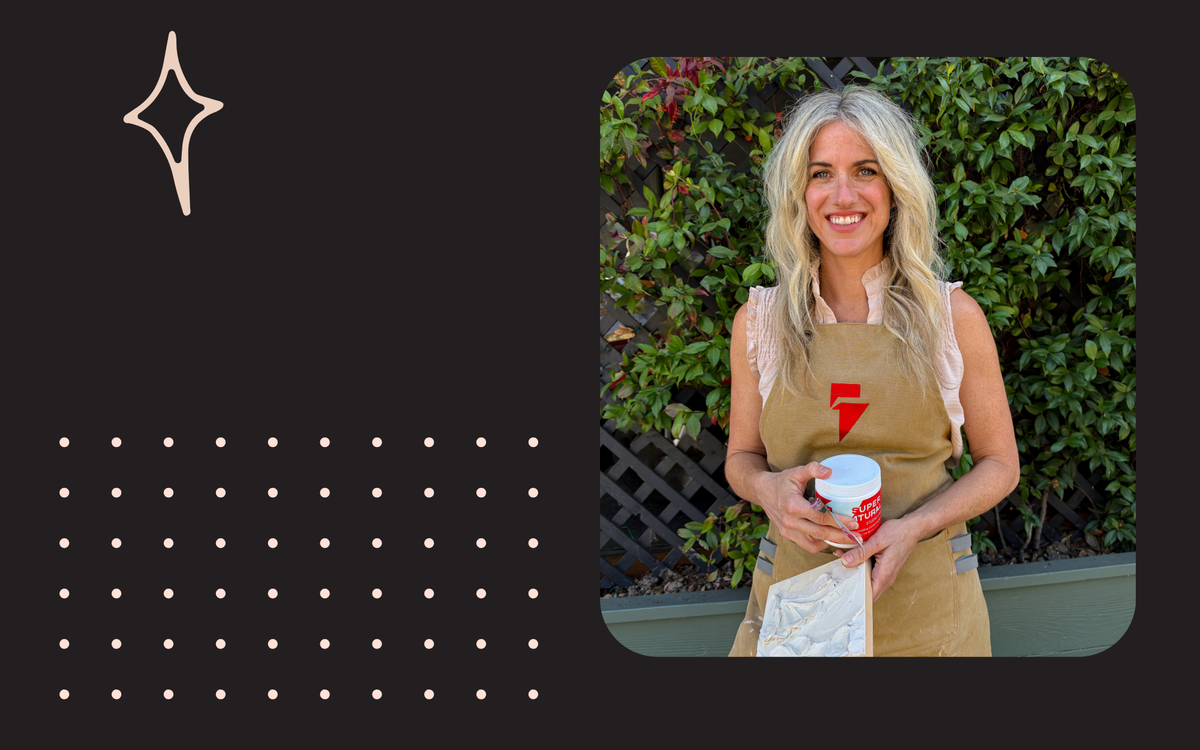
Most art mediums are built on plastic, and most wall compounds contain crystalline silica. Alicia Garcia-Romero spent eighteen years working with these materials as an artist, an architectural designer and a furniture maker before she started questioning them. The turning point came while she was designing furniture, pregnant, with a two-year-old beside her. She decided that making more of the same would never leave the planet better for her children.
Her answer was SUPERNATURAL, a Public Benefit Corporation that she founded and leads as CEO. Together with materials scientist Tom Vermeeren, she spent six years and hundreds of formulations developing a mineral-organic base that combines plant-derived ingredients with minerals that capture carbon as they cure. Along the way, batches cracked, warped and even melted a bucket, until one morning a batch cured clean into something that felt like stone.
Now that material is reaching the market. Studio One, a mineral molding paste that cures into real stone, arrives in artists' hands later this month, with the Built Line of decorative finishes for architects and designers following next year. In this Q&A, Alicia shares what inspired the company, why she chose the PBC structure to hold herself accountable, and where she sees a carbon-capturing material going next.
Know a founder (or are one) doing incredible work? Founded by Women Awards are open for entries. If you're building something bold, leading with purpose, or driving change in your industry, we'd love for you to enter. 👉 foundedbywomen.org/awards
Q: What inspired you to start SUPERNATURAL?
I went looking for a material I couldn't find.
I was designing furniture. Pregnant, with a two-year-old beside me. Somewhere in the middle of specifying finishes, I looked at my son and knew I wanted to leave the planet better for them both. Making more of the same wasn't going to do that.
I'd spent eighteen years with these materials, as an artist, an architectural designer, on job sites and in furniture factories, and I had never really questioned them. Now I couldn't stop. Most art mediums are built on plastic. Most wall compounds contain crystalline silica. Nobody set out to cause harm. These were defaults, set decades ago, when performance and cost were the main questions being asked.
Better options existed, made by people I respect. But too often products came with a tradeoff: healthier, or better performing, or a lower footprint. I didn't want the tradeoff. I wanted all of it, in one material that was a pleasure to work with.
So after a long search, I found a materials scientist who was up for the challenge: Tom Vermeeren, thirty-five years in the field. We spent six years and hundreds of formulations building a mineral-organic base. It combines plant-derived ingredients with minerals that react with air and water, capturing carbon as they cure. Batches cracked, warped, and bloomed black specks. One batch got so hot, we melted a bucket. Then one morning, one cured clean. Stone, sitting in my hand. It felt supernatural.
That's when I realized this was bigger than I'd thought. This shouldn’t be limited to one product. It's a foundation for an artist's molding paste, a designer's wall finish, and, in time, a lot more.
Q: Why a Public Benefit Corporation?
When I learned what a Public Benefit Corporation was, I was so excited because it gave a name and framework for the company we were already running.
So I made it legal. A PBC is bound to weigh people and planet alongside profit. I wanted anyone who works with us, buys from us, or invests in us to know that from the first conversation. This is our DNA. It doesn't get diluted when the pressure comes.
And the pressure does come. In the lab, the easy answer was often an ingredient that solved a performance problem and failed our health or environmental standard. We didn't test those. We asked what that ingredient actually did, and found another way to do it. Sometimes that took two ingredients instead of one. Sometimes it took months or years of research and testing.
It shapes how we talk, too. Studio One carries a small amount of synthetic stabilizer, about one part in a hundred. We could have left it out of the conversation. Instead, we put a number on it, and we keep testing for better.
It shapes who we work with. Partners know what we stand for before they sign on. We earn our claims, we don't blur lines, and we don't make decisions on financial return alone. The people who join us want the same things we do.
As CEO, every decision gets the same question: does it hold our standard for the planet, in service to the people and our company's values? This structure anchors that.
Q: What's next for SUPERNATURAL?
Later this month, Studio One will (finally!) be in artists' hands. It's a mineral molding paste and ground that cures into real stone. That's the beginning of a line that will grow into complementary products.
Next year, we open the Built Line: decorative finishes for architects and designers, made from the same mineral foundation. Same standard, larger scale. Walls with depth and texture that are better to live with.
From there, the foundation keeps going. Everyday building products. Cast and printed forms. Further out, I see buildings 3-D printed in our material, seawalls that grow small ecosystems at the waterline, and public sculpture quietly pulling carbon from the air. Every product we make and will make is designed to capture carbon while out in the world.
Six years ago, it was an idea. Two years ago, the material became real. This month, it's a product artists can buy.
What excites me most as I think about our future is the creatives; the students, artists and builders who will pick it up and make something we never imagined.
Are you a woman leader with an inspiring story? Founded by Women elevates the voices of women making an impact.
Breaking barriers or paving the way for others? We'd love to feature you. Get in touch! 👉 hi@foundedbywomen.org