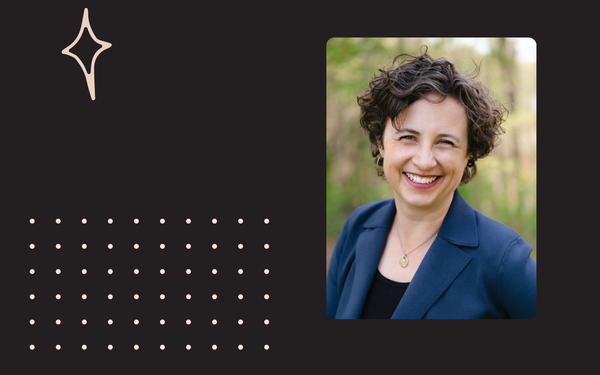
"At Heart, I Will Always Be a Journalist": Nealy Gihan, APR on 25 Years From Newsrooms to Corporate to On Point Transportation PR, and Why Career Paths Are Rarely Linear


Nealy Gihan, APR, is a seasoned communicator with 25 years of experience spanning print journalism, corporate communications, nonprofit work, and government communications. But as she puts it: "At heart, I will always be a journalist."
That drive to tell good, impactful stories has propelled her through every phase of her career. She spent five years writing and editing for newspapers and magazines, including producing a tourism guide for the City of Lincoln, Nebraska. She spent seven years developing messaging and crisis communications at Anthem, where she also helped maintained a Nielsen Norman award-winning intranet. Today, she's a Senior Public Relations Specialist at On Point Transportation PR, specializing in communications and public involvement for transportation and infrastructure projects in and around the Hampton Roads, Virginia, region.
She's also President of PRSA Hampton Roads, sits on the Virginia Beach Public Library Board (where she served as Board Chair 2022-2023), and holds a board position with the Norfolk Tourism Foundation. She was named a 2024 Inside Business Women in Business honoree and is a Maynard Institute Fellow. She's Accredited in Public Relations (APR).
Through Purple Inked, which she founded, Nealy provides writing coaching, media training, and personal branding guidance. She has short stories published and is currently working to finish her first novel.
Her career path wasn't linear. She's been laid off three times. She's worked in environments where support and collaboration were not always present. Those experiences were difficult, but they taught her important lessons about resilience and leadership. They helped her become very clear about the kind of communicator and leader she wants to be: someone who values integrity, supports their team, and creates an environment where people feel respected and appreciated.
One of her most influential mentors was Dick Thien, a founding editor of USA Today, whom she first met through the Chips Quinn Scholarship program while she was in college. The program, supported by the Freedom Forum, played a significant role in shaping her path in journalism and helped open doors that later led to opportunities like becoming a Maynard Institute Fellow.
She started her career at the Lincoln Journal-Star, where she was surrounded by talented journalists and editors who poured into her. There, she found another mentor in editor-in-chief Kathy Rutledge, one of the first female leaders she observed closely. Kathy showed her that leadership doesn't have to be loud or performative to be effective. She led with kindness, thoughtfulness, and quiet confidence. As someone who is not naturally the most outgoing person in the room, seeing Kathy's leadership style helped Nealy understand that thoughtful, steady leadership can be incredibly powerful.
For women building communications careers, one of the most important things Nealy has learned is that career paths are rarely linear. Layoffs, transitions, and unexpected challenges can be discouraging in the moment, but they can also strengthen your adaptability and perspective.
As she reflects: "You can do everything and have it all. You just can't do it all at once."
From Print Journalism to Corporate Communications to PR Leadership - 25 Years of "Transforming Ideas Into Strategies, Words, and Images That Resonate"
Q: You're a seasoned communicator with 25 years of experience spanning print journalism (5 years writing and editing for newspapers and magazines, including producing a tourism guide for the City of Lincoln, Nebraska), corporate communications (7 years developing messaging and crisis communications at Amerigroup, which later became part of Anthem and is now Elevance Health, where you helped maintained a Nielsen Norman award-winning intranet), and now PR leadership as Senior Public Relations Specialist at On Point Transportation PR. You also founded Purple Inked, where you provided writing coaching, media training, and personal branding support. For female founders building communications careers or transitioning between journalism, corporate comms, and agency work, what did each phase of your career teach you about strategic communications that you wouldn't have learned otherwise? How did your journalism background shape your approach to PR and media relations, and what made you decide to move from corporate communications into agency work at On Point Transportation PR?
A: At heart, I will always be a journalist. The drive to always tell a good, impactful story is innate for me and has been what’s propelled me through each phase of my career.
One of the most influential mentors in my early career was Dick Thien, a founding editor of USA Today, whom I first met through the Chips Quinn Scholarship program while I was in college. The program, supported by the Freedom Forum, played a significant role in shaping my path in journalism and helped open doors that later led to opportunities like becoming a Maynard Institute Fellow. Dick continued mentoring me through my early years as a journalist and was always a phone call or email away with encouragement and professional and fatherly advice. He was also very instrumental in helping me get my first newspaper job as a copy editor with the Lincoln Journal-Star, where I had previously interned.
I was incredibly fortunate to start my career at the Lincoln Journal-Star, where I was surrounded by talented journalists and editors who poured into me and to this day continue to encourage me. In that nurturing environment, my career and writing and editing skills flourished and the firm foundation for everything I’ve done since then was set.
At the paper, I also found another mentor in editor-in-chief Kathy Rutledge. Kathy was one of the first female leaders I observed closely in my career, and she showed me that leadership doesn’t have to be loud or performative to be effective. She led with kindness, thoughtfulness, and quiet confidence. As someone who is not naturally the most outgoing person in the room, seeing her leadership style helped me understand that thoughtful, steady leadership can be incredibly powerful.
Eventually, like many journalists, my path changed because of layoffs in the industry. I was laid off from Link, a free daily publication of The Virginian-Pilot, which pushed me to transition into corporate communications. That shift taught me how communications operate inside large organizations, how messaging supports business strategy, how internal communications shape culture, and how leaders rely on communicators during moments of crisis or change.
During my time at Anthem, I had a boss who trusted me and gave me the freedom to be creative and do my best work. That level of trust allowed me to grow professionally and reinforced how important supportive leadership is in helping communications professionals succeed.
My career has also included meaningful experiences in nonprofit and government communications, including work with Senior Services of Southeastern Virginia, where my supervisor became both a mentor and what I often call my “work mom.” She introduced me to the Public Relations Society of America and has been my professional and personal sounding board every since.
Throughout my career, however, not every experience along the way has been positive. I’ve been laid off three times and have also worked in environments where support and collaboration were not always present. Those experiences were difficult, but they also taught me important lessons about resilience and leadership. They helped me become very clear about the kind of communicator and leader I want to be: someone who values integrity, supports their team, and creates an environment where people feel respected and appreciated.
Alongside my professional work, I also founded Purple Inked, where I provide writing coaching, media training, and personal branding guidance. Purple Inked grew out of my lifelong belief that strong writing and clear communication are essential leadership skills. Whether I’m working with communications professionals, entrepreneurs, or individuals developing their voice, the goal is the same: helping people communicate their ideas with clarity, confidence, and authenticity.
Today, as a Senior Public Relations Specialist at On Point Transportation PR, I’m applying lessons from every phase of my career while learning an entirely new industry focused on transportation and infrastructure. My journalism background has proven especially valuable because strong writing, storytelling, and the ability to explain complex issues clearly are skills that translate across every sector of communications.
For women building communications careers, one of the most important things I’ve learned is that career paths are rarely linear. Layoffs, transitions, and unexpected challenges can be discouraging in the moment, but they can also strengthen your adaptability and perspective. Every chapter of my career—journalism, corporate communications, nonprofit work, government communications, and agency work—has helped shape the communicator and leader I am today.
PRSA Hampton Roads President, 2024 Women in Business Honoree, and Building Leadership While Serving Your Community
Q: Beyond your day job, you serve as President of PRSA Hampton Roads, sit on the Virginia Beach Public Library Board (where you served as Board Chair 2022-2023), and hold a board position with the Norfolk Tourism Foundation. You were named a 2024 Inside Business Women in Business honoree and are a Maynard Institute Fellow. You're also Accredited in Public Relations (APR). For female founders juggling professional growth, community leadership, and building credibility in their industries, how do you balance your PR career with extensive board service and professional association leadership? What's your framework for deciding which leadership opportunities are worth your time versus which are distractions? How has your involvement with PRSA and community boards actually impacted your professional development and business opportunities?
A: Balancing my professional career with board service and community leadership has always been intentional for me. While I care deeply about the work I do in public relations, the reality is that the work I produce in my day job ultimately belongs to the organizations and clients I serve. The work I do through community leadership, writing, and service is where I’m able to channel my personal passions and make an impact that feels uniquely my own.
Serving as president of PRSA Hampton Roads this year has been an especially meaningful leadership opportunity. Professional organizations such as PRSA play a critical role in strengthening our field, supporting ethical communications practices, and creating spaces where professionals can continue learning and connecting with one another. Leading the chapter has given me the opportunity to contribute to the profession while also growing as a leader.
My involvement on boards such as the Virginia Beach Public Library Board, where I previously served as chair, and the Norfolk Tourism Foundation allows me to contribute to organizations that directly shape the communities where I live and work. Similarly, the international missions work I’ve done through my church has allowed me to stay grounded in service and community.
Writing has always been another important outlet for me. I have short stories published and am currently working to finish my first novel. Through Purple Inked, I’m also able to teach writing workshops and provide editing support—two things I genuinely love because they allow me to help others strengthen their own voices and stories.
In many ways, my day job provides the stability that allows me to pursue those passions. At the same time, I’ll be the first to admit that I sometimes take on too much. Staying involved in different organizations and creative pursuits energizes me, but it can also be my downfall if I’m not careful about protecting my time.
One of the best pieces of advice I’ve ever received came from an incredible woman who once told me, “You can do everything and have it all. You just can’t do it all at once.” That perspective has stayed with me because it reframes the idea of balance. It’s not about trying to do everything simultaneously; it’s about recognizing that different seasons of life and career allow different priorities to take center stage.
Ultimately, the leadership opportunities I choose, whether through PRSA, community boards, or creative work, are the ones where I know I can contribute meaningfully, continue learning, and build relationships with people who care about making a difference.
Specializing in Transportation and Infrastructure PR, Media Relations, and Influencer Marketing - Your Approach to Public Involvement and Strategic Communications
Q: At On Point Transportation PR, you specialize in communications and public involvement services for transportation and infrastructure projects in Hampton Roads. You've also led influencer marketing as Director of Public Relations & Influencer Marketing at Qantm Creative, managing media outreach, brand messaging, and securing earned media placements. For female entrepreneurs working in specialized B2B or government sectors (like infrastructure, transportation, or public sector communications), what are the biggest misconceptions about PR in these industries? How do you approach public involvement and stakeholder communications differently than traditional consumer PR? What's your advice for founders trying to build media relationships in niche or highly regulated industries where traditional PR tactics don't always work?
A: One of the biggest misconceptions about public relations, especially in specialized industries, is that people often confuse it with marketing or advertising. I’ve heard that throughout my career. In reality, public relations is fundamentally about building and maintaining relationships with different publics, whether that’s journalists, community members, stakeholders, or government partners.
In transportation and infrastructure communications, those relationships are especially important because projects directly affect people’s daily lives. When roads are widened, transit systems expanded, or resilience projects implemented, residents want to understand what’s happening, why it matters, and how it will affect them. Public involvement in this space isn’t about promotion; it’s about communication and trust. Our role is to translate complex projects into information communities can understand while also creating opportunities for dialogue through community meetings, stakeholder outreach, media engagement, and other forms of communication that help keep people informed and heard.
This approach is very different from traditional consumer PR, where the goal is often to generate buzz around a product or brand. In infrastructure and public sector communications, success is measured by whether people feel informed, whether stakeholders trust the process, and whether communication is clear and transparent throughout the life of a project.
Another challenge in media relations today is the reality that newsrooms are shrinking. Many journalists are covering multiple beats with fewer resources, which makes it even more important to approach media relationships thoughtfully. My advice is to be as helpful as possible to the reporters covering your industry. Take the time to understand their beat and the types of stories they write before reaching out, and don’t pitch reporters whose coverage has nothing to do with your work.
It’s also important to make sure what you’re sharing actually has a real story or news angle. Journalists are looking for information that serves their audiences, not promotional material. When you focus on being a credible source—providing clear information, responding quickly to questions, and respecting deadlines—you build relationships that lead to stronger and more meaningful media coverage over time.
Ultimately, whether you’re working in infrastructure, healthcare, or another highly regulated sector, effective public relations comes down to the same principle: building trust and maintaining strong relationships with the people you serve.
Are you a woman leader with an inspiring journey to tell? Founded by Women is on a mission to elevate and amplify the voices of women making an impact.
If you’re breaking barriers, driving change, or paving the way for others, we’d love to feature your story. Get in touch with us today!
👉 hi@foundedbywomen.org