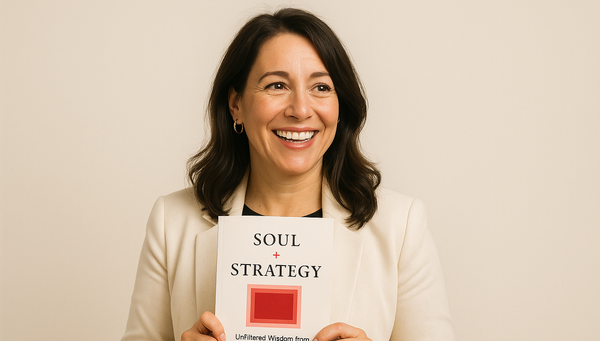
From Environmental Engineer to Founding Bick Law LLP: Kimberly Bick on Building a Women-Owned "Big Law Alternative," Navigating Post-Chevron Environmental Regulation, and Why She Became an "Accidental Entrepreneur"


Kimberly Bick is the founding and co-managing partner of Bick Law LLP, a Women-Owned Business Enterprise providing Fortune 500 clients with "Big Law" environmental expertise using flexible billing structures. But her path to founding Bick Law wasn't the result of careful planning. She describes herself as an "accidental entrepreneur" who started her firm purely out of necessity in 2015 when clients were moving from big law to boutique firms for environmental matters.
With degrees from Stanford (B.S. Environmental Earth Sciences, M.S. Civil Engineering, J.D. with distinction), Kimberly began her career as an environmental engineer at McDonnell Douglas (now Boeing), implementing compliance programs and serving on Superfund steering committees. After earning her law degree, she clerked for Chief Judge Patricia M. Wald on the D.C. Circuit before practicing environmental law at major firms like Morrison & Foerster. She's practiced environmental law for over 35 years, with a short hiatus to raise her two children.
The catalyst for founding Bick Law came when she was given the opportunity to pitch a company seeking new outside counsel for significant environmental matters. To land the business, she needed autonomy to set reasonable billing rates, which necessitated leaving big law and starting her own firm. Ten years later, that company remains an important client, and Bick Law's roster has grown as the trend of companies seeking boutique firms for environmental law matters continues.
Bick Law's team comprises top environmental lawyers in California with decades of big law experience before joining the firm, allowing them to provide the same or better quality legal service with more flexibility in rates and lean but collaborative staffing using only the most experienced counsel. The firm represents aerospace, manufacturing, biotech, real estate, and technology companies in environmental litigation, regulatory compliance (CERCLA, RCRA, Clean Water Act, Clean Air Act), enforcement defense, and corporate transactions involving environmental issues.
As former Chair of the California Lawyers Association Environmental Law Section, Kimberly has written extensively about the Supreme Court's decision overruling Chevron deference and its impact on environmental regulation. Her unique combination of engineering training and legal expertise allows her to work at the intersection where science and law meet, providing clients with both technical understanding and strategic counsel.
In this Q&A, Kimberly shares how she became an accidental entrepreneur when the economics of big law no longer aligned with client needs, the most critical environmental compliance mistakes she sees startups make, and how the post-Chevron legal landscape has changed regulatory risk assessment for companies in highly regulated industries.
From Environmental Engineer to Environmental Attorney – Building Bick Law LLP as a Women-Owned “Big Law Alternative”
Q: After earning degrees from Stanford (B.S. Environmental Earth Sciences, M.S. Civil Engineering), you started your career as an environmental engineer at McDonnell Douglas (now Boeing), implementing compliance programs and serving on Superfund steering committees, before returning to Stanford to earn your J.D. (with distinction) and clerking for Chief Judge Patricia M. Wald on the D.C. Circuit. In 2015, you founded Bick Law LLP as a Women-Owned Business Enterprise to provide Fortune 500 clients with “Big Law” expertise using flexible billing structures. For female attorneys considering leaving established firms to start their own practices, what prompted your decision to launch Bick Law after decades practicing environmental law at major firms like Morrison & Foerster, and how did you build credibility and a client base as a boutique firm competing against Am Law 200 practices? What’s your advice for women lawyers who want the autonomy of running their own firms while maintaining the sophisticated client work they handled at larger practices?
A: I have to adjust the premise of your first question because it suggests I made a plan to start Bick Law and then implemented that plan. That certainly is what many lawyers (and entrepreneurs) do, and I, myself, am an “extreme planner” by nature, so that would have been my preference. However, in this case, I would describe myself as more of an accidental entrepreneur or an entrepreneur-by-necessity. The fact is, I never planned to start a firm – I did so purely out of necessity following the evolution of environmental law at big firms, which was in the midst of a sea-change. Clients were moving from big law to boutique law firms for specialty practices like environmental law due to lower billing rates and the ability to staff matters lean with experienced lawyers, something that was challenging in big law due to the economics of that platform. It was at this time, and in this environment, that I was gifted the opportunity to pitch a company seeking new outside counsel for a number of significant environmental matters. To land the business, however, I needed autonomy to set reasonable billing rates, which necessitated starting Bick Law. Ten years hence, this company remains an important and valuable client and I am personally grateful for their support and trust. And, over the past ten years, our client list has grown, due to the continuing trend of companies seeking boutique firms for environmental law matters. Our team is comprised of top environmental lawyers in California, with subject matter expertise in nuanced areas of practice, and decades of experience in big law before coming to Bick Law. This allows us to provide the same (or better) quality legal service as big law firms, with more flexibility in our rates and with lean but collaborative staffing using only the most experienced counsel. My advice, in summary, is to know and offer what your clients need, and offer it at a better rate or better method than big law. Additionally, stay open to opportunities so that you see them when they come along. Finally, take risks and don’t be afraid of the path less traveled.
Environmental Law for Growing Companies – When Founders Need Compliance Counsel Before Problems Arise
Q: You represent aerospace, manufacturing, biotech, real estate, and technology companies in environmental litigation, regulatory compliance (CERCLA, RCRA, Clean Water Act, Clean Air Act), enforcement defense, and corporate transactions involving environmental issues. For female founders building companies in manufacturing, cleantech, biotech, or real estate, what are the most critical environmental compliance mistakes you see startups and growth-stage companies make? Walk us through when founders should actually engage environmental counsel (beyond just “when we get sued”), what environmental due diligence looks like in fundraising rounds or M&A transactions, and how to structure compliance programs that scale with the business without spending hundreds of thousands on legal fees upfront.
A: The most critical environmental compliance mistakes that lead to liability are almost always preventable through advance planning. In real estate, for example, conducting “all appropriate inquiry” (through due diligence) is required to understanding if property is contaminated. A big mistake is to assume lack of knowledge means lack of liability—it doesn’t. I also support large mergers and acquisitions and private equity deals and the same general rule applies – ignorance is not bliss – environmental liabilities can hold things up if they are not fully assessed and mitigated, but even worse, the cost of those liabilities can be material and if not understood in advance, can result in a bad investment. That is all on the transactional side, which lends itself to being proactive. From the enforcement or litigation angle, the best way to avoid issues, again, is to understand what your company is doing and make sure it is in full compliance with the law. This may mean self-auditing, developing and implementing procedures so that employees are knowledgeable, and ensuring sufficient resources are devoted to maintaining compliance. As a compliance lawyer with engineering experience, I love to roll up my sleeves and look at a company’s compliance status and help keep the company apprised of the latest changes in the laws. An ounce of prevention (and an investment in compliance) is worth a pound of cure (and the high cost of an enforcement action, including penalties, damages, and litigation costs). When to engage environmental counsel? As soon as you begin negotiating a deal, or before you begin operating your business, and periodically thereafter. The sooner the better so that the lawyer is part of the team and can identify material liability early.
Navigating Post-Chevron Environmental Regulation – Former CLA Environmental Law Section Chair on the Changing Regulatory Landscape
Q: You served as Chair of the California Lawyers Association Environmental Law Section and have written extensively about the Supreme Court’s decision overruling Chevron deference and its impact on environmental regulation. For female entrepreneurs building businesses subject to environmental regulation (water quality, air emissions, hazardous waste, PFAS chemicals, climate disclosure), how has the post-Chevron legal landscape changed what companies need to do to stay compliant? What’s your framework for helping clients assess regulatory risk in an environment where agency interpretations no longer receive automatic deference, and what should founders building in highly regulated industries understand about the intersection of compliance, enforcement, and business operations?
A: The Supreme Court’s opinion in Loper Bright provided a light at the end of a dark tunnel for many industries that assumed they could never win a challenge of an EPA or other agency decision. Now, under Loper Bright, depending on the facts, there may be hope. That said, the ability to challenge EPA, or any other agency, should not change a business’s compliance practices. To stay compliant going forward, companies need to do the same as they have in the past – understand their business operations and understand the regulations that govern them. If the regulations are unclear, and noncompliance arises out of a reasonable interpretation, then there may be an opportunity to challenge an agency enforcement action now under Loper Bright. Or, if the regulations are arguably inconsistent with the governing statute or the constitution, then there may be a case for a challenge. While we all expect there will be more litigation challenging agency decisions and regulations post-Loper Bright, I don’t think we expect day-to-day compliance operations to be affected.
From a risk management standpoint, a founder may want to consider the worst case scenario for the agency interpretation of the regulation, or enforcement action. Before deciding to risk noncompliance in the hopes of challenging an agency order, a founder should consider the cost of such challenge and the likelihood of success, which may depend on the jurisdiction, as well as the facts. In this current paradigm, the fact that a founder can even consider challenging an agency action is significantly different than in the past when it was virtually guaranteed they would lose. However, there is still no guarantee the founder will win such a challenge. For that reason, I would still advise full compliance to avoid enforcement if possible. Where the laws are uncertain, a lawyer can assist with interpretation, and the founder can decide if a conservative interpretation is appropriate or if they are willing to take the risk of enforcement and then challenge it in the hopes of a Loper Bright win. That is a business decision. Remember, Loper Bright does not apply to state law, so depending on where the business is located, there may be state agencies that are regulating the operations and some states are still deferential to their regulators.
Are you a woman leader with an inspiring journey to tell? Founded by Women is on a mission to elevate and amplify the voices of women making an impact.
If you're breaking barriers, driving change, or paving the way for others, we’d love to feature your story. Get in touch with us today!
👉 hi@foundedbywomen.org