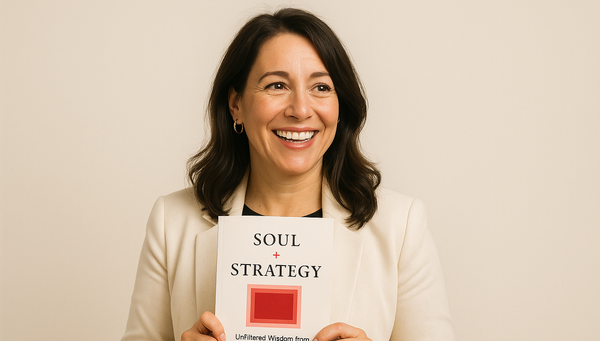
From Lebanon to Miami: How Marie Torossian Built Two Businesses and Helps Entrepreneurs Break Through $2 Million with Her Proprietary Financial Framework


From Lebanon to Miami: How Marie Torossian Built Two Businesses and Helps Entrepreneurs Break Through $2 Million with Her Proprietary Financial Framework
At age 11 in Lebanon, Marie Torossian was already helping her father run his business. While other kids were focused on school and friends, she was learning the language of numbers, discovering she had a natural talent for understanding how businesses actually worked. That early exposure planted a seed that would shape everything that came after.
Marie's career followed what looked like a traditional path at first: auditor, then climbing the corporate ladder from accounting manager to controller, eventually landing CFO roles. She gained experience across operations, finance, HR, and IT, building the kind of holistic business understanding that most accountants never develop. But somewhere along the way, she started seeing the ceiling. Limited growth opportunities. A baby on the way. The realization that financial freedom and time freedom mattered more than a stable paycheck.
In 2016, Marie started consulting on the side. No clear plan, just a dream of owning her own business and the skills to make it happen. By 2020, she'd launched Marie Torossian CPA. Two years later, The Profit Lab followed, intentionally designed to complement her accounting firm by addressing the marketing, sales, operations, and mindset gaps her clients were struggling with beyond just their books.
Today, Marie is a CPA, CGMA, 10X Certified Coach, author, and podcast host who's developed the proprietary VALUEATION-MT methodology to help service-based business owners ($750K-$15M) break through revenue plateaus and build companies that actually run without them. Her approach is built on a philosophy that sounds simple but challenges conventional wisdom: grow revenue, don't just cut costs. Stop trading time for money. Think about your exit from day one, not when it's too late.
With a mission to transform one million businesses to their 10X levels, Marie has shifted from hourly billing to value-based pricing, hosts The Profit Lab Podcast, speaks at CPA conferences, and teaches Grant Cardone-licensed sales training. All while running two businesses and staying true to her core values: put God first, family second, and make honorable dealings in business.
From Auditor to Controller to CFO to Founding Two Businesses - Building Marie Torossian CPA and The Profit Lab
Q: Your entrepreneurial journey started at age 11 helping your father with his business in Lebanon. You began your career as an auditor, moved into corporate accounting positions rising to CFO, started consulting as a side hustle in 2016, launched Marie Torossian CPA firm in 2020, and founded The Profit Lab in April 2022. Walk us through the decision to leave stable corporate positions to start consulting, then building two separate but complementary businesses. What made you realize you needed to build your own platform, and what advice would you give women about transitioning from employee to entrepreneur while building credibility?
A: I started my career as an auditor because it was my preference over tax. Auditing gave me the opportunity to understand corporate accounting at a deeper level, as well as the importance of assurance services. From there, I transitioned into the private sector, where I spent about six years moving up from accounting manager to controller, and eventually to chief administrative officer and chief financial officer.
I enjoyed the corporate accounting side much more, particularly the holistic understanding I gained across operations, finance, HR, and IT. That cross-functional exposure shaped how I think about businesses today.
I decided to start consulting for several reasons. First, I always had a dream of owning my own business. Second, I began to see a ceiling in my career, with limited opportunities to continue growing or moving up. Third, I was preparing to give birth to my second child, and both financial freedom and time freedom became more important than ever. A fourth reason was culture — I wanted to build an environment where I could operate at my best.
I began consulting on the side in 2016, without a complete plan of attack — something I would definitely do differently now. Since then, I've invested significant time and money into learning the skills needed not only to build a business, but to think in terms of multiple revenue streams.
When I started my second company, The Profit Lab, I intentionally designed it to be complementary to my accounting firm. I knew that business owners struggling with their accounting, books, or financial insights often needed support in other areas — marketing, sales, operations, or even mindset. The Profit Lab allows me to meet those needs without blurring the lines of traditional accounting services.
The advice I would give women transitioning from employee to entrepreneur is the following:
Create a clear problem-and-solution list:
- What problem do you want to solve?
- Who is your target audience or ideal client persona?
- How do you solve that problem for them?
Create a second list focused on skills and roles:
- What are you good at and enjoy doing?
- What are you good at but do not enjoy doing?
- What tasks are required to run the business that should be delegated because you don't know how to do them?
- What skill gaps do you need to learn and will coach you through them?
I recommend these lists because they are things I did not fully think through before starting. I knew I wanted to help business owners with financial insights and bring a CFO-level mindset into their businesses, but I hadn't clearly defined a client persona or the language clients use to describe their problems. That was something I had to learn the hard way.
I also quickly realized that while I loved financial analysis and building policies and procedures, there were tasks I was very good at — like bookkeeping — that I did not want to do. I hired and trained someone to handle that work so I could stay focused on what I do best. At the same time, I had major skill gaps in marketing, business development, selling, and closing, so I invested heavily in learning those areas.
The VALUEATION-MT Methodology - Your Proprietary Framework for Helping Businesses Break Through $2 Million and Build Sellable Companies
Q: You created the VALUEATION-MT® methodology that combines business valuation, financial analysis, processes and procedures, and growth roadmaps. You specialize in supporting business owners ready to break through the $2 million barrier and recommend CFO advisory starting around $750K in revenue. Your philosophy is "Growing revenues should always be the main focus" rather than cutting costs. For female founders trying to scale past revenue plateaus, what's your framework for understanding true business value? When should founders invest in financial advisory services versus DIY, and how should they think about building sellable businesses from the beginning?
A: The VALUEATION-MT® methodology is the result of my years of experience as an auditor, controller, and CFO. I've seen firsthand that when businesses don't focus on revenue growth, there's only so much they can do by cutting expenses. If your focus is only on cost-cutting, you're never truly growing.
My methodology uses business valuation as a starting point. Most people only think about valuation at the point of sale, which is often too late. If you don't know the value of your business today, how can you ensure you're getting top dollar if an investor becomes interested?
I saw this clearly in a consulting project I worked on in 2019. The company had been growing revenues and closing on long-term contracts, yet they remained unprofitable for seven years. A private equity firm showed strong interest but ultimately passed because the financials didn't support the story. I helped the company clean up its books and build financial forecasts. While the private equity deal didn't happen, the financial clarity allowed the business to expand into multiple locations and warehouses.
I believe all business owners should think about their end goal from the beginning. When I first started consulting, I wasn't thinking about an exit or long-term value — and that's exactly why I talk about it so much now. Without an end goal, you won't think strategically about future revenue, valuation, or what needs to be done today to maximize value later. Whether voluntarily or involuntarily, we all exit our businesses at some point — so why not build one that's sellable?
My advice to women business owners — and business owners in general — is to never DIY something you don't know how to do. Go back to your skills-gap list. If you don't have expertise in an area, hire someone who does. That allows you to spend your time on the things you're good at and enjoy.
That said, CFO advisory isn't for very early-stage businesses. At a minimum, every business should have a strong bookkeeper — and I say that intentionally, because not every bookkeeper is a good one. Get referrals, check reviews, and assess whether they're proactive or reactive. I generally recommend starting some level of financial advisory or strategic guidance around $750,000 in revenue, when growth accelerates and mistakes become more costly. Between $1 million and $3 million, systems and automation become critical, and CFO advisory delivers even greater value by helping businesses build repeatable, scalable processes.
Value-Based Pricing, Speaking, Podcasting, and Balancing Profit with Purpose - Building The Profit Lab While Running a CPA Practice
Q: Through The Profit Lab, your mission is to "help entrepreneurs grow and scale with top-notch sales, marketing, operations & financial strategies" with a vision to "transform one million businesses to their 10X levels." You've shifted from hourly billing to value-based pricing packages, you host The Profit Lab Podcast, you're a 10X Certified Coach teaching Grant Cardone-licensed sales training, and your personal values are "put God first, family second" with "honorable dealings" in business. For female founders building coaching or professional services businesses, what's your advice about structuring pricing that reflects value rather than time? How do you balance building a personal brand with delivering client services?
A: This is a great question, and my advice on pricing models is to stay away from hourly billing. In the accounting and CPA world, hourly billing has traditionally been the norm, but even that is changing.
When I first launched as a consultant, I charged hourly, and one of my biggest challenges was explaining why my rate was higher than someone with significantly less experience. That led me to research alternative billing structures, and I ultimately adopted value-based pricing.
Today, I use value pricing across both businesses — whether it's bookkeeping, financial insights, CFO advisory, or coaching. Everything is packaged into three clear options, which makes it easier for clients to choose based on their needs and budget, while also protecting my time and preventing scope creep.
Balancing personal branding — speaking, podcasting, writing books — with service delivery comes down to understanding multiple revenue streams. Speaking and podcasting are part of my marketing strategy. I'm the face of the company and the thought leader, so those activities generate attention and demand.
As a 10X Certified Coach, one principle I've adopted is that marketing precedes sales. If we want to grow revenue, we need attention. I spend about 80% of my time on revenue-generating activities, which for me means speaking, guest podcast appearances, hosting my own podcast, writing, and showing up on strategic platforms. I also speak regularly at CPA conferences and maintain a strong social media presence.
I couldn't do all of this alone. I have a team that handles accounting delivery, which allows me to focus on visibility, coaching, and high-level advisory work. Protecting your time and being intentional about where you invest it is critical. Not all networking events produce results — some are great, others aren't — and business owners need to test, evaluate, and commit to what actually works.
When it comes to building a business with both profit goals and purpose alignment, I encourage women to clearly define their vision, mission, and core values. These become the drivers behind every decision. Your "why" goes beyond business — it connects to your story and personal brand.
People don't do business with companies; they do business with people they like and trust. In coaching, accountability is everything. When clients get distracted, overwhelmed, or caught in shiny-object syndrome, I always bring them back to their "why." That's why I recommend defining it from the very beginning — before business grows, before the pressure increases, and before decisions get harder.
Are you a woman leader with an inspiring journey to tell? Founded by Women is on a mission to elevate and amplify the voices of women making an impact.
If you're breaking barriers, driving change, or paving the way for others, we’d love to feature your story. Get in touch with us today!
👉 hi@foundedbywomen.org